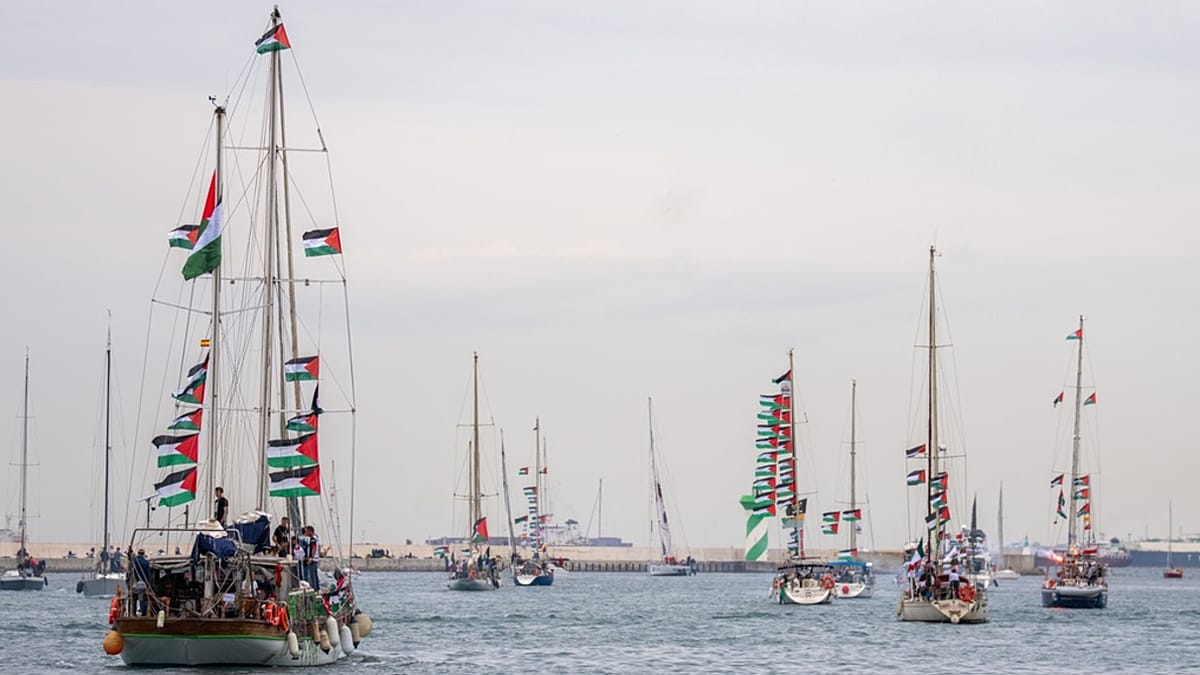
Israeli military forces intercepted the Global Sumud Flotilla in international waters near the Greek island of Kythira on Thursday, boarding multiple vessels and detaining 175 activists, according to statements from both the flotilla and Israeli authorities. The flotilla, which set sail with 58 boats carrying humanitarian aid and activists, aimed to challenge the Israeli naval blockade of the Gaza Strip.
The group reported that Israeli soldiers boarded ships, damaged engines, and disabled communications equipment in what they described as a “violent raid.” In a statement posted on X, the flotilla said its boats were approached by military speedboats identifying themselves as Israeli, with personnel pointing lasers and semi-automatic weapons, ordering participants to the front of the boats and to kneel. The group issued an SOS as communications were jammed.
Israeli Army Radio, citing an unnamed military source, said seven of the 58 boats had been intercepted near Kythira. The flotilla, however, reported losing contact with 11 vessels and stated that 15 had been boarded. The Israeli foreign ministry later confirmed that forces had detained 175 people from more than 20 boats, adding that the activists were “now making their way peacefully to Israel.” A video released by the ministry showed activists aboard an Israeli navy ship.
International Waters and Legal Disputes
The interceptions began in the early hours of Thursday, more than 600 nautical miles from the coast of Gaza, placing the operation in international waters. The flotilla condemned the action as an “illegal act,” arguing that international law permits freedom of navigation on the high seas. Israel, however, maintains that the flotilla was a political provocation with alleged ties to Hamas, a claim the group has consistently denied.
Israeli Ambassador to the United Nations Danny Danon defended the operation, stating that Israeli soldiers acted “with professionalism and determination” to stop what he called a “provocative flotilla” before it reached Israeli waters. The incident echoes a 2010 confrontation in which Israeli commandos raided the Mavi Marmara, part of a Gaza-bound flotilla, resulting in the deaths of nine Turkish activists and a severe diplomatic rift with Turkey.
The flotilla’s organizers remain committed to delivering aid to Gaza, emphasizing that the plight of Palestinians has been sidelined in international priorities amid broader regional tensions, including the ongoing conflict with Iran. The group has not confirmed whether all detained activists are being taken to Israel or if some remain stranded at sea.
This interception occurs against a backdrop of heightened violence in the region. Recent Israeli strikes in Gaza killed five people, including a nine-year-old boy, while airstrikes in southern Lebanon killed eight, including three civil defence medics. The flotilla’s attempt to break the blockade underscores the ongoing humanitarian crisis in Gaza, where access to basic goods remains severely restricted.
The European Union has not yet issued an official response to the interception, but the incident raises questions about the safety of humanitarian missions in the Eastern Mediterranean. Greece, as a key EU member state and a frequent launch point for such flotillas, may face diplomatic pressure to clarify its role in monitoring or facilitating these voyages. The flotilla’s departure from Greek ports had previously drawn attention from Greek authorities, who have sometimes blocked vessels from sailing.
As the situation develops, the fate of the detained activists and the remaining boats remains unclear. The flotilla’s organizers have vowed to continue their mission, signaling that further attempts to reach Gaza may follow.