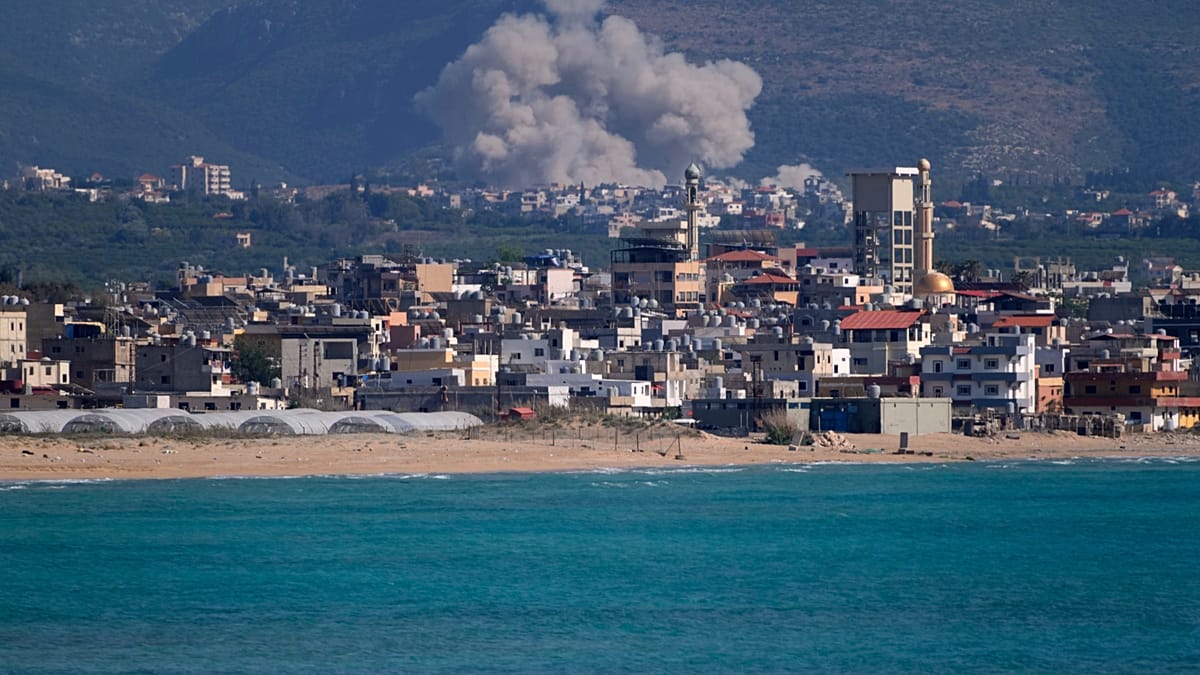
At least 14 people were killed in Israeli airstrikes on southern Lebanon on Monday, according to Lebanon's health ministry, as the cross-border conflict with Hezbollah persisted despite fresh Iranian threats of retaliation. The strikes hit the coastal city of Tyre and the villages of Marwanieh and Zifta, wounding dozens and drawing condemnation from Lebanese authorities.
In Tyre, a UNESCO World Heritage site, an Israeli raid near a Red Cross centre killed five people and wounded eight, four of whom were Red Cross paramedics, the health ministry said. A Lebanese culture ministry official reported that bombardment the previous day had also damaged parts of the ancient Phoenician city, raising concerns over the protection of cultural heritage in conflict zones.
Iran warns of 'more severe' measures
Iran's military central command, which announced the end of its own direct attacks on Israel over the weekend, warned that any continued aggression—including in southern Lebanon—would be met with "much more severe and crushing measures than before." Tehran has insisted that a halt to the wider Middle East conflict must include a ceasefire in Lebanon.
But Israeli Defence Minister Israel Katz rejected the ultimatum. "We categorically deny Iran's threats. Any Iranian attempt to link Lebanon and Iran and attack Israel will be met with great force, as happened yesterday," Katz said on Monday. He added that Israel would strike Beirut's southern suburbs in retaliation for every attack on northern Israel.
Hezbollah, the Iran-backed militant group, said it had targeted Israeli troops inside Lebanon but did not claim any attacks on Israeli territory. The group has been exchanging fire with Israel since early March, when it launched rockets at Israel in response to the US-Israeli killing of Iran's supreme leader, drawing Lebanon into the broader regional conflict.
Lebanon's health ministry reports that Israeli strikes have killed more than 3,600 people since the escalation began. The violence has displaced tens of thousands on both sides of the border and threatens to further destabilise an already fragile region.
The latest strikes come amid a volatile backdrop of tit-for-tat attacks between Israel and Iran, which have raised fears of a wider war. Oil prices have surged as the conflict undermines ceasefire efforts, and concerns over energy security have grown, particularly regarding the Strait of Hormuz, a critical chokepoint for global oil shipments.
European diplomats have urged restraint, but the cycle of violence shows no sign of abating. The European Union has called for an immediate ceasefire and the protection of civilians, while several member states have warned that the conflict could spill over into Europe through increased migration flows and energy market disruptions.
For now, Israeli leaders remain resolute. "We will continue to operate in Lebanon against the terrorist organisation Hezbollah," Katz said, vowing to strike Beirut's southern suburbs for every attack on northern Israel. The coming days will test whether Iran's warnings can alter the trajectory of a conflict that has already exacted a heavy toll on Lebanese civilians.