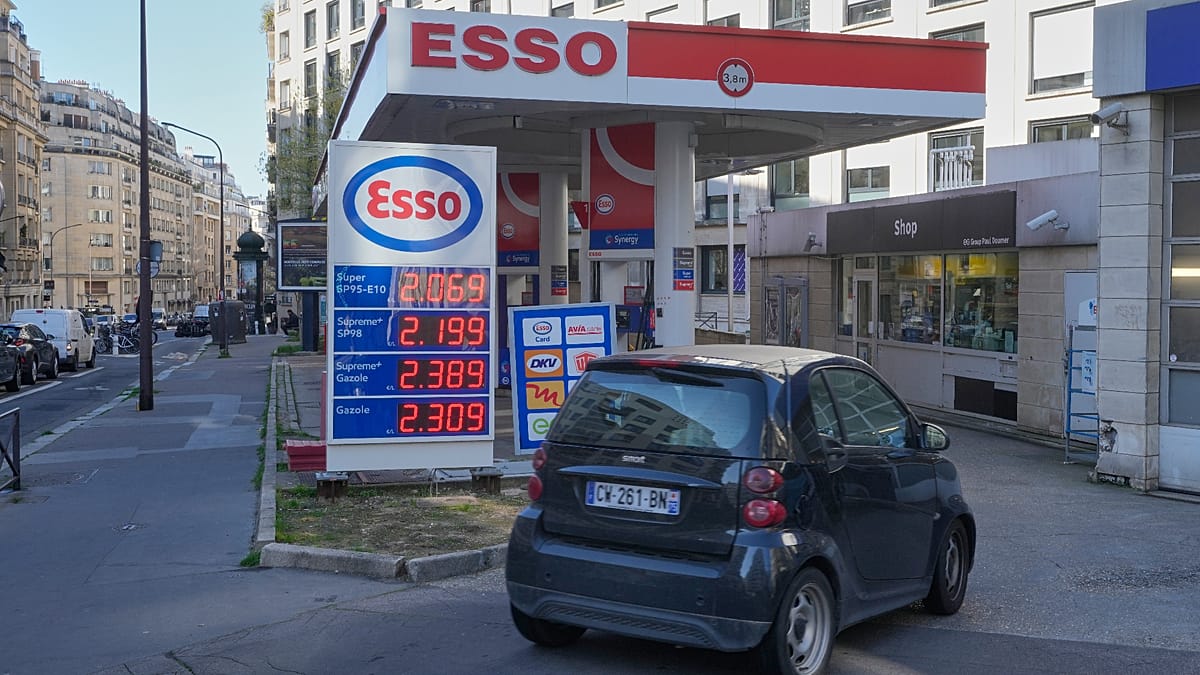
Oil prices surged on Monday as markets reacted to a new round of direct military strikes between Israel and Iran, further destabilising a region already on edge. Brent crude, the international benchmark, rose $3.50 to $96.59 a barrel, while US benchmark crude climbed $3.48 to $94.02 a barrel in early trading.
Israeli airstrikes targeted sites in central and western Iran early Monday, according to reports from Iranian state television, which confirmed explosions heard in Isfahan, Tabriz and Tehran. The strikes come in response to Iranian missile fire, escalating a conflict that has already drawn in regional actors and disrupted global trade routes.
Ceasefire Hopes Fade
The military exchange directly challenges a tentative ceasefire agreement reached last week between American and Iranian negotiators. That deal, which aimed to extend a pause in hostilities, has not been finalised. The latest attacks further complicate diplomatic efforts and raise the risk of a broader regional war.
European capitals have watched the escalation with growing concern. The conflict has already driven a post-pandemic drop in European air traffic, and the renewed instability threatens to push energy prices higher across the continent. EU member states, already grappling with inflation and supply chain pressures, face additional strain as crude costs climb.
Analysts note that the Strait of Hormuz, a critical chokepoint for global oil shipments, remains effectively blocked due to US-Iran hostilities. This has compounded the impact of tariffs and other economic measures imposed by the Trump administration.
Global Markets Tumble
The geopolitical shock rippled through Asian and European markets. Japan's Nikkei 225 dropped 4.2% to 63,804.77, while South Korea's Kospi fell 6.8%, led by a 7% decline in Samsung Electronics. Taiwan's Taiex lost 3.8%, and Hong Kong's Hang Seng shed 1.3%.
Wall Street had already closed lower on Friday, with the S&P 500 sinking 2.6% after a stronger-than-expected US jobs report raised expectations of a Federal Reserve rate hike. The Dow Jones Industrial Average fell 1.4%, and the Nasdaq composite slumped 4.2%.
Bond yields jumped as the US Labour Department reported 172,000 jobs added in May, signalling a resilient labour market despite inflationary pressures. The yield on the 10-year Treasury rose to 4.54%, while the 2-year yield climbed to 4.16%.
In currency markets, the US dollar edged up to 160.35 Japanese yen, while the euro strengthened slightly to $1.1530.
The escalation also threatens to strain transatlantic relations. Trump's grievances with NATO over Iran have already tested alliances, and European leaders are urging restraint. The EU's trade chief recently unveiled plans to diversify supply chains away from China, but the energy crisis underscores Europe's continued vulnerability to Middle Eastern instability.
As the conflict enters a new phase, the economic and diplomatic stakes for Europe are higher than ever. The coming days will test whether diplomatic channels can hold, or whether the region is sliding into a prolonged confrontation with global consequences.