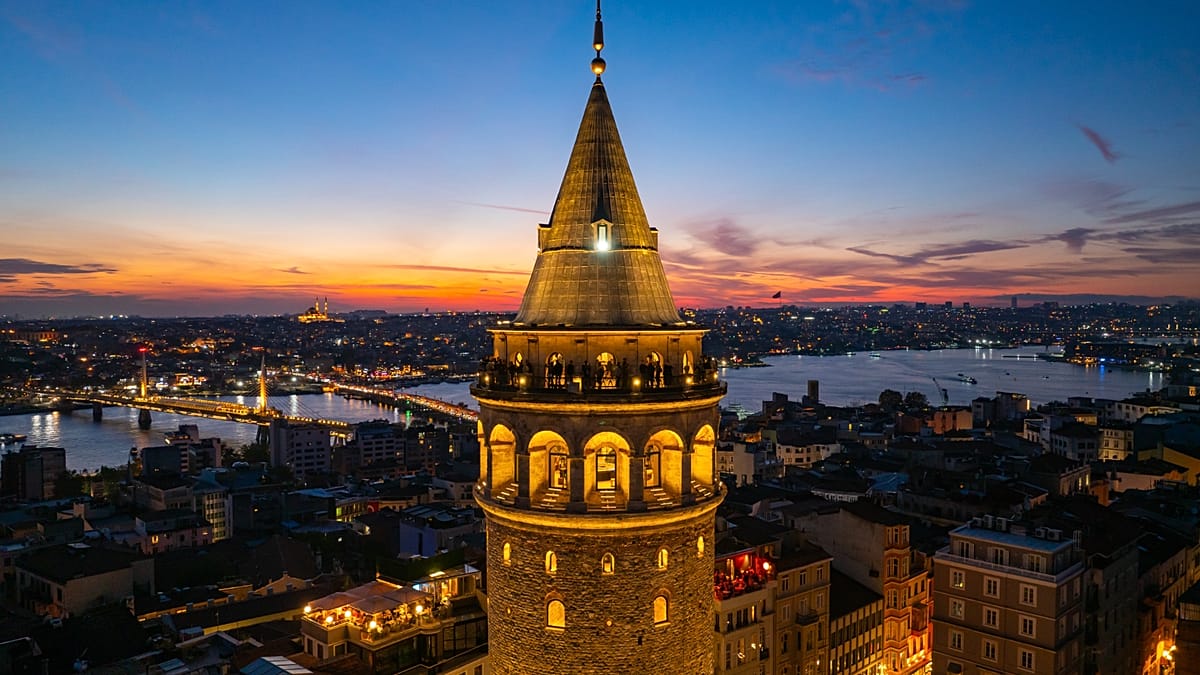
No other metropolis sits astride two continents, and İstanbul's nightlife reflects that duality. For two millennia the city has absorbed traders, migrants and travellers from across Europe, Anatolia and the Levant, and the result is an evening culture that moves easily between a raucous meyhane and a polished rooftop terrace overlooking the Bosphorus.
Daytime in Türkiye's largest city belongs to the mosques, museums and bazaars. After sunset, the tempo shifts. Venues stay open well past midnight, and the city's reputation as a cultural magnet — increasingly underwritten by Turkish conglomerates bankrolling İstanbul's cultural ambitions — has drawn international DJs, touring bands and a growing fine-dining scene.
Clubs along the water
İstanbul is not Türkiye's capital, but it behaves like one after dark. The shoreline of the Golden Horn and the Bosphorus is lined with venues that pair water views with serious sound systems. The neighbourhoods of Kuruçeşme, Ortaköy and Bebek are the traditional ravers' circuit, each with its own character and crowd.
In Beşiktaş, Ruby spreads across three floors: international cuisine by day, then neon-lit dancefloors above and below, with a cocktail lounge wedged in between. Further south, 360 İstanbul occupies a penthouse in Beyoğlu, offering sweeping sightlines across the Bosphorus, the Golden Horn and the Sea of Marmara, plus live dancers and DJ sets that run into the small hours.
Meyhane culture on İstiklal
For those who prefer bar-hopping to clubbing, İstiklal Avenue is the obvious starting point. The long pedestrian artery is packed with bars, restaurants and meyhanes — Turkish taverns — many of them housed in Ottoman-era art nouveau and neo-classical buildings.
Meyhanes are a cornerstone of Turkish social life: generous plates of mezze, communal tables, glasses of anise-infused rakı and traditional music. Çiçek Pasajı, a covered arcade off İstiklal, contains several of them under one roof and is a good introduction to the format. Sofyali 9, one of the city's longest-running taverns, works well as an early stop before casual cocktails at Yuri Gagarin, where seats sit beneath İstiklal's famous colourful umbrellas.
Early-evening jazz with Bosphorus views is available at Balkon Restaurant & Bar, while Ziba, tucked off the main street, has built a reputation for live music at reasonable prices.
Street food after midnight
Drinking and dancing are only part of the picture. İstanbul's food scene extends deep into the night, with most restaurants serving substantial meals late and a dense network of street vendors filling the gaps. Galata, Taksim and Karaköy are particularly well supplied.
The local specialities worth seeking out include kokoreç (chargrilled offal wrapped in sheep intestine and heavily spiced), balık ekmek (grilled fish sandwiches) and döner kebabs. Soups and seafood snacks such as midye dolma, stuffed mussels, are also widely available. The lower deck of Galata Bridge functions as a seafood quarter in its own right, with small restaurants serving the day's catch.
Fine dining and the Bosphorus
İstanbul's gastronomy has risen sharply in international standing, with a growing list of Michelin-starred and Michelin-recommended restaurants reshaping the city's culinary map. Sleek rooftops in Beyoğlu and elegant waterfront mansions now offer refined readings of Turkish heritage cooking alongside international technique, often paired with Anatolian wines.
Many of these tables face the water, but the classic perspective is from the water itself. Dinner cruises along the Golden Horn pass the illuminated Blue Mosque and Topkapı Palace, and private yacht charters with a guide remain a popular option for visitors marking a special occasion.
Concerts and the arts
İstanbul also pulls in major touring acts. In 2025, Justin Timberlake, Jennifer Lopez and Martin Garrix played to large crowds, including at the 10,000-capacity Festival Park Yenikapı. The coming season is expected to bring Kasabian, Wolf Alice and Gorillaz, among others.
Beyond pop and electronic music, the city's cross-cultural history sustains a busy classical calendar. The Atatürk Cultural Centre anchors İstanbul's arts programming, with ballet, opera and orchestral concerts featuring regularly in its evening schedule.
For visitors planning a trip around the city's nightlife, connectivity is rarely an obstacle: İstanbul Airport dethroned Heathrow as the world's most connected hub, making the city an easy weekend destination from most European capitals. And for a sense of how the local scene has evolved over three decades, the story of French house music's journey from clubs to heritage offers a useful parallel.