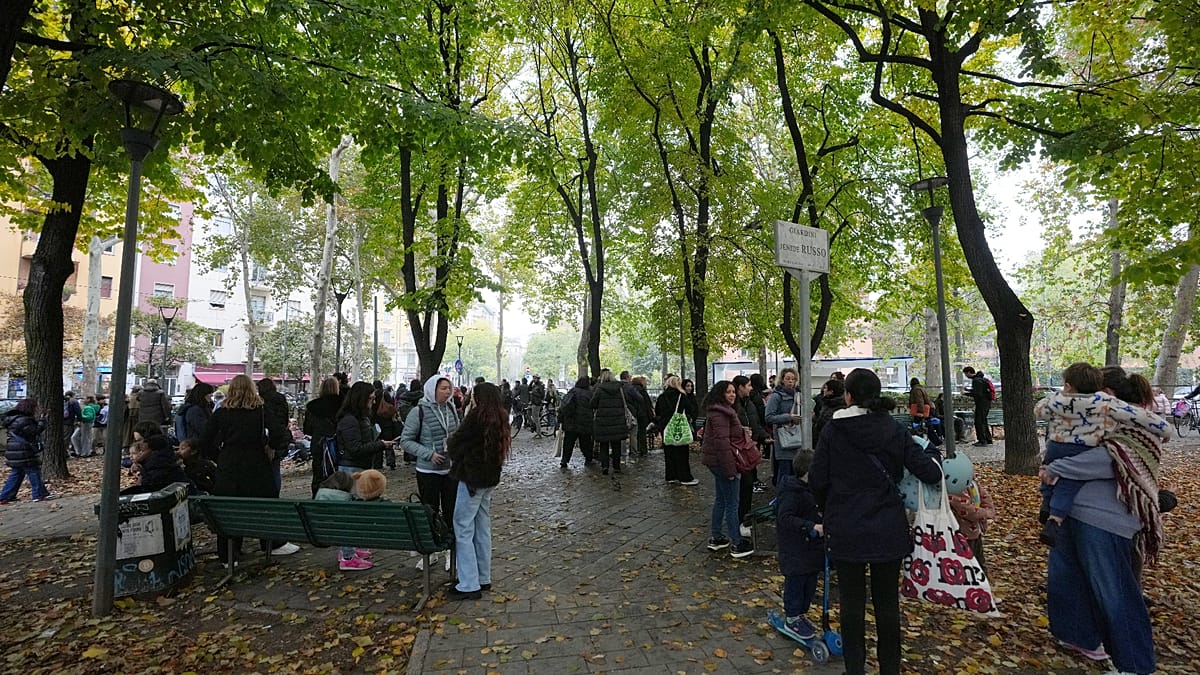
More than one hundred schools across Italy received emailed threats on Monday morning, warning of imminent bomb detonations and poisoned canteen food. The messages, which arrived at roughly 10:50 am, triggered a handful of evacuations but no confirmed hazards, according to Italian authorities. Checks on school meals found nothing unusual.
The episode marks the second wave of such threats in a week and has prompted Rome to formalise a more calibrated response. Under new security guidelines, Italian schools will no longer evacuate automatically when they receive vague, mass-distributed warnings. That decision now rests with law enforcement and security officials, who weigh the credibility of each message before ordering a shutdown.
A coordinated campaign with a foreign digital footprint
The threatening email, signed with the initials MA, claimed that an explosive device would detonate within forty minutes and that a canteen employee had mixed sodium azide and potassium cyanide into food supplies. It also accused recipients of ignoring unspecified demands. Investigators believe the message originated from the compromised account of a Vietnamese academic institution. The address, [email protected], is linked to a research centre in the city of Da Nang.
Italy's postal police have launched a probe. Ivano Gabrielli, who heads the cyber police service, described the case as an investigative challenge. "The simpler the operation, the harder it is to identify an error by the person who carried out the attack," he told SkyTg24. He noted that retrieving an email from the dark web and using it anonymously is, from a technical standpoint, unfortunately very easy these days. Yet he added that whoever built the infrastructure to dispatch so many messages at once may still have left a trace that investigators can pursue.
The threats fit a broader pattern of hybrid disruption that has unsettled European institutions in recent years, from hoax bomb alerts to cyber intrusions. Italy's response reflects a wider shift: authorities are increasingly treating mass threats as a test of resilience rather than a reason to shut down public services at scale. The same logic has guided recent debates over protecting Europe's hospitals and other civilian infrastructure against low-cost, high-annoyance attacks.
Why the protocol changed
Monday's messages caused only a few schools to close, a marked contrast with last week's disruptions. The new guidelines, introduced by the government after the earlier wave, aim to prevent copycat hoaxes from achieving their likely goal: maximum disruption at minimal cost to the sender. By leaving evacuation decisions to police and security officials, Rome hopes to avoid handing anonymous actors an easy lever over daily life.
Still, the strategy carries risks. School administrators must now judge quickly whether a threat is credible, and parents may question why some buildings empty while others remain open. The postal police's investigation will be closely watched as a test of whether Italy can trace a campaign that appears designed to be untraceable.
For now, no explosive devices or contaminated food have been found. The immediate danger appears to be the disruption itself — and the challenge of responding proportionately to threats that are easy to send and hard to attribute.