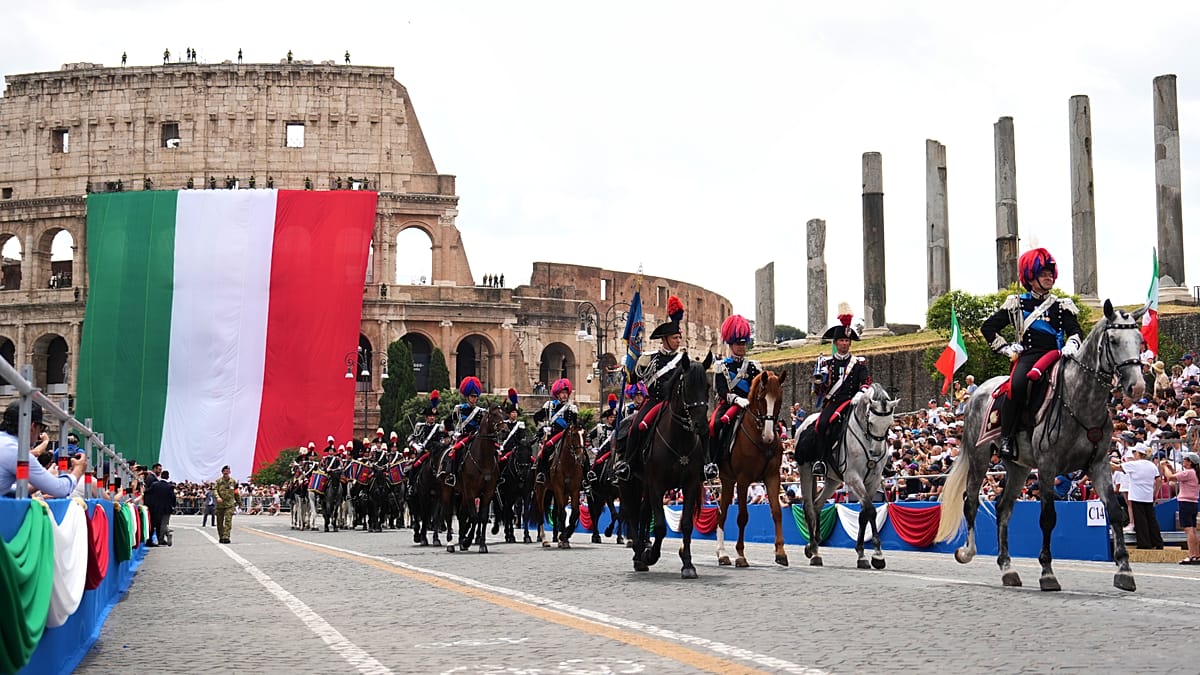
Rome marked the 80th anniversary of the Italian Republic on 2 June with a grand military parade along Via dei Fori Imperiali, featuring thousands of troops, armored vehicles, and flypasts by the Frecce Tricolori aerobatic team. The ceremony honored the 1946 institutional referendum in which Italians voted to abolish the monarchy and establish a democratic republic, paving the way for the modern Italian state.
President Sergio Mattarella, Prime Minister Giorgia Meloni, and other senior officials attended the event, which included the laying of a wreath at the Altare della Patria and a review of the armed forces. The parade showcased units from the Army, Navy, Air Force, Carabinieri, and Guardia di Finanza, as well as contingents from international partners.
A Historic Vote That Shaped Modern Italy
The 2 June 1946 referendum saw 54.3% of voters choose a republic over the monarchy, ending the House of Savoy's reign after 85 years. Women voted for the first time in a national poll, marking a milestone in Italian democracy. The vote also elected a Constituent Assembly that drafted the new constitution, which took effect on 1 January 1948.
This year's anniversary comes amid broader debates about Italy's role in Europe and its foreign policy direction. Meloni's government has recently signaled a pivot away from close alignment with the United States and Israel, seeking a more independent stance within the EU. The parade also highlighted Italy's commitment to NATO and European defense cooperation, with troops from allied nations marching alongside Italian forces.
The celebration was not without controversy. Some opposition figures criticized the scale of military spending at a time when many Italians face rising energy costs. Meloni's administration has been exploring ways to redirect EU defence loans to combat rising energy costs, a move that has sparked debate in Brussels.
Cultural ties were also in focus: a recent concert in Rome, part of strengthening cultural ties between Kazakhstan and Italy, underscored the republic's enduring soft power. Meanwhile, the anniversary coincided with news that Italy will be absent from the 2026 FIFA World Cup, a reminder of the country's mixed fortunes on the global stage.
The parade concluded with a flypast by the Frecce Tricolori, trailing green, white, and red smoke over the Colosseum and the Roman Forum. For many spectators, the display was a moment of national pride, reflecting the resilience of a republic that has weathered political crises, economic challenges, and social change over eight decades.
As Italy looks ahead, the anniversary serves as a reminder of the democratic foundations laid in 1946. The republic's ability to adapt—from post-war reconstruction to EU integration and contemporary debates on sovereignty and energy—remains a central theme in its ongoing story.



