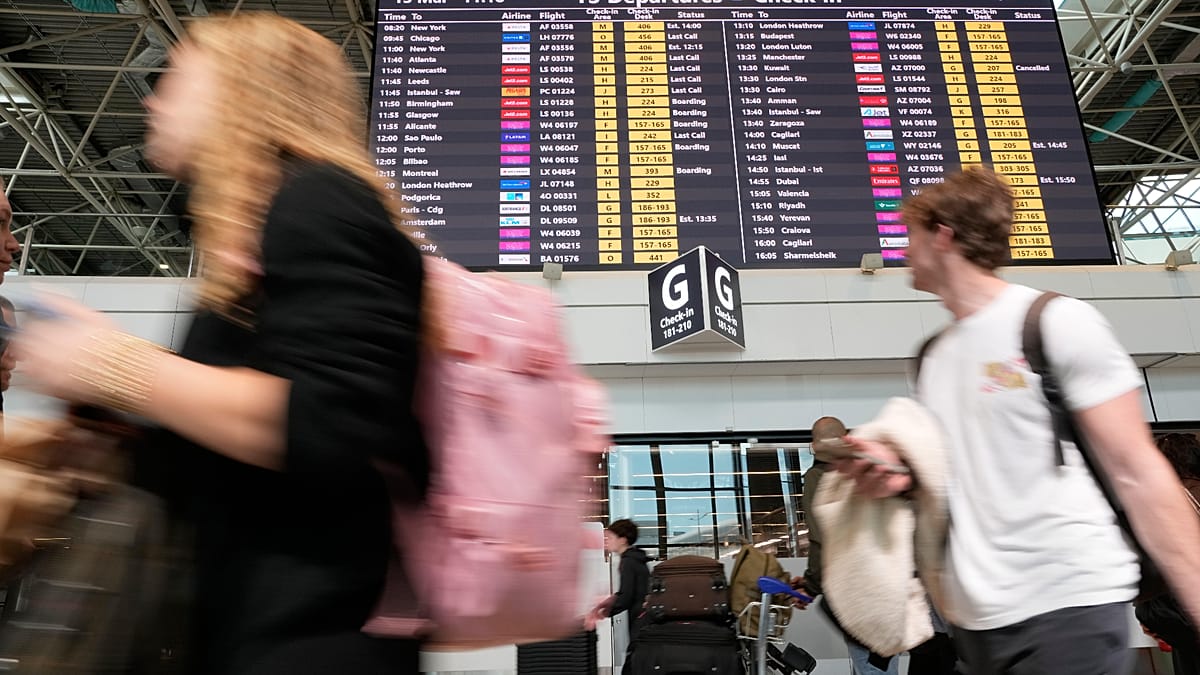
Passengers at Rome's Fiumicino Airport faced significant delays and cancellations on Friday after a technical fault struck the data-transmission network that underpins Italy's nationwide air traffic control system. The disruption, which began in the morning, quickly rippled through the country's busiest hub, leaving travellers stranded and airlines scrambling to adjust schedules.
Technical fault halts operations
The glitch affected the network that relays flight plans and radar data between air traffic control centres, forcing controllers to revert to slower, manual procedures. While safety was not compromised, the reduced efficiency led to a backlog of departures and arrivals at Fiumicino, with knock-on effects at other Italian airports.
Italy's civil aviation authority, ENAC, confirmed the issue and said technicians were working to resolve it. The exact cause of the fault has not yet been disclosed, but similar incidents in the past have been traced to software updates or hardware failures in the national air traffic management infrastructure.
By mid-afternoon, some flights were being cleared for take-off again, but the disruption had already forced dozens of cancellations. Airlines, including ITA Airways and Ryanair, advised passengers to check their flight status before heading to the airport.
Wider impact on European travel
The knock-on effects were felt beyond Italy's borders, as delayed departures from Fiumicino caused late arrivals at other European hubs. Travellers connecting through Rome to destinations across the continent faced missed connections and extended layovers.
This incident comes at a time when European air travel is already under strain, with staffing shortages and technical issues affecting several national air traffic control providers. The European air traffic management network, coordinated by Eurocontrol, has been working to improve resilience, but Friday's events highlight the fragility of the system.
Italy's air traffic control infrastructure has faced scrutiny in recent years, with calls for modernisation. The country's recent glitches have raised questions about the reliability of the network, which is operated by ENAV, the state-owned company responsible for air traffic services.
Passenger rights and compensation
Under EU regulations, passengers affected by flight cancellations or long delays may be entitled to compensation, depending on the circumstances. However, technical faults are often classified as extraordinary circumstances, which can limit airlines' liability.
Consumer groups have urged passengers to document their experiences and submit claims where appropriate. The Italian civil aviation authority has said it will monitor the situation and ensure that airlines comply with their obligations.
For now, travellers are advised to stay in contact with their airlines and allow extra time for their journeys. The disruption is a reminder of how dependent modern air travel is on the seamless flow of data, and how quickly a single technical failure can cascade across the continent.
As Europe's skies become increasingly congested, the need for robust and resilient air traffic management systems has never been more critical. Friday's events at Fiumicino serve as a cautionary tale for the entire industry.