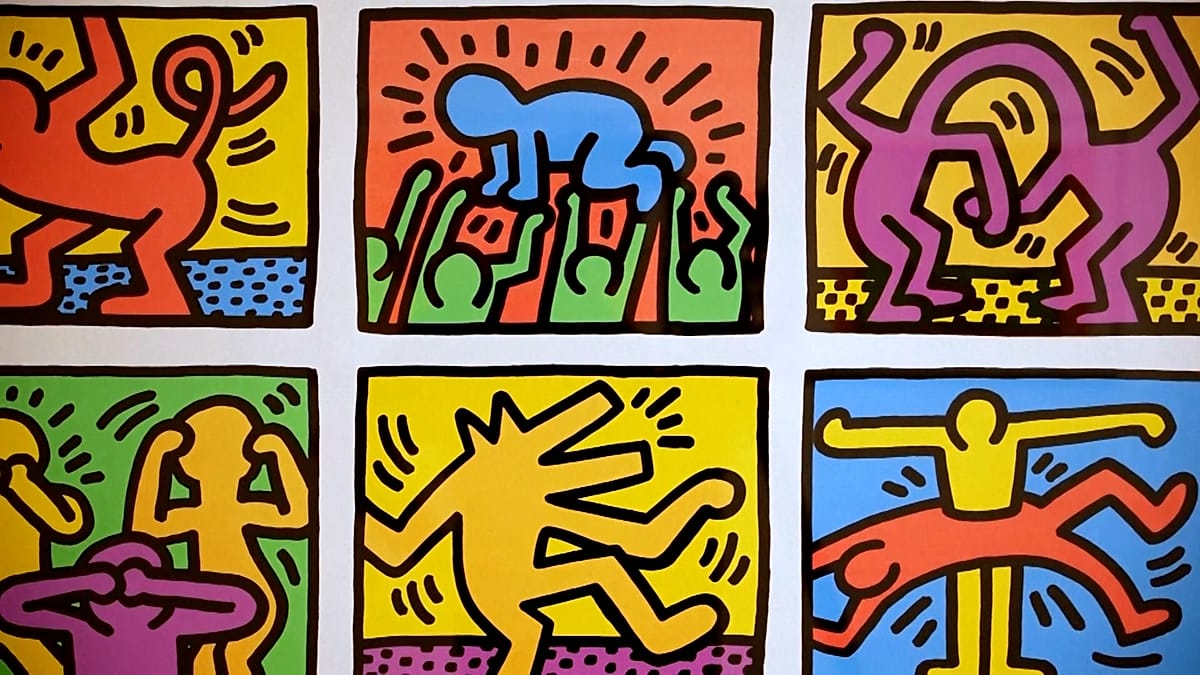
Rome's Palazzo Braschi is now hosting a comprehensive retrospective of Keith Haring, the American pop artist whose bold, graphic style became synonymous with 1980s New York. Titled 'Keith Haring: Retrospect', the exhibition brings together more than 140 works, tracing his evolution from subway graffiti to large-scale public art and political statements.
Haring first gained attention in the early 1980s by drawing with white chalk on the black paper panels used for advertisements in New York's subway stations. These 'Subway Drawings', as they came to be known, are featured prominently in the show, offering visitors a glimpse of the artist's raw, spontaneous energy. The exhibition also includes the iconic spray-painted panels he created in 1984 along Manhattan's FDR Drive, a series that captured the vibrant, sometimes chaotic spirit of the city.
Activism and legacy
Beyond the visual punch of his imagery, Haring was deeply engaged with the social and political issues of his time. His work often addressed themes of AIDS awareness, apartheid, and the dangers of drug abuse, reflecting his belief that art should be accessible and meaningful. The retrospective includes pieces that highlight this activism, from posters and murals to his monumental 'Altarpiece: Life of Christ', a triptych created in the final year of his life, which blends religious iconography with contemporary commentary.
Haring's influence extends well beyond the art world. His visual language—dancing figures, radiant babies, barking dogs—has permeated fashion, design, and popular culture, making him one of the most recognizable artists of the late 20th century. The Rome exhibition offers a chance to see the breadth of his output in one place, from small sketches to large-scale installations.
The show is organized in collaboration with the Keith Haring Foundation and includes loans from major museums and private collections. It provides a chronological journey through his career, starting with his early experiments in New York's downtown scene and culminating in his later, more reflective works. Curators have also included archival material, such as photographs and videos, to contextualize his practice within the vibrant cultural milieu of the era.
For those unable to travel to Rome, the exhibition's extended run—until 11 April 2027—makes it a significant draw for cultural tourism in Italy. It also coincides with a broader European interest in pop art and its legacy, as seen in recent retrospectives in other capitals. The show is a reminder of how art can transcend borders and speak to universal human experiences.
As Haring once said, "Art is for everybody." This retrospective embodies that ethos, inviting both longtime fans and newcomers to engage with a body of work that remains as urgent today as it was decades ago. Whether you're drawn to the energy of his subway drawings or the depth of his later altarpieces, the exhibition offers a powerful encounter with an artist who never stopped pushing boundaries.
The Museo di Roma at Palazzo Braschi, located in the heart of the city, provides an elegant setting for this vibrant display. Visitors can combine the exhibition with a stroll through nearby Piazza Navona or the historic center, making it a perfect cultural outing. The show is expected to attract art lovers from across Europe and beyond, cementing Rome's status as a key destination for contemporary art.