Latvia has launched a new security operation, codenamed “Vilkatis” (Werewolf), to reinforce its eastern border after a sharp increase in irregular migration from Belarus. Prime Minister Andris Kulbergs announced the initiative on Tuesday, framing it as a direct response to what Riga describes as a coordinated hybrid threat from Minsk and Moscow.
The announcement came on the same day Latvian border guards reported detecting 15 people who had crossed into the country through an underground tunnel dug from Belarus. The incident underscores the evolving tactics used by migrants and the authorities tasked with stopping them.
Operation Werewolf: a broader security response
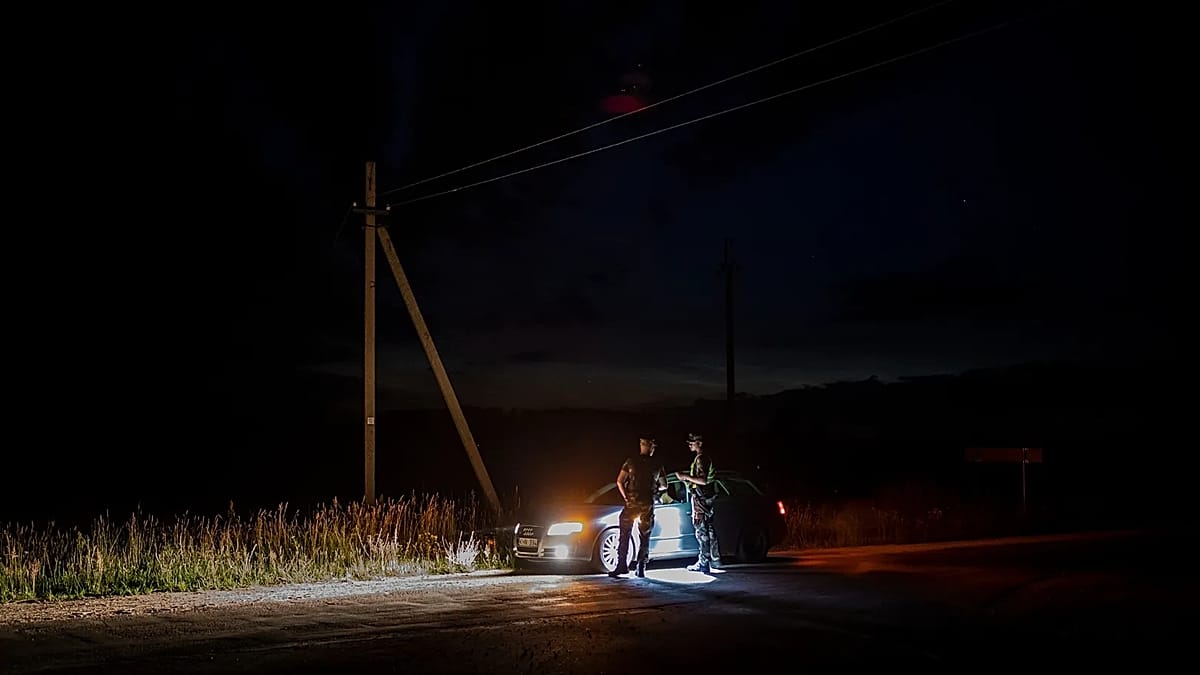
Under the new operation, Latvia’s armed forces will play a larger role in supporting border guards, providing additional personnel and logistical assistance. Authorities will also expand the use of drones, helicopters, and fixed-wing aircraft to monitor the 173-kilometre frontier with Belarus, and will step up vehicle checks on roads in the eastern border region to disrupt secondary migration flows.
“It is now the fifth year since hostilities began and Russia has been using Latvia’s border as an element of hybrid warfare,” Kulbergs said at a press briefing on Tuesday. His remarks echo a growing consensus among Baltic officials that migration pressure is being weaponised by Russia and Belarus to destabilise NATO’s eastern flank.
The operation also aims to improve coordination among Latvia’s security services and with neighbouring countries. Riga is seeking tighter cooperation with Lithuania, Estonia, and Poland to curb illegal crossings and prevent migrants from moving deeper into the EU.
A sharp spike in crossings
The shift in migration routes toward Latvia became evident in July, just months before the country’s parliamentary elections on 3 October. On a single day in mid-July, Latvian border guards recorded 111 attempted illegal crossings from Belarus. By comparison, Lithuania—which shares a 679-kilometre border with Belarus, nearly four times longer—reported just two attempted crossings on the same day, while Poland recorded none the previous day.
The numbers highlight how quickly pressure can move along the EU’s eastern frontier. For Latvia, the surge is not just a border management issue but a security challenge with broader implications for the bloc.
Illegal migration from Belarus first spiked in 2021, after President Aliaksandr Lukashenka threatened to flood neighbouring countries with migrants and drugs in retaliation for EU sanctions. Since then, the situation has ebbed and flowed, but the recent increase suggests Minsk is again using migration as a tool of coercion.
Latvia’s response reflects a wider European trend toward securitised border policies. As security-first politics have come to define EU migration policy, member states are increasingly investing in physical barriers, surveillance technology, and military support to manage their external borders.
The Baltic states have been particularly vocal about the threat from Belarus and Russia. In recent months, Swedish security services disrupted a Russian influence operation, highlighting the broader intelligence challenge facing the region. Latvia’s move to bolster its border is part of a larger effort to counter hybrid tactics that extend beyond migration.
Kulbergs’ government has also sought to draw attention to the role of Belarusian state media in stoking tensions. Belarus’s ban on Euronews and its designation of the outlet as “extremist” have been cited by EU officials as evidence of Minsk’s fear of independent reporting. The EU has backed Euronews in response, underscoring the bloc’s commitment to press freedom in the face of authoritarian pressure.
For Latvia, the immediate priority is to prevent further illegal crossings and to send a clear signal that its border is not porous. The operation “Werewolf” is a demonstration of that resolve, but it also raises questions about the long-term sustainability of such measures and the need for a coordinated EU approach to migration from Belarus.
As the situation evolves, Latvia’s experience may offer lessons for other member states facing similar pressures. The country’s willingness to deploy military assets and advanced surveillance reflects a pragmatic response to a persistent threat, but it also underscores the delicate balance between security and humanitarian obligations.