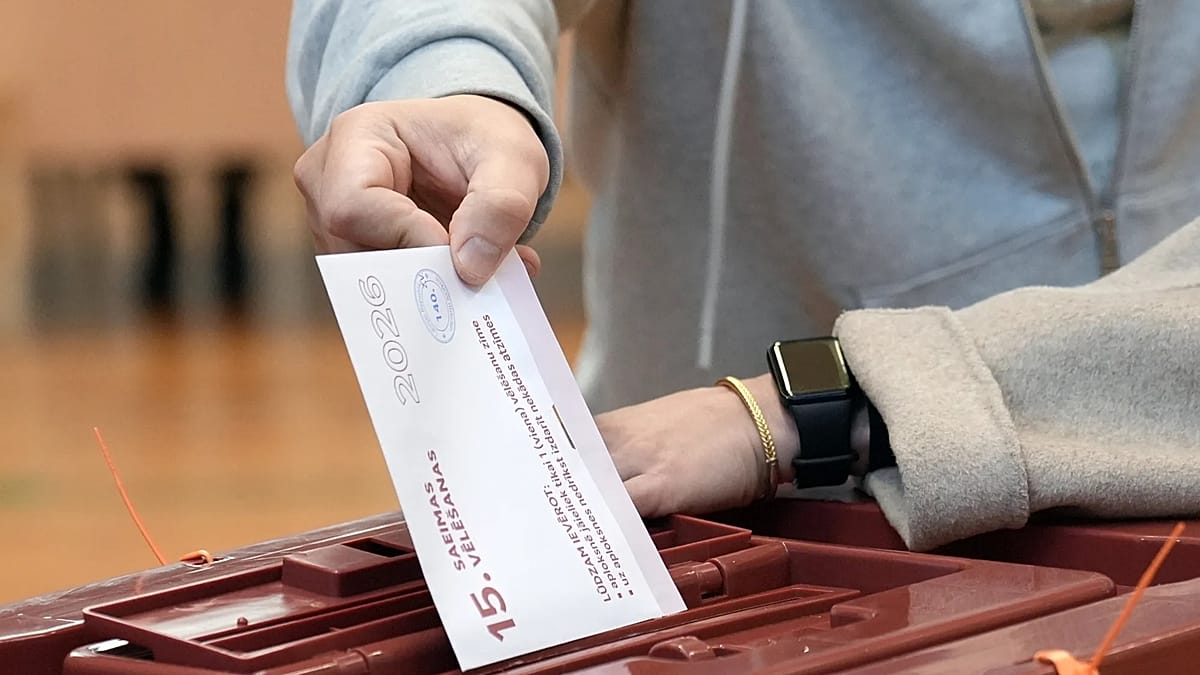
Latvia's centre-right ruling party, led by Prime Minister Andris Kulbergs, has secured a decisive victory in the Baltic state's parliamentary election, according to preliminary results released on Sunday. With over 99.9% of ballots counted, the United List party garnered 35.4% of the vote, state television reported.
In the 100-seat Saeima, the United List will hold 42 seats—a record for any party since Latvia regained independence from the Soviet Union in 1991. The result cements a pro-European and pro-Ukrainian trajectory for the country, which shares a 214-kilometre border with Russia.
Kulbergs, who took office only in May, called the outcome "higher than expected" and consistent with exit polls. "That means people truly want change," he said, adding that the mandate reflects a desire for "economic growth" and "a future for (Latvia's) children."
However, his coalition will not survive in its current form. One junior partner appeared to lose all its seats, while others underperformed relative to pre-election forecasts.
Populist surge amid security fears
Despite the ruling party's strong showing, populist forces also made significant inroads, buoyed by support from Latvia's Russian-speaking minority, which constitutes roughly a third of the population. The campaign was dominated by anxieties over neighbouring Russia and the rising cost of living.
Security remains the central issue in Latvian politics, more than four years after Russia's full-scale invasion of Ukraine. As a NATO and EU member since 2004, Latvia views Russia as its principal security threat and has sharply increased defence spending in response.
"Because we are the external border of Europe, we must have a strong economy... a strong border region," Kulbergs said. "That is the main task."
Beyond security, voters were concerned about high living costs, low wages, an overstretched healthcare system, and a long-term population decline that has shrunk the country's inhabitants by nearly a third since independence.
Most parties expected to enter parliament support both elevated military expenditure and continued aid to Kyiv. The exception is Sovereign Power, a party that opposes military assistance to Ukraine and further defence spending increases. Having campaigned on cost-of-living issues, it looked set to finish third, though critics label it pro-Russian, and mainstream parties have ruled out cooperation.
Latvia First, a conservative party led by a property magnate often compared to US President Donald Trump, appeared poised for second place. Both populist parties benefited from shifting voting patterns among the Russian-speaking minority, which had long rallied behind the Harmony party—once the country's largest and broadly perceived as pro-Russia.
The election outcome underscores a broader European trend: while mainstream pro-European parties retain power, populist movements are gaining traction, often by tapping into economic grievances and security fears. As Latvia's election showed, the balance between stability and discontent remains delicate.
For Latvia, the immediate challenge is forming a stable government that can address economic pressures while maintaining a firm stance on defence. The country's strategic position as NATO's northeastern flank means its policies resonate beyond its borders, particularly in other European states facing similar geopolitical dilemmas.
As Kulbergs prepares to form a new coalition, he will need to navigate a fragmented parliament where populist voices are louder than ever. The coming weeks will reveal whether the pro-European consensus can hold in the face of rising scepticism.