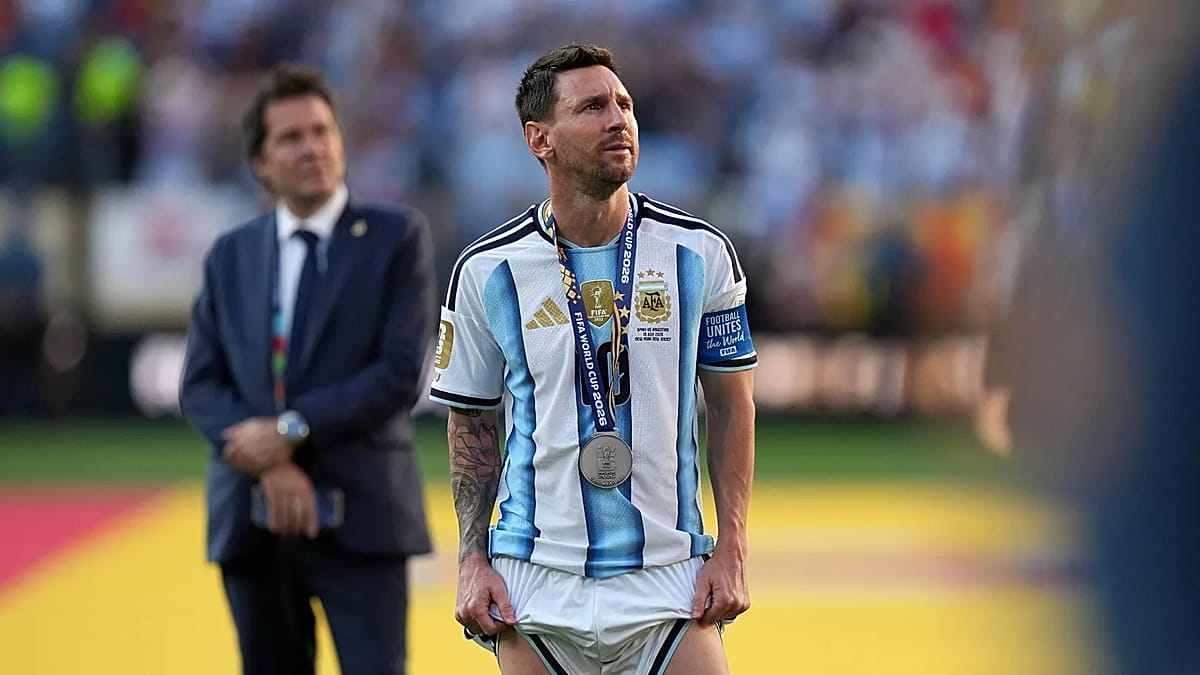
Lionel Messi, the Argentine forward widely considered one of the greatest footballers of his generation, has announced his retirement from international football. The 38-year-old, who currently plays for Inter Miami, confirmed the news in an emotional Instagram post, saying the decision "hurt" but that he knew it was the right time to step aside from the national team.
"I swear to you that I've always given it my all—not just in recent years, but in the past as well—and I've always fought hard and given everything I had for this jersey, to bring you joy and make you proud to be Argentine through football," he wrote. He also thanked fans and his family for their unwavering support throughout his career.
"I've given it my all; I have nothing left to give, and besides, there are some really talented young players coming up who deserve their spots," he added.
The announcement comes just weeks after the death of his father, Jorge Messi, which had prompted the former Barcelona and Paris Saint-Germain star to reconsider his future with the national side. The loss appears to have been a decisive factor in his decision to call time on a glittering international career.
A career defined by perseverance and triumph
For years, Messi's international career was marked by near-misses and heartbreak. Despite dominating at club level, a major trophy with Argentina seemed elusive. However, that narrative changed dramatically in the 2020s. He led Argentina to back-to-back Copa América titles in 2021 and 2024, and in 2022 he finally lifted the World Cup in Qatar after a dramatic penalty shootout victory over France—a moment that cemented his legacy as one of the sport's all-time greats.
Messi came close to adding another World Cup to his collection at the 2026 tournament, held across the United States, Canada, and Mexico. He guided Argentina to the final, where they were narrowly beaten 1-0 by Spain. That defeat, coupled with the emotional weight of his father's passing, seems to have convinced him that the time had come to pass the torch.
His retirement marks the end of an era for Argentine football, but it also opens the door for a new generation of players. Messi himself acknowledged this, noting the emergence of talented youngsters who "deserve their spots." The national team will now look to build on the foundations he helped lay, with a squad that has already shown its quality on the world stage.
Messi's impact extends far beyond Argentina. Across Europe, where he spent two decades at Barcelona and Paris Saint-Germain, his influence on the game is profound. His departure from the international scene will be felt by fans in every corner of the continent, from the terraces of Camp Nou to the streets of Paris. As European clubs continue to invest heavily in data analytics and youth development, Messi's legacy serves as a reminder of the enduring power of individual brilliance.
While his international career is over, Messi's club career continues. He remains a key figure at Inter Miami, where he has helped raise the profile of football in North America. For European supporters, his absence from the international stage will be a significant loss, but his body of work—both for club and country—will be studied and admired for generations to come.