For the world's 32 landlocked developing countries, geography is a heavy burden. According to the UN Food and Agriculture Organization (FAO), almost 57 per cent of their combined population of nearly 600 million cannot afford a healthy diet, and roughly one in six faces hunger. These nations must rely on transit routes through neighbouring states to reach global markets, a dependence that inflates costs for farmers, businesses, and consumers alike.
A 2025 UN study quantified the penalty: logistics costs per tonne of imported goods are 75 per cent higher in landlocked developing countries than in transit developing countries—the coastal nations through which their trade flows. For exports, the gap is 63 per cent. These figures framed discussions at the Global Technical Forum on Food Security, held in early October in Tashkent and co-organised by the FAO and Uzbekistan's Ministry of Agriculture.
Transport costs and food security
The impact of geography extends far beyond shipping fees. Food imports, fertiliser, and fuel become pricier when goods must cross extra borders or travel longer distances. "The countries that will always be the most affected are the poorest countries, because those are the ones that import food, and their food import costs will increase," Máximo Torero, the FAO's chief economist, told Euronews.
For agricultural exporters, delays also create risks. Fresh fruit and vegetables can lose quality or spoil before reaching buyers, cutting into farmers' earnings and amplifying losses along supply chains. Torero also pointed to climate change and population growth as long-term pressures on food production. He cited disruptions affecting the Black Sea and the Strait of Hormuz, alongside drought-related restrictions on shipping through the Panama Canal, as examples of threats to international agricultural trade. These are not abstract concerns for Europe, which depends heavily on grain imports from the Black Sea region and has seen drone strikes near Romanian waters raise alarm about maritime security.
Uzbekistan: High production, but continued reliance on imports
Uzbekistan is one of only two doubly landlocked countries in the world, the other being Liechtenstein. Neither has direct sea access, and all their neighbours are also landlocked. Agriculture, forestry, and fisheries accounted for roughly 19 per cent of Uzbekistan's GDP in 2024, according to the FAO. Despite its constraints, the country has made remarkable progress against hunger: the prevalence of undernourishment has stayed below 3 per cent over the past decade, down from about 20 per cent in 2000.
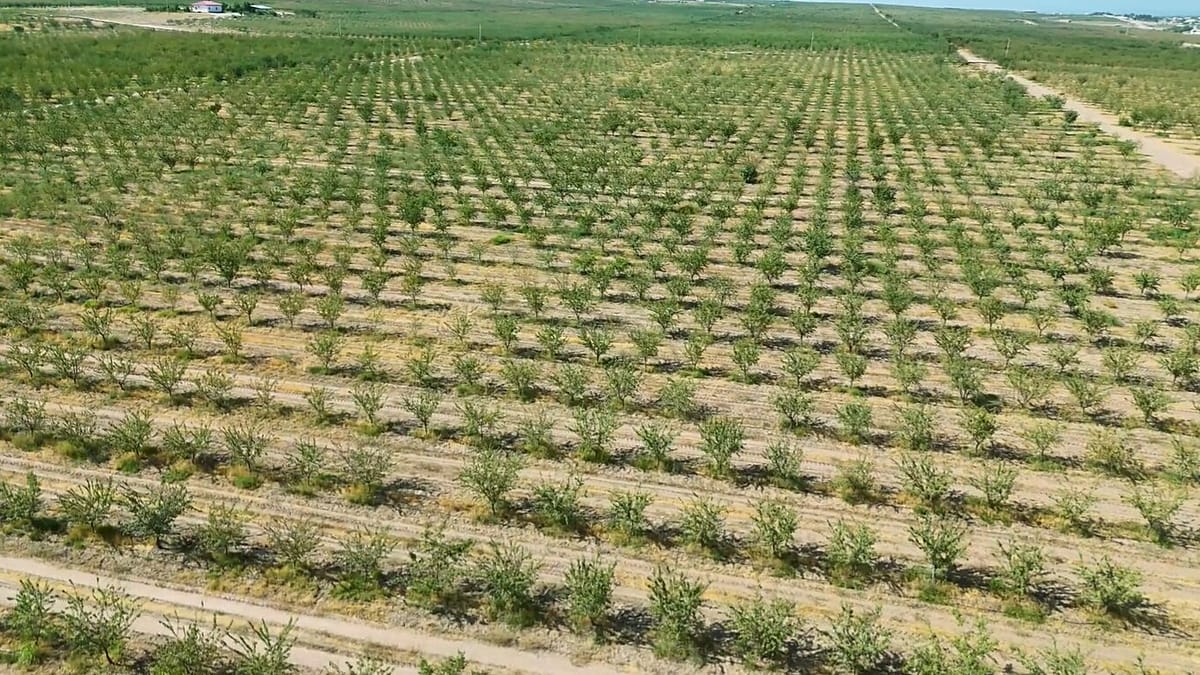
The FAO's July 2026 assessment forecast an above-average cereal harvest of approximately 9 million tonnes, including 7.3 million tonnes of wheat. Yet Uzbekistan's wheat and wheat flour import requirements are projected at 4.2 million tonnes for the 2026-2027 marketing year, with significant demand for high-quality wheat, particularly from neighbouring Kazakhstan. The figures illustrate that domestic output alone cannot eliminate the need for reliable cross-border trade.
"We are telling the world that we have moved from being 'landlocked' to 'land-linked'," Uzbekistan's Agriculture Minister Ibrokhim Abdurakhmonov told Euronews. "But this connectivity does not happen on its own. First and foremost, we need to work together to address our common challenges."
Water management and agricultural innovation
Transport connectivity is only part of the challenge. Agriculture across Central Asia depends heavily on irrigation, while several countries share limited water resources. "Our common challenges are particularly visible in Central Asia. First and foremost, there is the issue of water," Abdurakhmonov said.
Uzbekistan is proposing a regional initiative that brings together natural resource management, agricultural research, and new technology. The minister also outlined plans to strengthen knowledge-sharing and support the adoption of new farming methods. The FAO has identified water scarcity, land degradation, and climate change as the main challenges facing Uzbek agriculture. Its cooperation programme with Uzbekistan covers digital agriculture, biodiversity, and natural resource management.
However, increasing production does not automatically guarantee access to nutritious food. The FAO's global food security research highlights how processing, transport, and distribution costs influence consumer prices. But access also depends on household incomes and the support available when prices rise. "On food security, I think it's not a standalone goal but it's really part of a larger picture," Sabine Machl, the UN Resident Coordinator in Uzbekistan, told Euronews.
For Europe, the lessons are clear. The continent's own food security is intertwined with global supply chains and the stability of regions like the Black Sea. As energy disputes with Moscow continue to reverberate, the need for resilient trade routes and cooperative water management becomes ever more pressing. The challenges facing landlocked countries are not isolated; they are a bellwether for a world where climate change and geopolitical tensions increasingly test the limits of our interconnected food systems.