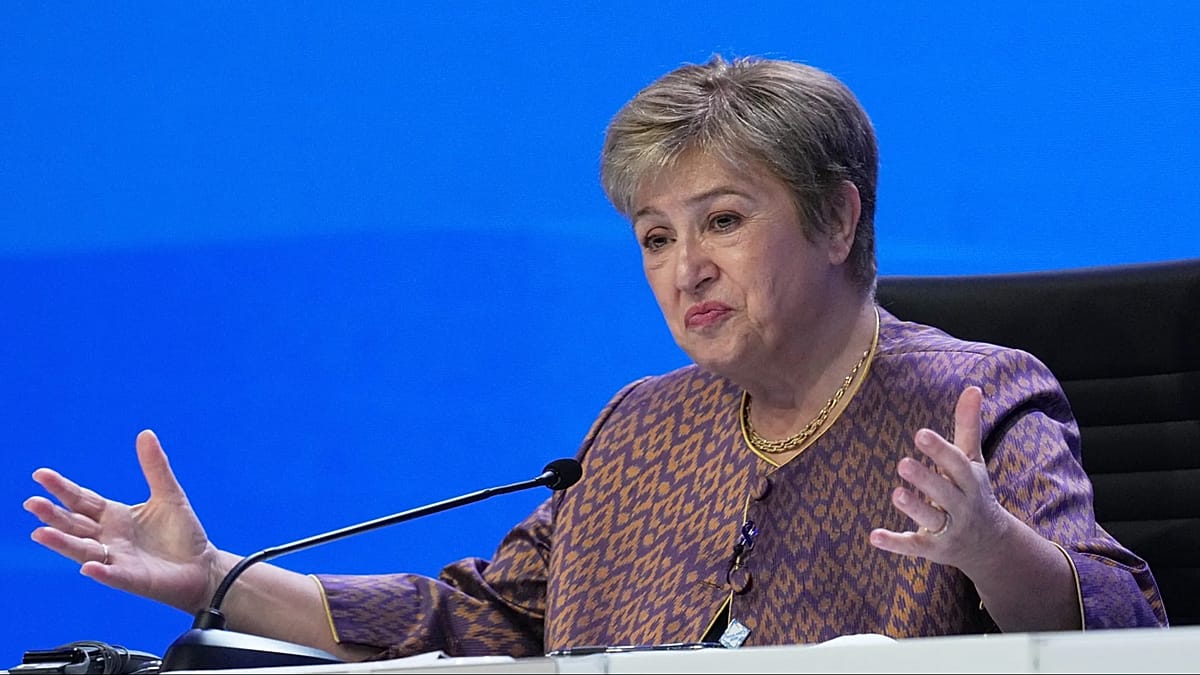
The International Monetary Fund has warned that attacks on Saudi Arabia could have significant economic repercussions worldwide, following a strike that damaged the headquarters of oil giant Aramco. Kristalina Georgieva, the IMF's managing director, stressed the kingdom's central role in global energy markets.
“In that sense, these developments have potentially negative spillovers for everybody, everywhere,” she said on Wednesday at the IMF and World Bank annual meetings in Bangkok.
Saudi Arabia's energy ministry reported that an administrative building at Aramco's headquarters in Dhahran was hit on Tuesday evening, causing a limited fire. No casualties were reported. Yemen's Iran-aligned Houthi rebels claimed responsibility, continuing a pattern of attacks on Saudi airports and infrastructure amid renewed fighting with a Saudi-led coalition.
According to a person with direct knowledge, the top three floors of the building—including the office of chief executive Amin Nasser—were badly damaged. While operations at the complex continue, some employees have been told to work from home, and certain functions have been relocated to offices abroad.
Economic fallout and market reaction
The attack has already moved markets. Brent crude traded above $106 a barrel on Wednesday, and Aramco's shares slipped 0.5% in early trading. Air travel has also been disrupted, with Lufthansa suspending flights to Riyadh until at least 18 November.
Saudi Arabia's economy was already under strain from the ongoing Iran war and disrupted shipping through the Strait of Hormuz. The IMF projects a 3.3% contraction this year, followed by a recovery of 7.9% in 2027—though those forecasts were prepared before the latest escalation.
The recovery assumes a gradual reopening of the Strait of Hormuz from March 2027, with shipping returning to pre-war conditions by October. The kingdom's East-West pipeline, which carries oil to Yanbu on the Red Sea, has helped mitigate the impact compared with neighbouring countries.
Georgieva noted that Saudi efforts to diversify its economy beyond oil have also provided some buffer. However, she warned that poorer nations reliant on energy imports are among the most vulnerable to rising costs, and urged governments to support citizens facing higher food and energy bills.
The situation underscores the fragility of global supply chains and the interconnectedness of European economies with Middle Eastern energy markets. As diesel prices in Europe may climb amid the supply crunch, the ripple effects of such attacks are felt from Berlin to Brussels.
Meanwhile, the conflict continues to draw in regional actors, with Romania investigating a suspected drone strike on a tanker in the Black Sea, highlighting the broader security risks. European leaders have called for coordinated action, as Kallas warns the EU must act together ahead of a summit.
The IMF's warning serves as a stark reminder that instability in one region can have far-reaching consequences, affecting energy prices, trade routes, and economic growth across the globe.