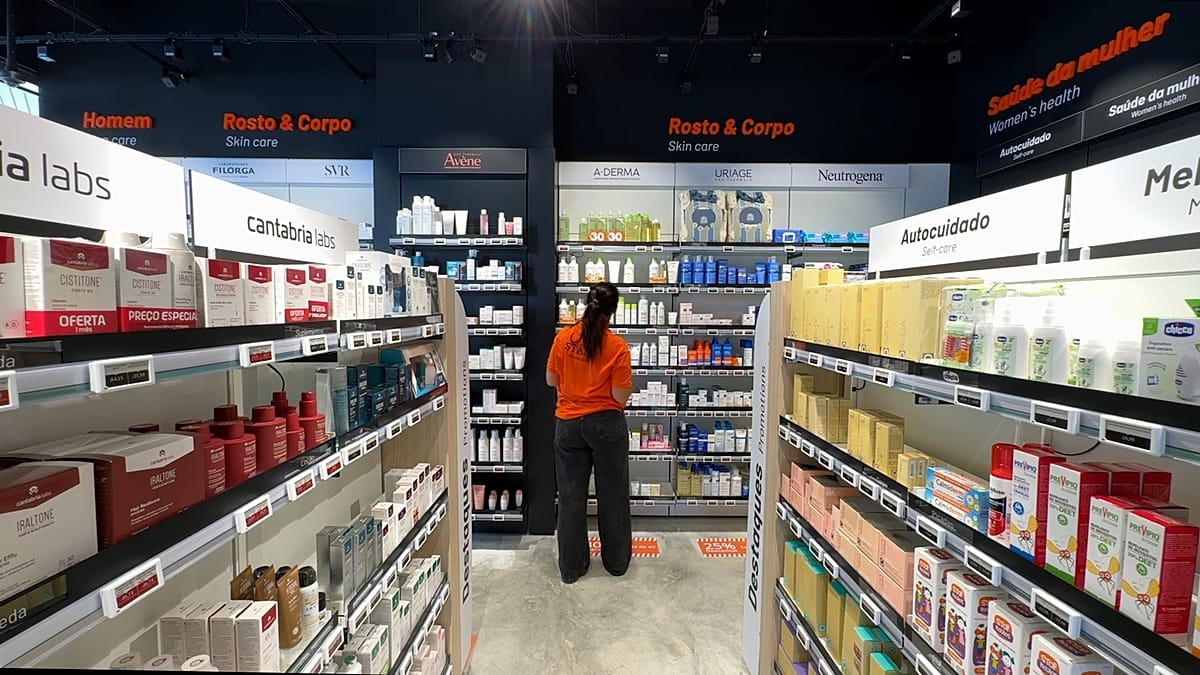
In Lisbon's Parque das Nações district, a new parapharmacy is redefining retail convenience: no queues, no checkout staff, and no human interaction beyond restocking. The store, named Pharma&Go, relies on a network of hundreds of cameras, sensors, and artificial intelligence to monitor customers and products, automatically charging their cards upon exit.
Pharmacist Catarina Dias, who runs the venture, explained the rationale: "More and more, we are investing in solutions that allow us to keep pharmacists and the professionals we have focused on the clinical side, and to reduce the time they spend on purely commercial tasks." The shop sells over-the-counter health and beauty products—items consumers can buy independently—and is open 24/7.
How the Autonomous Shop Works
The process is straightforward. Customers present a credit or debit card at the door to gain entry. Once inside, the card is linked to everyone who enters together. Shoppers pick their items and leave; the system automatically charges the card for the products taken. "There are no tills, no queues, no friction, no complications," Dias told Euronews.
The technology, developed by Sensei and Glintt Life, tracks each item from shelf to exit. Artificial intelligence determines which products have been picked up and ensures accurate billing. Dias noted that the error rate is below 2%, with most mistakes stemming from human behaviour rather than technical flaws. One example: a man held the door for a woman entering behind him, and the AI charged both purchases to his card, assuming they were together.
Since opening in November, the shop has seen steady growth in customer numbers. "Every month we have more customers than the month before. I think people are starting to lose their fear of this new technological solution," Dias said. The location was chosen to attract a younger, tech-savvy audience, but uptake has been broader. "It has been very interesting to see that the more experienced generations have also taken to them. People come in, even at 70 or 80, and already have a level of digital literacy that allows them to use the shop perfectly well," she added.
The 90-square-metre store was financed entirely with private funds. Dias expressed disappointment that a funding application under Portugal's Recovery and Resilience Plan (PRR) for AI and innovation was rejected as "not sufficiently innovative." Despite this, the project continues to evolve, refining its software with each customer interaction.
This autonomous model could signal a shift in European retail, particularly in sectors where convenience and efficiency are paramount. Similar concepts have emerged in other European cities, such as Amazon Go stores in London and Berlin, but Pharma&Go is the first fully autonomous parapharmacy on the continent. As Europe grapples with labour shortages and rising consumer expectations, such innovations may become more common.
For now, Lisbon's experiment offers a glimpse of a future where shopping is frictionless—and staff are free to focus on what matters most.