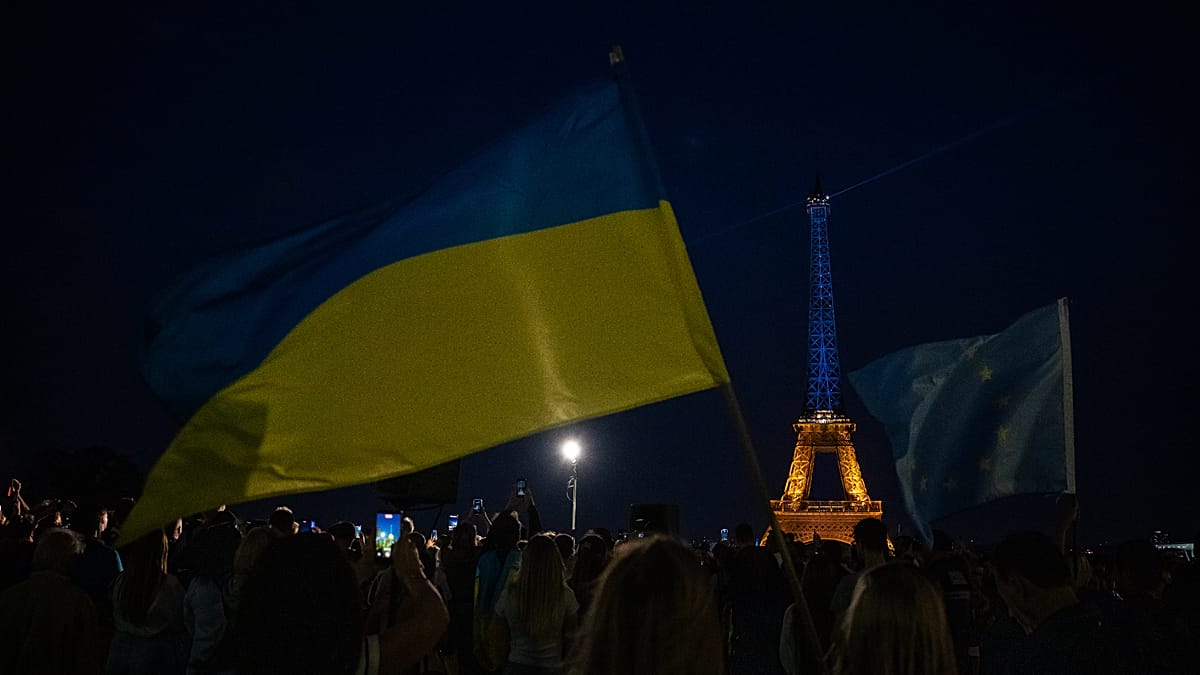
On Ukraine's Independence Day, two of Europe's most iconic landmarks—the UK Parliament in London and the Eiffel Tower in Paris—were bathed in blue and yellow, the colors of the Ukrainian flag. The coordinated illuminations served as a visual reminder of the continent's steadfast support for Kyiv as the war with Russia enters its third year.
A continent in solidarity
The displays were part of a broader wave of commemorations across Europe. In London, the Palace of Westminster's Gothic facades glowed against the night sky, while in Paris, the Eiffel Tower's iron lattice shimmered in alternating bands of blue and yellow. Both cities have been vocal supporters of Ukraine, hosting millions of refugees and providing significant military and humanitarian aid.
The choice of landmarks carries symbolic weight. The UK Parliament, the seat of British democracy, and the Eiffel Tower, a global symbol of French culture, together represent the unity of two of Europe's most influential nations. Their illumination on August 24 echoed similar gestures in previous years, but this year's commemoration comes at a critical juncture.
Ukraine's Independence Day marks the country's declaration of sovereignty from the Soviet Union in 1991. This year, the celebration is overshadowed by the ongoing Russian invasion, which has devastated cities, displaced millions, and strained global energy and food supplies. The reported Russian plans to call up 600,000 troops by 2027 underscore the long-term nature of the conflict.
European responses and debates
The illuminations also coincide with renewed debates within the European Union about how to support Ukraine financially. Several member states have revived a push to tap frozen Russian assets to fund Ukraine's reconstruction and military needs. The EU has already frozen billions of euros in Russian central bank assets, and discussions about their use have gained momentum as the war drags on.
Meanwhile, Russia has warned of massive strikes on Ukraine's power grid, a tactic that has previously caused widespread blackouts during winter months. The threat looms over the upcoming heating season, adding urgency to Western efforts to bolster Ukraine's air defenses.
In London, the illumination of Parliament was accompanied by a small ceremony attended by Ukrainian diplomats and British officials. Similar events took place in other European capitals, from Berlin to Warsaw, where municipal buildings and public squares were decorated in Ukrainian colors. The gestures, while symbolic, reflect a broader commitment that extends beyond rhetoric.
For many Ukrainians abroad, the sight of these landmarks in their national colors is a poignant reminder that they are not forgotten. "It's a powerful message," said Olena, a Ukrainian refugee now living in London, who watched the Parliament lights from across the Thames. "It tells us that Europe stands with us, not just in words but in visible, tangible ways."
As the war continues, such displays of solidarity are likely to persist. But European leaders are also grappling with the practical challenges of sustaining support, from rising energy costs to political fatigue. The EU's revived debate on using frozen Russian assets is a case in point, balancing legal constraints with the urgent need for funding.
For now, the blue and yellow glow over London and Paris serves as a beacon of hope—and a reminder of the stakes. As Ukraine marks another year of independence, the continent's landmarks stand as silent witnesses to a struggle that has reshaped European security and unity.