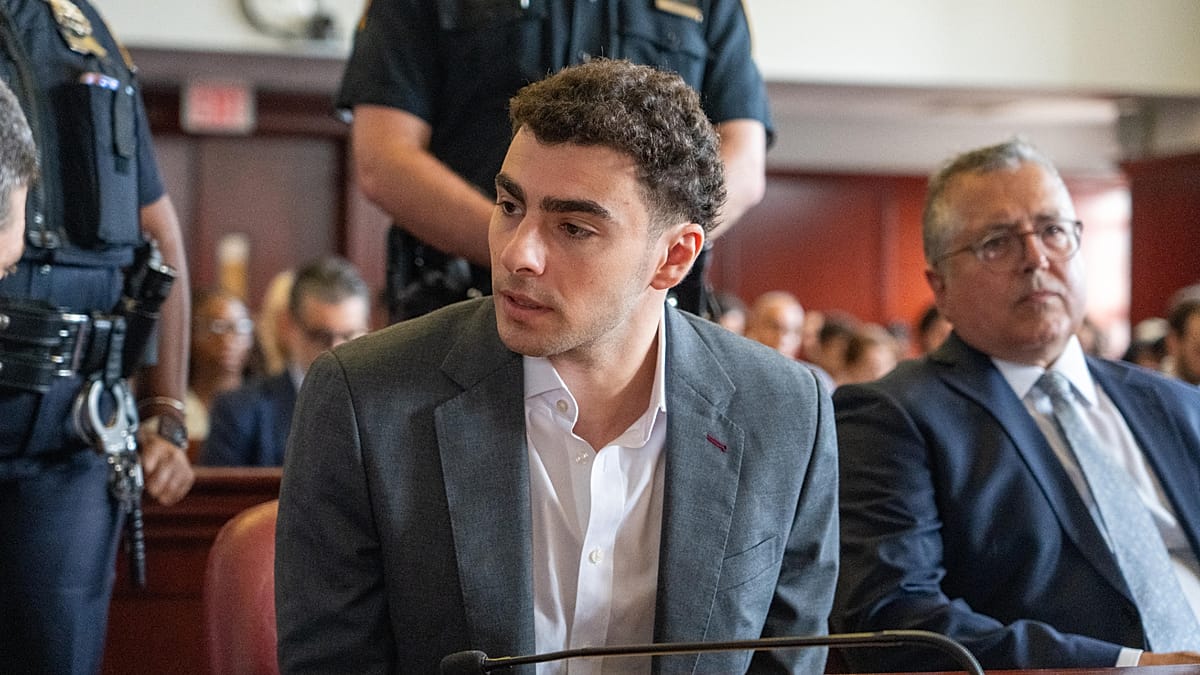
In a swift hearing at Manhattan federal court on Friday, Luigi Mangione admitted to the murder of Brian Thompson, the chief executive of UnitedHealthcare. The 28-year-old, appearing before US District Judge Margaret M. Garnett, stated plainly: “On the morning of December 4, I shot Mr Thompson in Manhattan and he died.”
Mangione also pleaded guilty to federal stalking charges, acknowledging that he had followed Thompson to an investor conference in 2024. He confessed to using a ruse—contacting the health insurer under the pretence of being an investor from a multibillion-dollar firm—to obtain details about the event before carrying out the attack.
The plea resolves one of two criminal cases against Mangione. Sentencing is scheduled for 18 December, and Judge Garnett asked whether he understood that he could spend the rest of his life in prison. Mangione replied neutrally: “Yes.”
Double jeopardy dispute
Mangione’s legal team is now seeking to have the separate New York state murder case dismissed, arguing that a federal conviction for the same killing violates constitutional protections against double jeopardy. Defence lawyer Karen Friedman said outside the court: “Mr. Mangione has accepted full responsibility for the death of Brian Thompson.” She contended that her client should not face two prosecutions over a “single tragic event.”
The case has drawn intense public attention, partly because of the circumstances of the shooting. Surveillance footage showed a masked gunman firing at Thompson from behind. Police reported that the ammunition bore the words “delay, deny, depose,” a phrase often used to criticise insurers for delaying or denying claims. Authorities also said Mangione’s private writings lambasted health insurers as greedy, turning him into a folk hero for some critics of the US healthcare system.
Mangione told the court that he had pursued Thompson “after years of enduring severe pain from a broken back and navigating the obstacles of the health insurance system.” Notably, police and UnitedHealthcare have confirmed that Mangione was never a customer of the company.
Born into a wealthy Maryland family and a graduate of the University of Pennsylvania, Mangione was arrested five days after the shooting at a McDonald’s in Pennsylvania. Thompson, an accountant by training, had spent two decades at UnitedHealth Group and became CEO of its insurance arm in 2021. He and his wife had two sons, who were in high school at the time of his death.
Both the federal and state cases could result in life imprisonment. A federal judge earlier this year dismissed additional charges that could have carried the death penalty. Mangione has previously complained about facing two trials, telling a judge in February: “It’s the same trial twice. One plus one is two. Double jeopardy by any commonsense definition.”
Under New York law, a state prosecution may be barred if a federal case ends in a guilty plea or a jury is sworn in. State prosecutors, however, objected in a letter last month to the possibility that a federal plea could wipe out the state case.
Judge Garnett has ruled against the defence on several points, including allowing evidence from Mangione’s backpack—a 3D-printed pistol and a notebook in which he allegedly described his intent to kill an insurance executive. In June, Mangione’s lawyers briefly indicated they would pursue a psychiatric defence in the state case but reversed course the next day. That defence, based on extreme emotional disturbance, is not available in federal court.
The case has resonated far beyond the United States, echoing debates in Europe about healthcare access and corporate power. While the legal proceedings are American, the underlying issues—insurance denial, public anger at executives, and the ethics of vigilantism—have parallels in European countries where private health systems and social safety nets are under strain. As the story develops, European readers may find it a sobering reminder of the consequences when healthcare becomes a battleground.