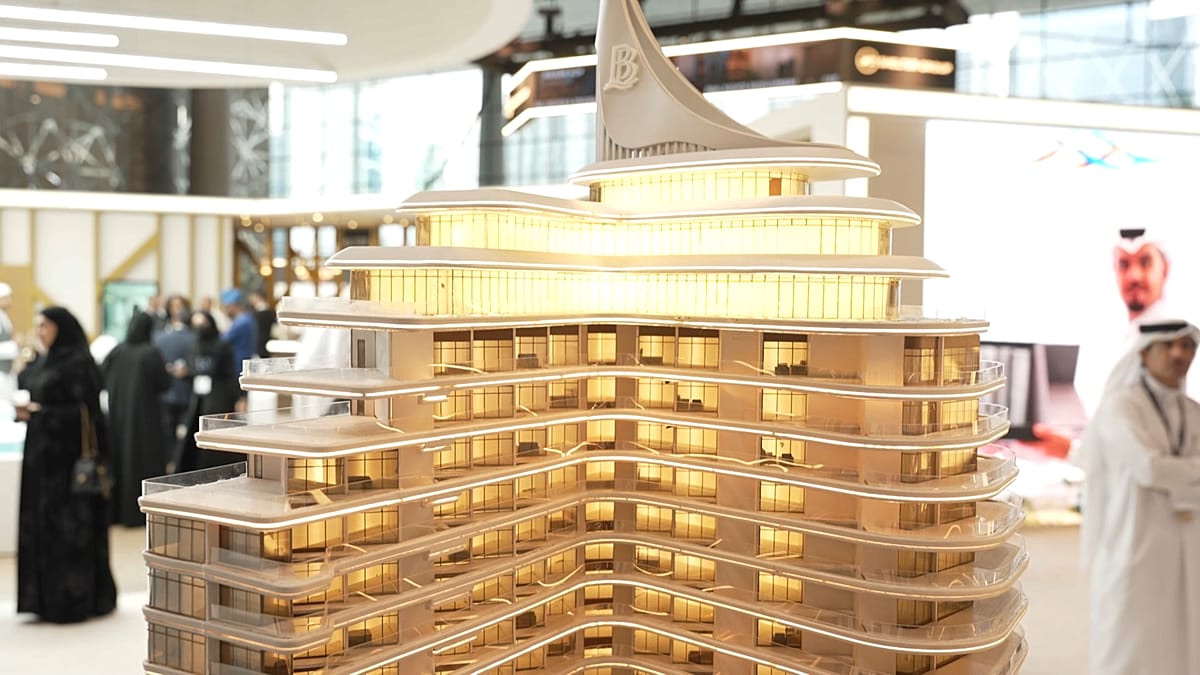
Doha's Cityscape Qatar exhibition, which wrapped up this week, offered a detailed look at how Qatar is shaping its urban future. With 70 exhibitors from more than 15 countries and 400 projects on display, the event drew developers, architects, and investors from across the Gulf and beyond. Among the most talked-about plans were two residential towers destined for Lusail Marina, a district that has become a symbol of Qatar's post-World Cup ambitions.
The twin towers, which will house more than 600 apartments, are part of a broader push to create dense, mixed-use neighbourhoods along Lusail's waterfront. The developer behind the project stressed that early cost modelling was key to keeping prices competitive. By locking in construction budgets before detailed design, the team aims to avoid the overruns that have plagued similar megaprojects in the region. This approach is particularly relevant as Qatar's real estate market matures and buyers become more price-sensitive.
Designing for the heat
Elsewhere on the Lusail waterfront, architects presented a different kind of challenge: how to make a shopping street comfortable enough to walk in summer, when temperatures routinely exceed 40°C. Their solution combines physical shading, water features, and mechanical cooling to create a microclimate that encourages pedestrians. The street is designed to link residential blocks with retail and leisure spaces, reducing the need for car trips and fostering a more European-style street life—albeit one adapted to the Gulf's extreme climate.
The emphasis on walkability reflects a wider trend in Gulf urbanism, where planners are moving away from car-centric layouts toward more human-scale environments. For European observers, the parallels with efforts in cities like Copenhagen or Amsterdam are striking, though the technical solutions differ. In Lusail, the challenge is not cold winds but relentless sun, and the design team has drawn on lessons from other hot-weather cities, including those in Spain and Italy.
Beyond the physical infrastructure, the exhibition also addressed the softer side of urban living. Developers fielded questions about the placement of schools and hospitals, the reliability of landlords, and the management of common areas. One notable innovation was an AI-powered search tool that lets prospective buyers or renters describe their ideal school district and commute, then suggests neighbourhoods that balance both. This kind of digital assistance is becoming standard in mature property markets, and its appearance in Doha signals a shift toward more transparent, data-driven decision-making.
The Lusail projects are part of a larger story of Qatar's economic diversification, which has accelerated since the 2022 World Cup. The country is investing heavily in infrastructure, tourism, and technology, and events like Cityscape Qatar serve as a platform to attract international partners. For European firms, the Gulf remains a lucrative market, despite the challenges of doing business in a region with different regulatory and cultural norms. The EU's recent defence talks with Qatar underscore the deepening ties between Brussels and Doha, and the construction sector is likely to benefit from this diplomatic momentum.
However, the Gulf's building boom is not without its critics. Environmental groups have long pointed to the carbon footprint of air-conditioned outdoor spaces, and the cooled shopping street in Lusail is likely to draw scrutiny. Developers argue that the energy used is offset by reduced car travel and that the technology is becoming more efficient. They also note that similar systems are already in use in places like Singapore and Dubai, and that the lessons learned can be shared globally.
For now, the focus is on delivering the projects on time and on budget. The twin towers at Lusail Marina are expected to break ground within the next year, with completion slated for 2027. The shopping street, which will run parallel to the marina, is set to open in phases, with the first section scheduled for 2026. If successful, these developments could become a template for other Gulf cities looking to balance growth with liveability.
As Qatar continues to position itself as a hub for business and tourism, events like Cityscape Qatar are more than just trade shows—they are a window into the country's long-term vision. For European investors and urban planners, the innovations on display offer both inspiration and a reminder of the region's unique challenges. Whether the cooled street becomes a model for sustainable design or a cautionary tale about energy consumption remains to be seen, but it is certainly a conversation starter.
In the meantime, Doha's property market is showing signs of resilience. According to recent data, apartment prices in Lusail have stabilised after a post-World Cup dip, and demand from expatriates remains steady. The new towers, with their mix of one- to four-bedroom units, are aimed squarely at this demographic. The developer says that pre-sales have been encouraging, though they declined to give specific figures.
For those unable to attend the exhibition, the projects can be explored through virtual tours and detailed online brochures. The AI search tool, which was demonstrated at the event, is already live on the developer's website, and early users have praised its ability to cut through the noise of listings. As the Gulf's property market becomes more sophisticated, such tools are likely to become the norm rather than the exception.
Cityscape Qatar may be over, but the conversations it sparked will continue. From construction costs to climate adaptation, the themes discussed in Doha resonate far beyond the Gulf. For Europe, which faces its own housing challenges, there are lessons to be learned—and perhaps a few to share.