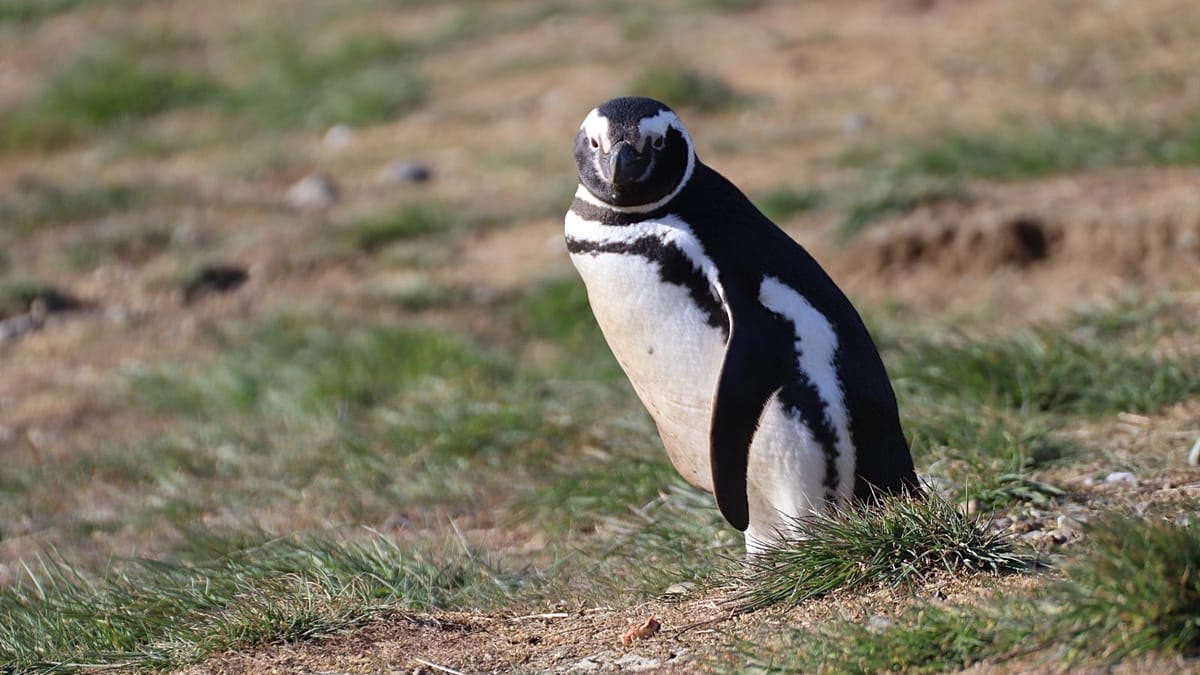
Scientists have turned Magellanic penguins into living environmental monitors, revealing that even the most remote corners of the planet are not immune to contamination by per- and polyfluoroalkyl substances (PFAS). A new study, published in Earth: Environmental Sustainability, found that 90 percent of the penguins sampled along the Patagonian coast of Argentina carried traces of these synthetic chemicals, including newer compounds designed to replace phased-out variants.
The research, led by the University of California, Davis and the State University of New York at Buffalo, deployed a novel, non-invasive sampling method. During the 2022–2024 breeding seasons, the team fitted 54 Magellanic penguins with small silicone leg straps. These passive samplers absorb chemicals from the water, air, and surfaces the birds encounter over a few days. Once retrieved, the bands were analyzed at the University at Buffalo, where PFAS were detected in more than 90 percent of them.
PFAS: A Persistent Global Problem
PFAS, a group of over 10,000 synthetic chemicals, are used to make products water- and grease-resistant, from non-stick cookware to food packaging and clothing. Their extreme stability—taking more than 1,000 years to degrade naturally—has earned them the nickname “forever chemicals.” They have been found on Mount Everest, in human blood, and in deep-sea species off New Zealand. In Europe, concerns over PFAS have prompted regulatory action, with the European Chemicals Agency considering a broad ban on the substances. The European Union has already restricted some PFAS in firefighting foams and consumer goods, but the chemicals remain widespread.
The study detected a mix of older legacy PFAS and newer replacement chemicals, such as GenX, which were introduced as safer alternatives. “The presence of GenX and other replacement PFAS – chemicals typically associated with nearby industrial sources – shows that these compounds are not staying local but are reaching even the most remote ecosystems,” said senior author Diana Aga. “This raises important concerns that newer PFAS, despite being designed as safer alternatives, are still persistent enough to spread globally and pose exposure risks to wildlife.”
Chronic exposure to PFAS has been linked to serious health issues in humans, including certain cancers, reduced fertility, and immune system problems. The effects on wildlife remain less understood, but the findings suggest that even species far from industrial centers are at risk. The researchers plan to expand their “environmental detective” work by fitting cormorants—which can dive to depths of over 76 meters—with similar samplers to study PFAS in deeper marine environments.
“By turning penguins into sentinels of their environment, we have a powerful way to communicate issues relevant for wildlife health – and more broadly, for the conservation of marine species and our oceans,” said co-author Marcela Uhart.
Europe, with its extensive coastline and diverse marine ecosystems, faces similar challenges. The continent has been grappling with the legacy of PFAS contamination, as highlighted in Europe Confronts the Enduring Threat of PFAS 'Forever Chemicals'. The new study underscores that even remote regions like Patagonia are not safe, reinforcing the need for global cooperation to address the spread of these persistent pollutants.