In the Maldives, a nation acutely vulnerable to rising seas, a new generation is refusing to accept a future of loss. Young activists, armed with kayaks and a sense of purpose, are challenging the very developments that threaten their islands' ecosystems and their cultural identity.
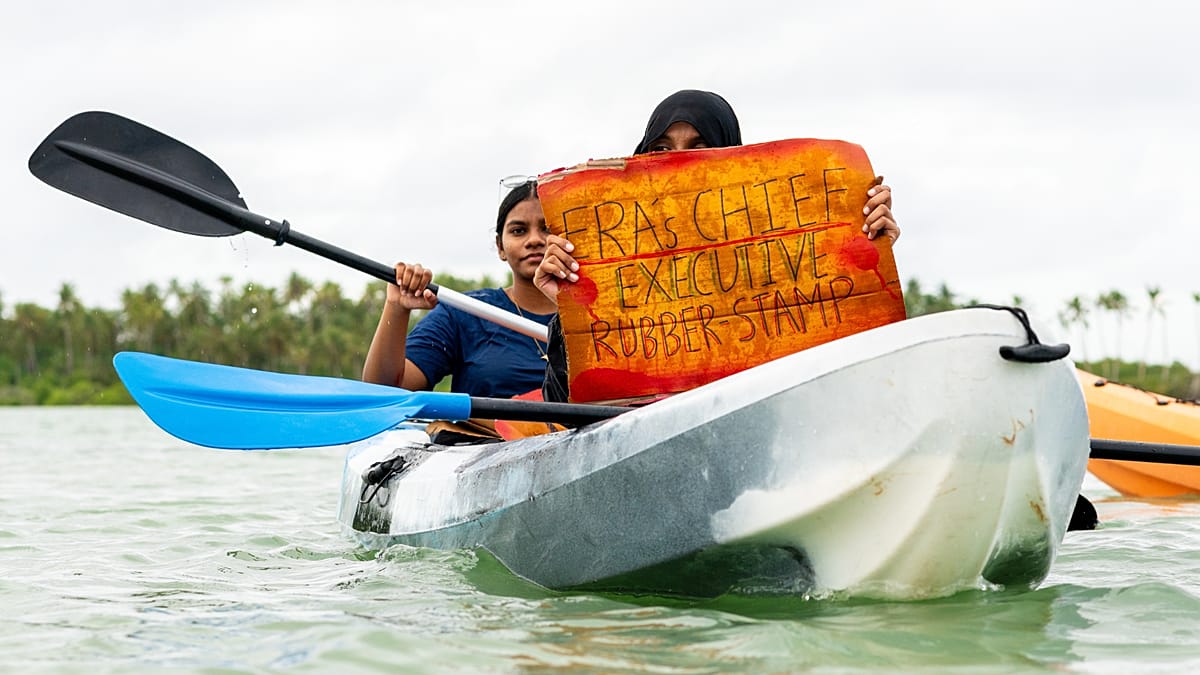
Project ThimaaVeshi, a nonprofit whose name translates to “self and surroundings,” recently led a kayak protest in Addu City against a land reclamation project that was cutting through protected mangrove wetlands in a UNESCO biosphere reserve. The activists even spray-painted “ECOCIDE” on the reclaimed land, a stark symbol of their frustration.
This action is part of a broader movement across the Indian Ocean nation. In Addu City, activists are documenting the impact of overdevelopment on wetlands and reefs. In the capital, Malé, groups are tackling the plastic waste that chokes streets and swimming areas. They collaborate with surfers and other volunteers for cleanups, extracting fishing lines from coral reefs and piling up discarded bottles, while educating their peers about their right to a clean and healthy environment.
Fighting a sense of helplessness
“It was just us and a bunch of hopes and dreams,” says Yameen Maumoon, 21, co-founder of Project ThimaaVeshi. Along with Mishal Mushahid, he started as a student leader working with the Addu City council. What began as a group of friends evolved into a registered nonprofit after they graduated from high school.
In Malé and neighbouring Hulhumalé, another youth group, Ripple, emerged when friends noticed the trash accumulating in their favourite hangout spots. “One day when we were playing Minecraft, we were joking around, saying we should start making TikToks and we should start cleaning up,” recalls co-founder Mariyam Maasha Waheed. Their informal cleanups gained traction after their TikTok videos went viral, and they now organize weekly events and campaigns against plastic pollution, even recycling the plastic they collect.
The founders say they want environmental action to feel less intimidating and more communal. Yania Hussain Ishan, co-founder of Barnacles, a newer group seeking registration, became interested in environmental issues while preparing a school presentation on protecting nature. Barnacles focuses on climate education and youth leadership. Ishan notes that constant talk of a climate emergency has led her generation to feel a lack of agency over it.
The activists face criticism for their youth. Government officials, including the minister of climate change, Ali Shareef, have suggested that young people are too emotional and cannot be trusted with decision-making. All three groups have been told their work is pointless, that a simple beach cleanup won't fix the overall challenges.
Yet the activists remain undeterred. They know they cannot solve the Maldives' problems alone, but they believe waiting for bigger solutions isn't an option. They aim to shape a generation that understands its rights and passes on the responsibility to future ones. “We are deciding what kind of ancestors we will be,” Ishan says. “We are defending our home, our heritage and the right of every Maldivian child yet to be born to stand on these shores, look out at the sea and feel the same wonder and security that defines who we are.”
Experts warn that up to 80% of the Maldives could become uninhabitable within 50 years due to sea-level rise. The government has championed the country's fight against climate change but has also said sacrifices must be made for development. The activists argue that protective measures are not happening fast enough. Their struggle resonates beyond the islands, echoing similar battles across Europe, where communities are also confronting the impacts of climate change, such as regenerative farming as a shield against wildfires or the unexpected role of beavers in wildfire prevention.