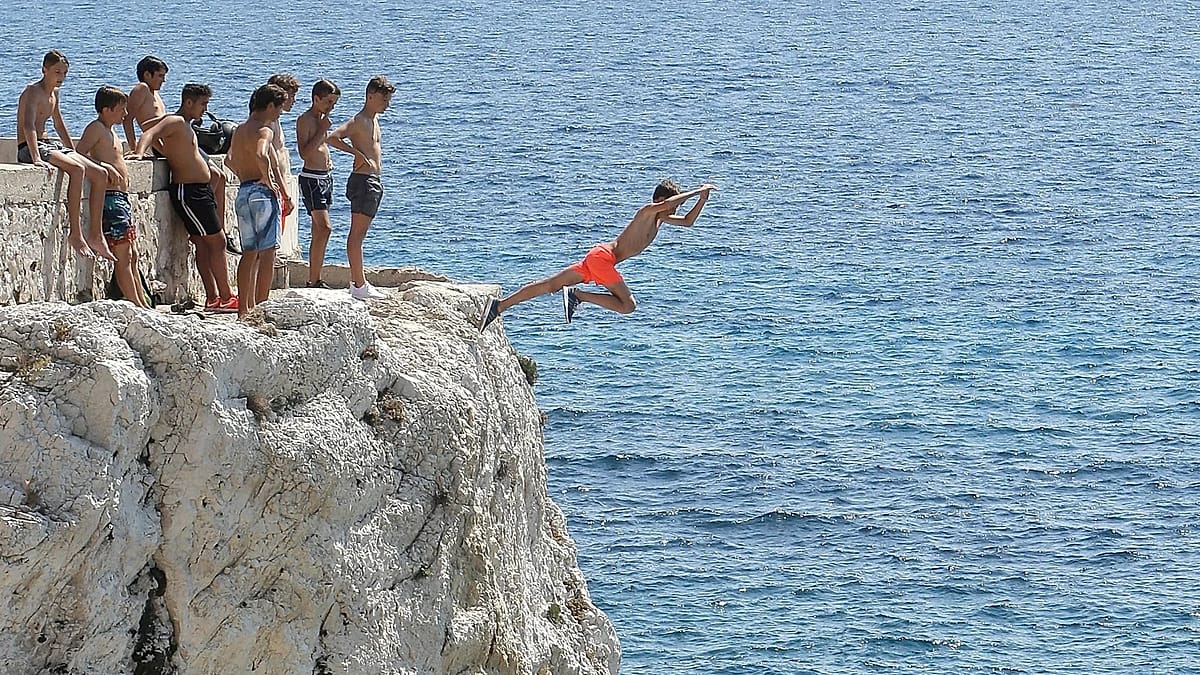
In Marseille, the Mediterranean's glittering surface has become a magnet for thrill-seekers. From the city's famed corniche, a growing number of young people and tourists are hurling themselves into the sea, a trend amplified by social media and now prompting municipal authorities to rethink how they manage the risky pastime.
Although a 2006 bylaw prohibits jumps higher than three metres, enforcement has struggled to keep pace with the practice's popularity. Videos of acrobatic leaps and scenic plunges circulate widely online, drawing both seasoned locals and curious visitors from across Europe.
"I started this year. We psych ourselves up, we jump and then we try to move on to another spot," says Dédé, a Marseille resident who has embraced the routine.
The appeal has spread well beyond the city. Romain, a young Swiss visitor, explains: "I saw videos online, it caught my attention. I also have friends from here who jump and told me to come." Dominik, travelling from Germany, did his homework before arriving: "This is the third place we have tried and lots of people are jumping here too. You feel safer, because if the people who live here do it, it is reassuring."
Risks that lurk beneath the surface
The spectacle, however, masks real dangers. Each year, several people in Marseille suffer serious injuries from diving into shallow or unpredictable waters. The municipal police have increased patrols at the most hazardous spots, particularly where the drop is steep and the landing zone narrow.
"We pay particular attention to this area because it is very high. It can be extremely dangerous, especially when landing," says Céline Lefléfian, head of Marseille's municipal police.
Authorities are also trying a softer approach. A civic and public order unit allows young offenders to avoid a fine by attending a session on the dangers of cliff diving. The hope is that education will prove more effective than punishment alone.
Looking ahead, the city is exploring the creation of dedicated areas where jumps could be made under safer conditions. Supervised diving platforms, installed in selected zones, might offer an outlet for the thrill-seekers while reducing the risk of accidents.
The debate echoes broader tensions across Europe between public safety and individual freedom, especially as social media continues to popularise high-risk activities. Similar challenges have emerged elsewhere, from crowd management at Mont Blanc to the growing online habits of young Europeans.
For now, Marseille's corniche remains a place where the line between exhilaration and danger is thin. Whether the city opts for more policing, more education, or new infrastructure, the goal is clear: to let people enjoy the Mediterranean without turning a leap of faith into a tragedy.