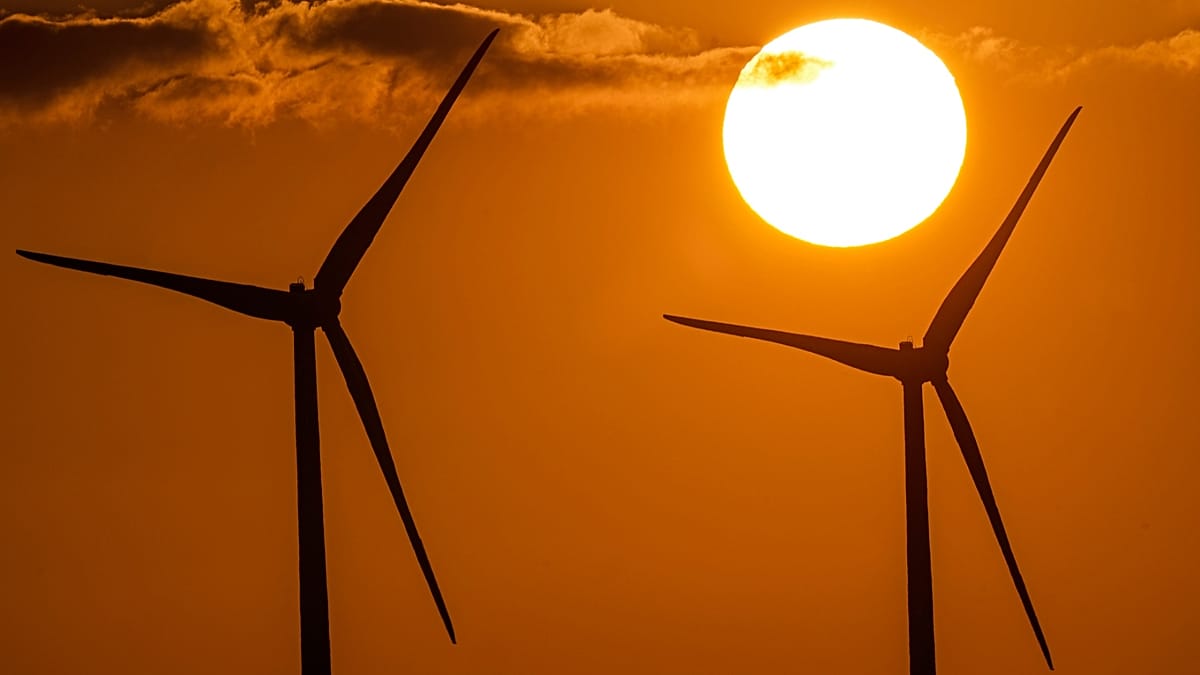
An intense May heatwave has gripped large parts of Europe, breaking temperature records and prompting the United Nations to renew its call for a rapid shift away from fossil fuels. Meteorologists describe the phenomenon as a 'highly anomalous and powerful' heat dome, a weather pattern that is becoming more frequent due to human-induced climate change.
Dozens of cities across the continent have recorded temperatures far above the seasonal norm. London and Paris experienced their hottest May days on record, with temperatures soaring 16°C and 14°C above the climatological average, respectively. Even typically cooler capitals like Oslo saw temperatures climb to 18°C, 3°C above the late-May average.
Friederike Otto, a climate scientist at Imperial College London, stated: 'This record-breaking heat has the fingerprints of climate change all over it. Temperatures on this scale were once exceptional even at the height of summer. Seeing 35°C in the UK during spring is absolutely astonishing, but the science is very clear – climate change makes these heatwaves hotter, longer and far more frequent.'
UN Warning: 'Kick the Fossil Fuel Addiction'
Simon Stiell, Executive Secretary of the United Nations Framework Convention on Climate Change (UNFCCC), described the heatwave as a 'brutal reminder of the spiralling impacts of the climate crisis.' He pointed to the world's continued reliance on coal, oil, and gas, as well as the destruction of carbon sinks like forests, as the primary drivers. According to the UN, fossil fuels account for roughly 68% of global greenhouse gas emissions and nearly 90% of all carbon dioxide emissions.
Stiell also highlighted the geopolitical risks of fossil fuel dependence: 'This climate-driven heatwave is a double-jeopardy, at a time when the latest war in the Middle East is showing the soaring costs of depending on fossil-fuel imports.' He argued that the solutions are clear: 'a faster shift to clean power, which is now cheaper than fossil fuels, and faster to produce, and hence is mission-critical for energy affordability and nations’ economic security.'
The heatwave has also drawn attention to the broader impacts of climate change on the continent. As temperatures rise, the risk of extreme weather events, including wildfires and droughts, increases. A recent study warned that climate change could turn Europe into a chikungunya hotspot, highlighting the health risks associated with a warming planet.
Renewables Outperform Fossil Fuels in EU
Despite the heatwave, there are signs of progress. Last year, wind and solar generated more electricity in the European Union than fossil fuels for the first time, according to a report from energy think tank Ember. Wind and solar accounted for 30% of the EU's electricity mix in 2025, overtaking fossil fuels by a single percentage point. This shift has helped reduce emissions, with some leading climate scientists now believing that a previously projected 4.5°C rise in global air temperature by 2100 is no longer plausible.
Solar power alone saved Europe an estimated €3 billion in March by reducing demand for gas imports, according to an analysis by SolarPower Europe. If gas prices remain high, the report suggests that Europe's savings could reach €67.5 billion by the end of 2026.
However, the transition is uneven. Italy has been criticised for 'climate neglect' after announcing plans to delay the permanent shutdown of its coal-fired power plants until 2038, 13 years later than the original deadline. The Netherlands, despite leading the EU in solar power generation per capita, remains heavily reliant on natural gas and risks missing its legally binding target to reduce emissions by 55% by 2030 compared to pre-industrial levels, due to a slow rollout of large-scale wind farms. Meanwhile, Germany risks missing its 2030 climate goal while Spain surpasses its target, illustrating the varied pace of the energy transition across member states.
Stiell concluded: 'Protecting human lives, businesses and economies from extreme heat and the many other soaring costs of climate change is core business for every nation, and it starts with kicking the fossil fuel addiction much faster. It also reinforces the need to invest more in building resilience to climate impacts, whether extreme heat, mega-floods, wildfires or droughts, which are also hitting food production and prices.'