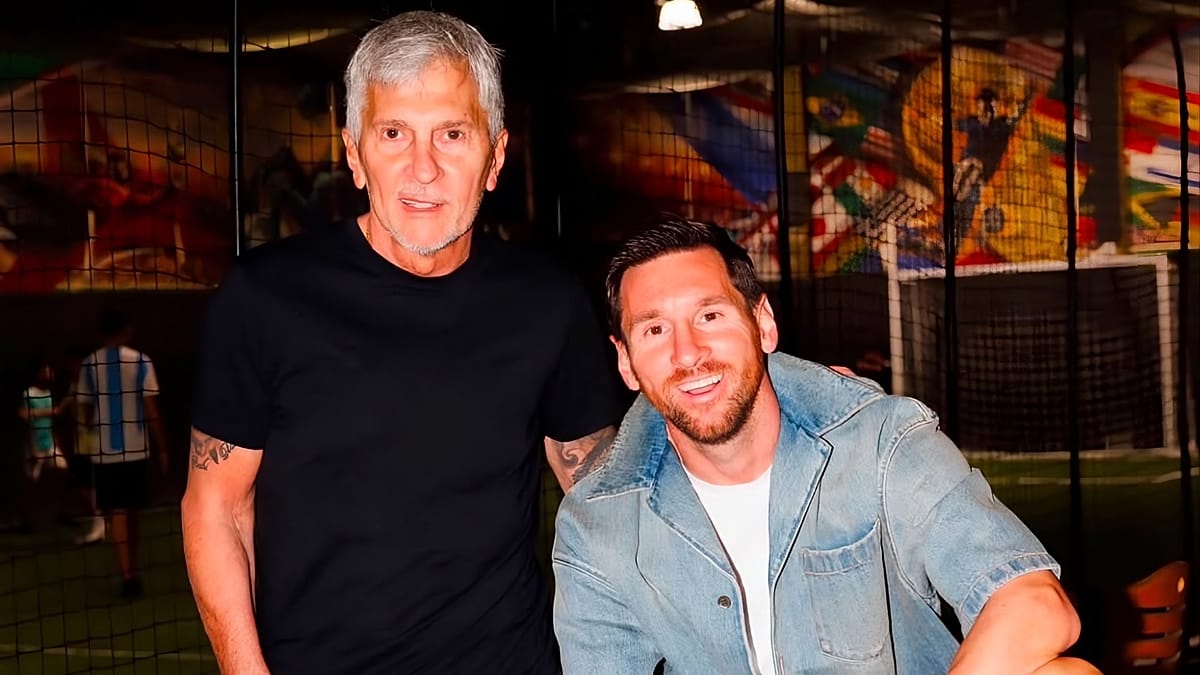
Lionel Messi, a figure who has spent two decades deflecting the spotlight from his private life, has broken his silence in the most personal way possible. Following the death of his father, Jorge Horacio Messi, on 8 August in Rosario after a long illness, the Argentine captain took to social media to publish an open letter that lays bare his grief and, strikingly, his uncertainty about his future in football.
"I don't know what I'm going to do without you, I don't know how to carry on. I just played football and now I have serious doubts that I'll keep doing it for much longer," the letter reads. For a player who has consistently avoided discussing retirement, these words carry particular weight.
Jorge Messi was not only Lionel's father; he was also his agent from the earliest years, the man who, as the player has often acknowledged, shouldered much of the burden of his career away from the pitch. The letter is addressed directly to Jorge, and in it Messi laments that his father could not hold on a little longer. "You were by my side from the very start, there was so little left to go. Why didn't you hang on that bit longer so we could finish together?" he writes.
A World Cup played in the shadow of illness
Messi also recalls that his father's health, already fragile during the last World Cup, prevented him from being there for the final. "Dad, I still can't believe you're gone. We still had so much left to enjoy together. You kept insisting that I should play the last World Cup, and just days before it began was when you got worse," he writes. He says his mother assured him his father would improve enough to travel and watch him play the final, and that he clung to that hope. "I told you we were going to reach the final so you could travel. We made it to the final and you couldn't be there," he adds, referring to the match Argentina played and lost against Spain on 19 July in New Jersey.
"I wanted to win it to bring it to you and show you a new one. I couldn't; my legs just weren't there any more. This time I tried to push my body beyond its limits, but I couldn't. I never managed to feel right," he concludes in that part of the message, acknowledging the physical wear and tear with which he arrived at the World Cup.
For now, Messi remains under contract with Inter Miami and has made no formal announcement about his future, either with the US club or with the Argentine national team. The letter, however, suggests that his father's death has triggered a bout of soul-searching he had not previously made public. The player himself admits that his relationship with football was always bound up with his father's figure, which helps explain why uncertainty over his future has emerged precisely at this moment.
Jorge Messi's funeral was held in private at the El Prado cemetery in Rosario, the hometown of both father and son, and was attended by Antonela Roccuzzo and the footballer's children. Clubs and bodies in Argentine football, among them Newell's Old Boys, the team Jorge openly supported, sent messages of farewell in the days that followed.
A career defined by moments
Messi's career has been defined by a series of iconic moments, from his Barcelona debut in 2004 to his first Champions League triumph in Rome in 2009, where he scored a header against Manchester United. The 2022 World Cup in Qatar finally brought him the one title he was missing, as Argentina beat France on penalties. His tearful departure from Barcelona in 2021, forced by the club's financial crisis, was followed by a stint at Paris Saint-Germain. In 2023, he won his ninth Ballon d'Or, sharing the stage with Spain's Aitana Bonmatí.
As the football world reacts to this news, the broader context of the sport's governance also looms. European, Asian, and American football bodies have recently united against FIFA president Gianni Infantino, a sign of the turbulent times in the sport. Meanwhile, Messi's own future remains uncertain, and the football community watches with bated breath.