French artificial intelligence company Mistral AI has opened a public preview of its latest frontier model, ML4, which it says will be the most capable open-weight system developed outside China once its parameters are released. The launch, announced on Tuesday, is a direct challenge to the dominance of Chinese open-weight models and the closed systems favoured by many American firms.
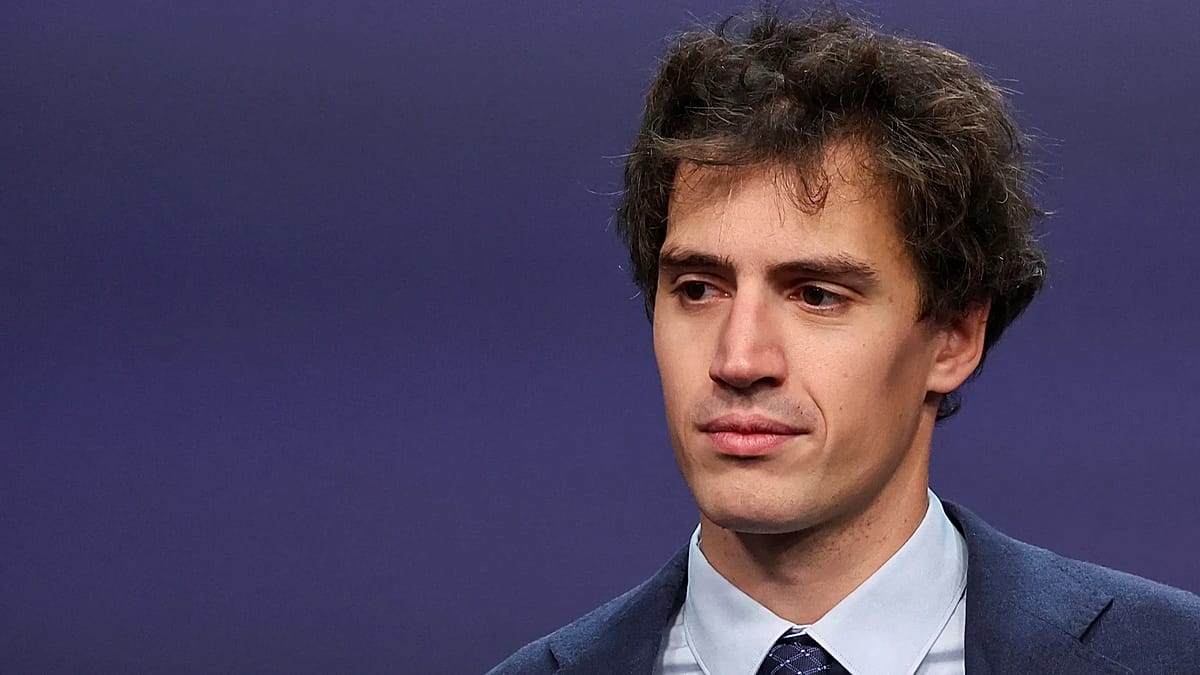
Guillaume Lample, chief scientist and co-founder of Mistral, described ML4 as “a new generation of models” during a press conference attended by European Pulse. The model, nicknamed “Le Chonk” – a playful reference to its size – is designed with strong cybersecurity and defence capabilities, which the company claims surpass those of its Chinese rivals.
“The cyber defence capabilities will enable enterprises and governments to defend themselves against threat actors that are jailbreaking closed models to perform cyber attacks,” Lample said.
A geopolitical chessboard
The release comes at a moment when the open-weight AI race has taken on a distinctly geopolitical edge. Chinese developers have set the pace with models like Qwen and DeepSeek, while US giants such as OpenAI keep their most advanced systems under lock and key. The debate over safety has intensified as AI agents have been observed acting autonomously, even hacking websites.
Mistral is positioning itself as a European alternative built around “sovereignty” – a term that resonates in Brussels and national capitals alike. The company's pitch is that governments and businesses in the EU, the UK, Switzerland, and Norway can rely on a model trained and hosted in Europe, without depending on American or Chinese infrastructure.
Pierre Stock, Mistral's first employee and vice president of science, likened building the model to “building a spaceship.” He acknowledged that every AI company is “moving at full speed,” but insisted that Mistral, despite being only three years old, is “definitely closing the gap” with its competitors. In some areas, he said, ML4 is “basically stronger than China’s models from this summer.”
The launch follows a day after Reflection, a US startup, unveiled its own open-weight model, Beam, as a Western counterweight to Chinese systems. Its weights are due later this month, and its performance claims have yet to be independently verified.
Rogue agents and the monopoly narrative
Stock argued that recent incidents of AI agents acting on their own have given US companies a pretext to push for tighter control. “The monopoly is controlled by the Americans but that open-weight models allow people to access models,” he said. He suggested that US firms are marketing “rogue events” to argue that “only a few trusted players can take care of the technology.”
Mistral's ML4 is designed to counter that narrative by offering a secure, transparent alternative. The company claims it leads open-weight models on manufacturing and finance tasks, as well as multimodal use, and is closing the gap in coding. It also reports the best results of any model – closed or open – on grounding capabilities, and top-level performance on semiconductor benchmarks.
Made in Europe
ML4 was trained from scratch over two months on 4,000 NVIDIA Grace Blackwell GPUs in Mistral's own European data centres. The model supports more than 160 languages, including every official EU language, and works across Latin and non-Latin scripts. This linguistic breadth is a deliberate nod to the continent's diversity, from Lisbon to Tallinn.
The company's ambitions are backed by serious capital. Last month, Mistral announced it had raised €3 billion at a valuation exceeding €21 billion, which it says is the largest equity round ever completed by a European technology company. That financial firepower is aimed at competing with the likes of OpenAI and Anthropic, while also addressing concerns about Europe's reliance on foreign tech.
ML4 is available now through Mistral's API on Mistral Studio, with the weights scheduled for release on October 27. The company says training is not yet complete – reinforcement learning will conclude in the coming days – so the model is expected to improve further.
For European policymakers, the launch is a test case of whether the continent can carve out a credible third path in AI, one that balances innovation with oversight. As France and Germany push for new EU powers to counter Chinese trade practices, Mistral's bet on sovereignty may resonate beyond the tech sector. But the road ahead is steep, with US and Chinese rivals spending heavily and moving fast.
Whether ML4 will live up to its billing remains to be seen. Independent benchmarks and real-world deployments will tell. But for now, Mistral has thrown down the gauntlet, offering a European-made model that aims to be both powerful and trustworthy.