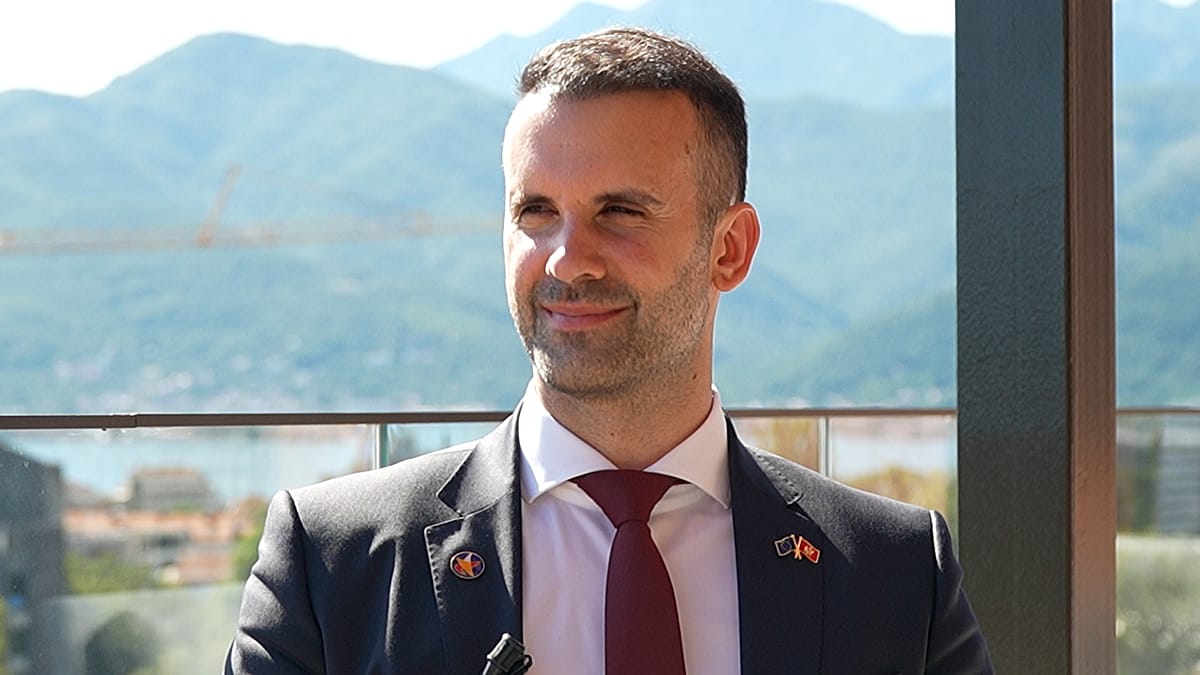
Montenegro's prime minister, Milojko Spajić, has described his country as the "cookie of the Balkans," suggesting that its successful integration into the European Union could serve as a catalyst for the bloc's enlargement process across the region. Speaking on the sidelines of the EU-Western Balkans summit held in Tivat on Friday, Spajić told Euronews that the current political climate is markedly different from previous years.
"The momentum is definitely different from previous times," Spajić said. "We definitely see that everybody is hopping on a boat called the unification of Europe."
European Commission President Ursula von der Leyen echoed that sentiment, telling reporters that Montenegro's membership is now "within reach." Council President António Costa also expressed confidence, stating that it is possible for Montenegro to join the union by 2028. All 27 member states must approve any new accession unanimously, but European officials noted that Montenegro—already a NATO member with a pro-European agenda and a relatively small population—presents an ideal candidate compared to larger aspirants that would demand greater financial resources.
"This goal is realistic and achievable. It is strongly supported by all our European partners," said Montenegrin President Jakov Milatović, who added that the summit had given him "even greater confidence" in meeting the 2028 target.
Obstacles Remain Ahead of 2028
Montenegro has been an official candidate since 2010 and began accession negotiations in 2012. While it is not part of the eurozone, it unilaterally adopted the euro as its currency. However, talks have dragged on for roughly 14 years, and several key hurdles remain. The EU has established so-called "clusters"—a series of reforms covering areas from taxation to environmental policy—that Montenegro must align with to secure membership. Podgorica has so far concluded negotiations on 14 of the 35 clusters.
"Montenegro has a lot to offer to the European Union," Spajić told Euronews. "I often say: Montenegro is like a little sample, like a little cookie of the Western Balkans. If you can take the cookie, and if you like it, you take more."
The prime minister also welcomed the lifting of a veto imposed on Ukraine by Hungary's new prime minister, Péter Magyar, saying that progress in accession for any country helps the overall momentum for all candidates. For more than two years, Ukraine and Moldova—informally coupled as candidates—have been blocked under Viktor Orbán's veto policy on Kyiv, particularly on the first accession cluster covering the rule of law, human rights, and the judiciary. EU officials now hope the process will accelerate.
"We want to see Ukraine as well, like progress on the path towards prosperity and peace. Montenegro is here to help, if anything," Spajić said.
Von der Leyen described EU expansion into the Western Balkans as "a geostrategic imperative," with Brussels increasingly concerned about hybrid threats and external interference in the region, largely driven by Russia. Spajić noted that Montenegro, as a NATO member, is investing significantly in its defence capabilities and working closely with partners to tackle potential threats.
The summit in Tivat comes amid a broader push for EU enlargement, with leaders from Paris and Berlin proposing gradual integration plans and Costa backing streamlined accession rules. For more on the regional dynamics, see our coverage of Albania's Rama warning of anti-EU forces in the Balkans and the momentum building at the Western Balkans summit.



