As EU and Western Balkan leaders convene in Brussels for a summit on enlargement and regional security, Montenegro's President Jakov Milatović has laid out an ambitious timeline for his country's accession. In an interview with Europe Today, Milatović said he aims to sign the EU accession treaty in the first half of 2027 and become a full member in 2028. The question is whether he has secured firm commitments from EU capitals—and whether unresolved issues could derail the process.
Reforms and disputes
Montenegro's path to membership hinges on judicial reforms, a robust fight against corruption and organised crime, and the resolution of a long-standing border dispute with Croatia. Zagreb has intensified pressure on Podgorica as EU talks near their final stage, with the issue potentially complicating the negotiation framework. Croatia's border pressure is a reminder that bilateral disputes can slow even the most determined candidates.
Milatović acknowledged the challenges but expressed confidence that Montenegro can meet the criteria. "We are committed to delivering on the rule of law and good neighbourly relations," he said. "Our goal is to be ready by 2027, and we expect the EU to recognise our progress."
EU-Western Balkans summit
The Brussels summit is expected to reaffirm the EU's commitment to bringing the Western Balkans into the bloc, while urging candidate countries to accelerate reforms. The region has grown frustrated with the slow pace of enlargement, and EU leaders are keen to counter Russian and Chinese influence in the area. However, the EU's own internal debates over budget priorities and enlargement fatigue could temper the enthusiasm.
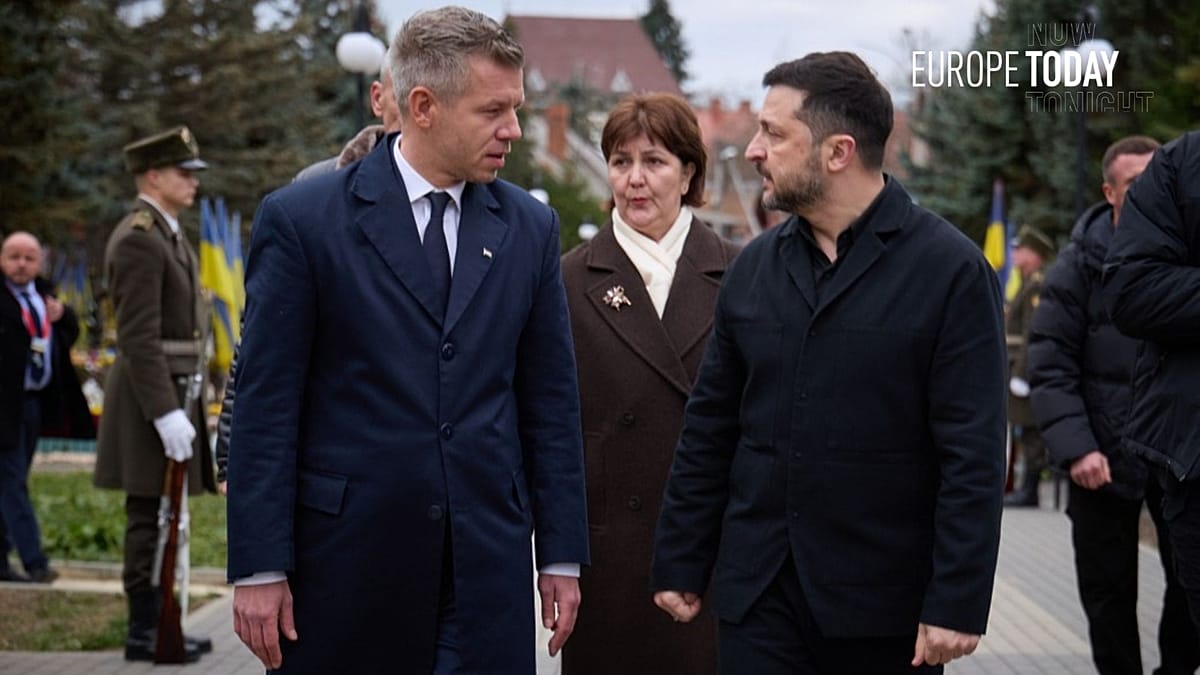
Meanwhile, Hungarian Prime Minister Péter Magyar visited western Ukraine, where he hailed a "fresh start" in bilateral relations and discussed closer trade and transport links with President Volodymyr Zelensky. The visit underscores the shifting dynamics in Europe's eastern neighbourhood, even as the EU grapples with its own budget and Ukraine-related funding disputes.
Climate contradictions at COP31
At COP31, the EU refused to back a deal that omitted fossil fuels, yet European governments continue to sign long-term gas contracts that could lock in fossil fuel dependence for decades. Szymon Kardaś, co-author of a new report from the European Council on Foreign Relations, told Europe Today that this contradiction undermines the EU's climate credibility. "The bloc cannot claim leadership on climate while simultaneously financing new gas infrastructure," he said. The report highlights the tension between short-term energy security and long-term decarbonisation goals.
Pope Francis's diaries
In other news, newly released diaries of the late Pope Francis describe three encounters with the Devil and a spiritual crisis in 2021 and 2022. His biographer Austen Ivereigh joined us to interpret these accounts, suggesting they reveal a pope deeply engaged in spiritual warfare and personal struggle. The diaries offer a rare glimpse into Francis's private life and his theological worldview.
Headlines
In the headlines, Palestinian officials say Israeli air strikes killed seven people in Gaza, including the head of Hamas's internal security service. And Germany's Federal Criminal Police Office reported the country's highest number of domestic violence victims in 2025, highlighting a growing social crisis.
Europe Today airs every weekday at 8, 9, and 10 am Brussels time.



