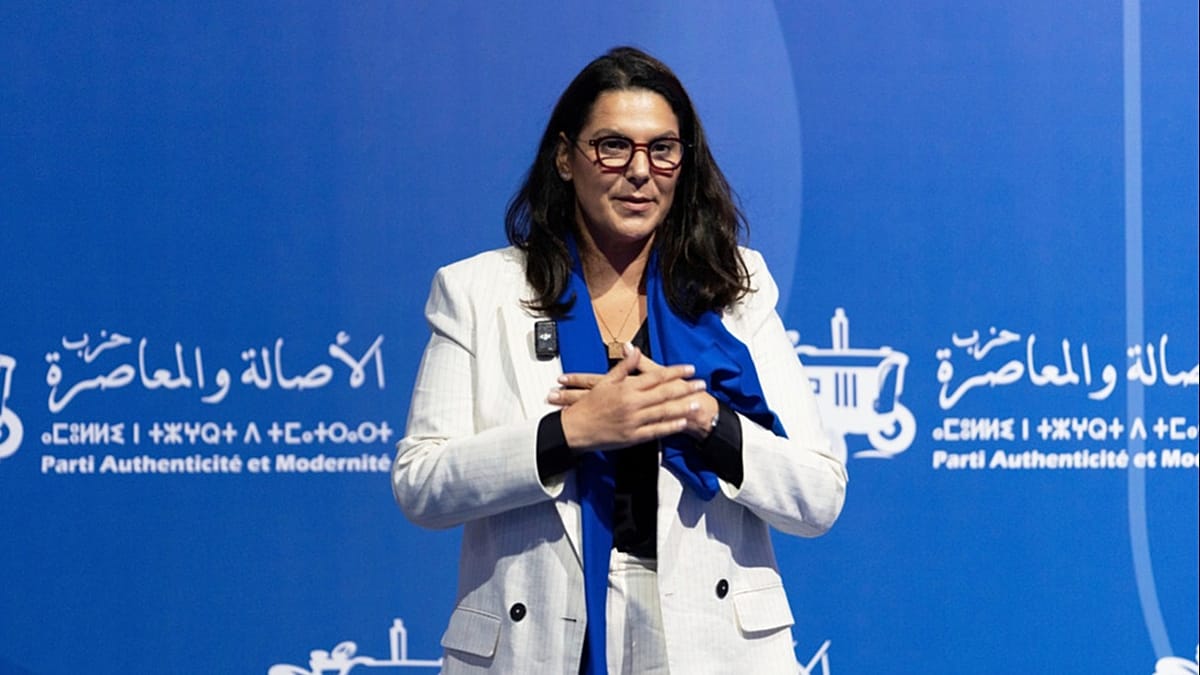
In a historic move for the North African kingdom, Morocco's King Mohammed VI has appointed Fatima Mansouri as prime minister, making her the first woman to lead a government in the country's history. The announcement came on Tuesday, just days after Mansouri's centrist Authenticity and Modernity Party (PAM) emerged as the winner of last week's parliamentary elections.
Mansouri, a 50-year-old attorney and former mayor of Marrakech, was also serving as minister of urban planning before her nomination. The Royal Palace confirmed that she has been tasked with forming a new government, a process that will require building a coalition in Morocco's fragmented political landscape, where no single party typically secures an absolute majority.
Her appointment places her as only the second woman in the Arab world to hold the office of prime minister, following Najla Bouden in Tunisia. It marks a significant step for women's political representation in a region where such leadership roles remain rare.
A Political Career Forged in Marrakech
Mansouri's rise to the top has been steady. A law graduate from the University of Montpellier in France, she joined PAM shortly after its creation in 2008 by Fouad Ali el-Himma, a childhood friend and close adviser to the king. She quickly became one of the party's leading figures, serving twice as mayor of Marrakech and as a member of parliament before taking on the urban planning portfolio.
Her background is notable: she is the daughter of Abderrahmane el-Mansouri, a former "pasha of Marrakech" who also served as Morocco's ambassador to the United Arab Emirates and headed the city's bar association. The family's deep roots in the city have given Mansouri a strong local base, but they have also drawn scrutiny.
Earlier in her career, Mansouri faced accusations of conflict of interest after a group of unidentified hackers claimed she had used her position for personal gain in land transactions in Marrakech. She denied the allegations, called them defamatory, and took legal action.
Election Victory and Coalition Challenges
Last week's election saw PAM secure the highest number of votes, with about one million of the 15.8 million registered voters backing the party. This marked PAM's first electoral victory since its founding. The vote was the first since the Ceuta migration crisis last July and the deadly youth-led protests that shook the country last year.
The election campaign was dominated by concerns over the cost-of-living crisis, with voters demanding action on inflation, wages, and employment. Mansouri's government will also be tasked with overseeing billions of dollars in investments linked to the 2030 FIFA World Cup, which Morocco is co-hosting alongside Spain and Portugal.
Under the Moroccan Constitution, the king retains the power to appoint the prime minister, but he must choose from the party that wins the most seats in parliament. This reform was pushed through following the Arab Spring protests in 2011, which limited the monarchy's previous discretion in naming the head of government.
As Mansouri begins the delicate work of coalition-building, her ability to navigate Morocco's complex political landscape will be closely watched. The new government's success will depend on its capacity to address the economic grievances that fueled last year's protests and to deliver on the promises of the World Cup bonanza.
The appointment also resonates beyond Morocco's borders, offering a fresh example of female leadership in the Arab world. For European observers, the stability of Morocco's government matters, particularly given the kingdom's role in migration management and security cooperation with the EU. The recent tensions over Ceuta and the fate of unaccompanied minors have highlighted the need for a constructive partnership, as experts argue for creative approaches to the migration challenge.
With the royal nomination complete, all eyes now turn to the coalition talks that will shape Morocco's next government. Mansouri's historic appointment is a milestone, but the real test lies in her ability to govern effectively in a country where the monarchy still holds significant sway.