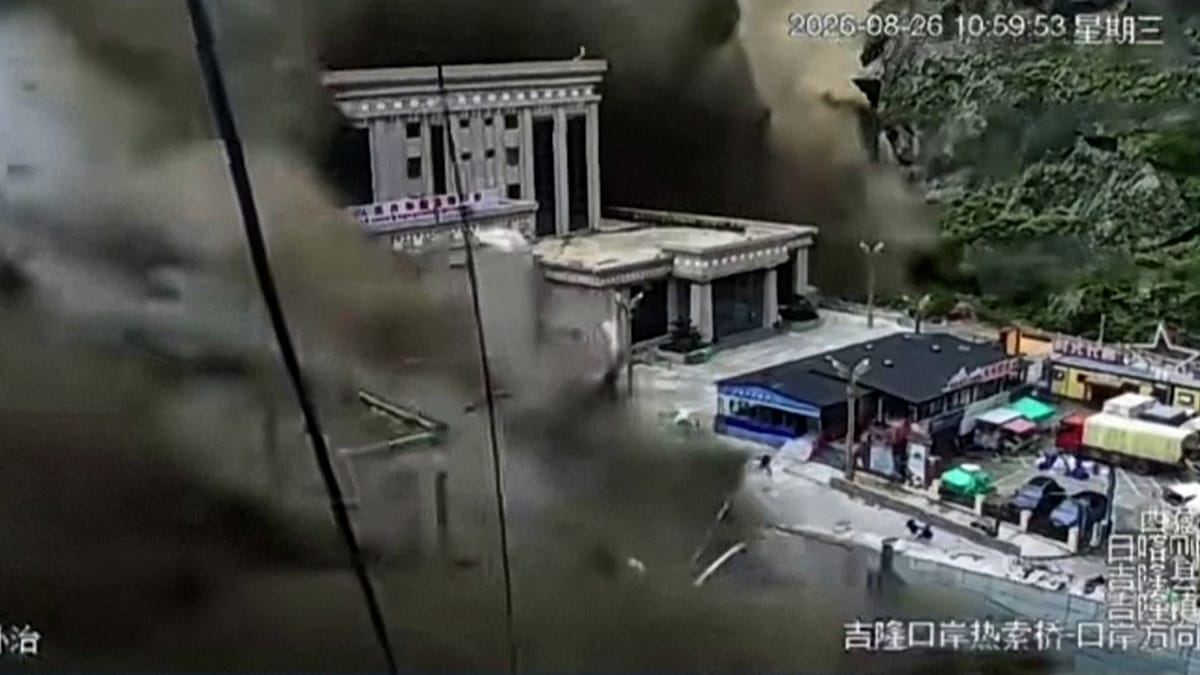
On 26 August, a powerful mudslide tore through Gyirong port, a key border trading post between China's Tibet Autonomous Region and Nepal. Footage circulating on social media shows a wall of mud and debris sweeping through the town, submerging buildings and vehicles in a matter of minutes.
The event came just days after catastrophic flooding and landslides struck neighbouring Nepal, where entire villages were washed away. According to local authorities, the mudslide at Gyirong was triggered by the same weather system that has caused widespread devastation across the Himalayas.
Regional disaster unfolds
The floods in Nepal have been described as one of the worst natural disasters in the region in recent years. As of the latest reports, the death toll has climbed to nearly 400, with more than 1,400 people still unaccounted for. The disaster has also affected areas on the Tibetan side of the border, where several casualties have been confirmed.
Scientists are pointing to a likely trigger: the collapse of a glacial lake, a phenomenon increasingly linked to climate change. As temperatures rise, Himalayan glaciers are retreating, leaving behind unstable moraine dams that can breach without warning. A team of researchers has been studying satellite imagery and field data to confirm the exact cause of the flood, but early evidence suggests a glacial lake outburst was the primary driver.
For European readers, the disaster carries a broader significance. The Himalayas are often called the 'Third Pole' because they hold more ice than anywhere outside the polar regions. Their meltwater feeds major rivers that sustain hundreds of millions of people across South Asia. Changes in this region have global implications, from sea-level rise to shifts in monsoon patterns that can affect weather as far away as Europe.
In the immediate aftermath, rescue efforts have been hampered by damaged roads and bridges. The port at Gyirong, which serves as a vital conduit for trade between China and Nepal, has been shut down indefinitely. The closure is expected to disrupt supply chains for goods ranging from food to construction materials, affecting businesses on both sides of the border.
For European travellers planning trips to Nepal, the situation is a stark reminder of the region's volatility. Authorities have issued warnings about further landslides and flash floods, and some airlines have adjusted their schedules. Travel insurance policies may not cover natural disasters, so it is essential to check the fine print before departure.
The disaster also highlights the interconnected nature of global trade and climate risk. As European leaders push for stronger climate action, events like this underscore the urgency of adapting to a warming world. The European Union has pledged support for disaster risk reduction in South Asia, but experts argue that more needs to be done to help vulnerable communities build resilience.
In the meantime, the people of Gyirong and the surrounding region face a long road to recovery. The mudslide has not only destroyed homes and infrastructure but also disrupted the lives of thousands who depend on cross-border commerce. As the waters recede, the full scale of the damage is only beginning to emerge.