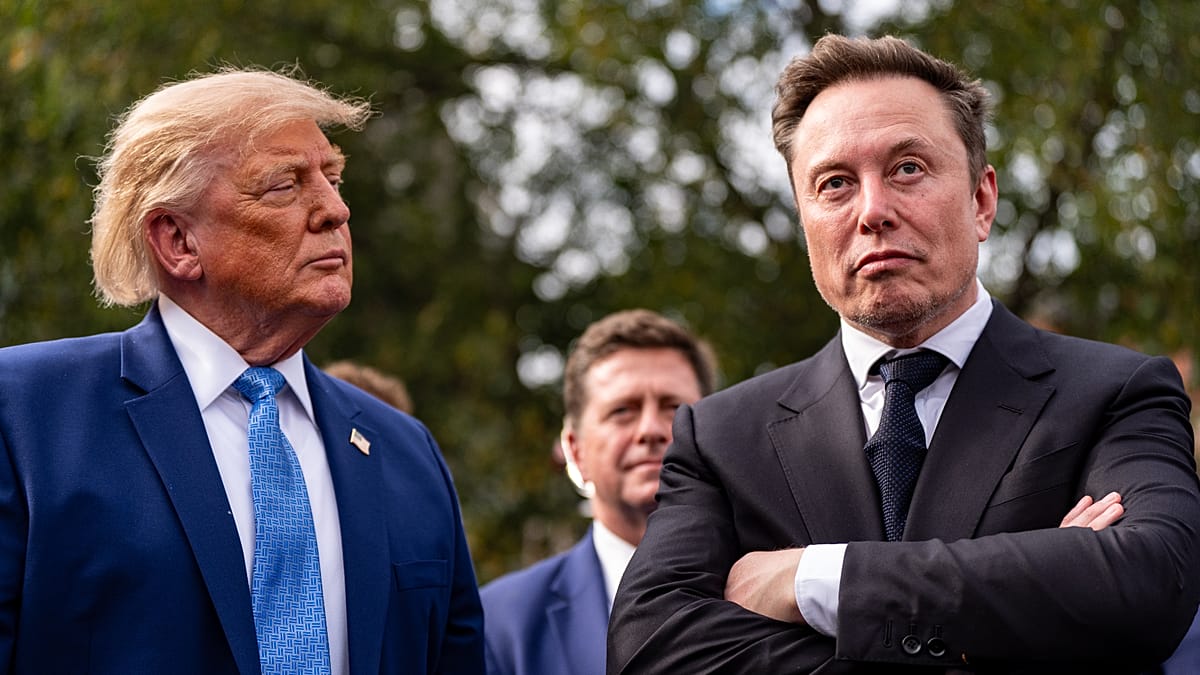
Elon Musk is returning to an official advisory role in the Trump administration, this time as co-leader of a Pentagon initiative to study the future of warfare. The project, dubbed Project Meridian, was announced Wednesday by US Defense Secretary Pete Hegseth during a speech at the Quantico military base in Virginia.
Hegseth described the effort as one that will "creatively look to the future and identify the domains that we must conquer and capabilities we must master." He added that the project would leverage "a unique source of American advantage, one our adversaries do not have: our innovators, our senior leaders and our technologists."
Musk, who previously headed the Department of Government Efficiency (DOGE) and oversaw sweeping job cuts across the US federal government before leaving in May 2025, will co-lead Project Meridian alongside Palmer Luckey, the 34-year-old co-founder of defence technology firm Anduril Industries, and Newt Gingrich, the 83-year-old former Republican House Speaker.
A familiar face at the Pentagon
Musk's companies are already major Pentagon contractors. SpaceX builds satellite networks for Trump's planned "Golden Dome" missile defence shield, and his artificial intelligence firm xAI signed a deal this year allowing the military to use its Grok chatbot on classified systems. This new role formalises his influence over US defence strategy, a development with significant implications for European allies who rely on American military technology and procurement decisions.
The announcement comes after a turbulent period in Musk's relationship with Trump. Musk backed Trump's 2024 presidential bid and helped him return to the White House, but the two later clashed publicly over spending legislation. They have since reconciled, and Musk has again become a frequent presence at the White House, though less visibly than during his earlier stint, when he often visited the Oval Office, most memorably with his young son on his shoulders.
On Tuesday, Musk sat next to Trump at a lunch with artificial intelligence executives, where he joined other tech leaders in signing a voluntary AI safety accord that the president described as "morally binding." That voluntary approach contrasts sharply with the European Union's binding regulatory framework under the AI Act, a divergence that European policymakers are watching closely. For more on this transatlantic divide, see our analysis of the two regulatory paths.
Last week, Musk attended the state dinner Trump hosted for Chinese President Xi Jinping, and in May he flew to Beijing on Air Force One as part of the business delegation accompanying Trump on his state visit to China. His proximity to power has also translated into financial support: Musk, who spent more than $250 million backing Trump and other Republicans in the 2024 election, has given at least $90 million toward November's midterm elections, according to Federal Election Commission filings.
Hegseth said Project Meridian's members will include hand-picked private sector leaders and subject matter experts from across the innovation, academic, and policy ecosystems. He has directed that the project's findings be completed and submitted within 120 days.
For European observers, the project raises questions about the direction of US military strategy and the role of tech billionaires in shaping it. European defence officials have long debated how to balance reliance on American systems with the need for strategic autonomy. Musk's involvement, given his companies' dominance in satellite communications and AI, could influence everything from NATO interoperability to the future of European defence procurement.
The Pentagon's embrace of Musk and Luckey signals a broader trend of bringing Silicon Valley's disruptive ethos into the military-industrial complex. Whether that leads to more agile defence innovation or simply concentrates power in the hands of a few tech moguls remains an open question—one that European capitals will be watching with keen interest.