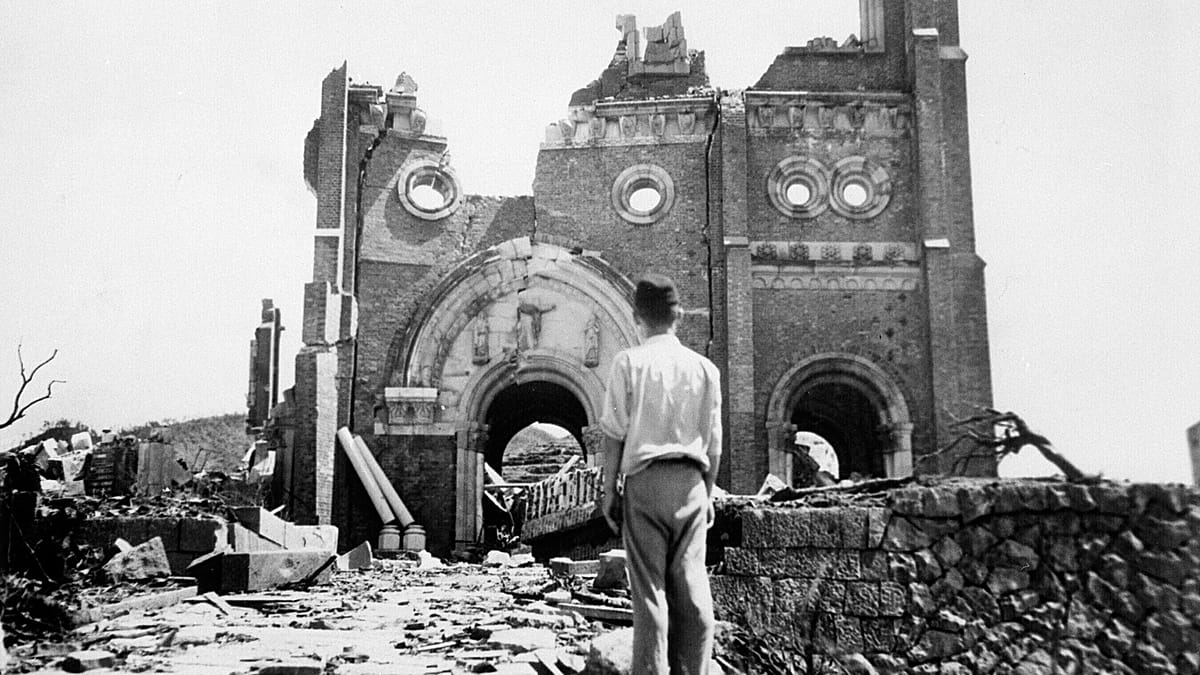
Nagasaki on Sunday marked the 81st anniversary of the US atomic bombing, a solemn occasion that has reignited a fraught debate over Japan's long-standing pacifist stance. Mayor Shiro Suzuki denounced nuclear weapons as “absolute evil” and warned against the growing acceptance of nuclear deterrence, urging the government to uphold the country's postwar non-nuclear principles.
The anniversary comes as Prime Minister Sanae Takaichi's administration signals a potential shift in defence policy, challenging commitments that have defined Japan since the end of World War II. The constitution renounces offensive military force, and successive governments have adhered to the “three non-nuclear principles” – not possessing, producing, or permitting the introduction of nuclear weapons into Japan.
That consensus is now under strain. China's military buildup and doubts about the reliability of the US security umbrella have prompted calls for a more assertive posture. Defence Minister Shinjiro Koizumi last month called for a “discussion without a taboo” on nuclear options, while Takaichi has declined to clarify whether she will maintain the non-nuclear pledge. In December, an unnamed senior official suggested in an off-the-record briefing that Japan should consider acquiring nuclear weapons – remarks widely reported by NHK and Asahi Shimbun, sparking public criticism.
For survivors of the 1945 bombings, such talk is deeply unsettling. Satoshi Tanaka, an 82-year-old who lived through the Hiroshima attack, expressed frustration that political leaders are prioritising military capacity over diplomacy. “There is so much talk about national security. What about building peace through diplomacy?” he asked.
The Takaichi government is undertaking a major review of defence strategy this year, having already lifted a self-imposed ban on weapons exports and increased military spending. These moves have drawn rebukes from Beijing, which accuses Japan of “new militarism” and of pandering to the far right. They have also alarmed the dwindling community of atomic bomb survivors, who have long shaped Japan's post-war pacifist culture.
Pressure on the non-nuclear principles
The debate now centres on the future of the non-nuclear principles, which date back to 1967. Supporters of Takaichi argue that the clause prohibiting the introduction of nuclear weapons should be revised to allow US nuclear-armed vessels to visit Japanese ports, ensuring the credibility of extended deterrence within the US-Japan alliance.
Hirofumi Yoshimura, leader of the Japan Innovation Party, a coalition partner, said the principle deserved discussion in the context of the alliance. “Of course, we need to work toward building a world without nuclear arms,” he told reporters on the Hiroshima anniversary. “But when considering how to ensure the effectiveness of extended nuclear deterrence within the framework of our alliance with the United States, I believe we should continue to adhere to the principle of 'neither possessing nor producing' nuclear weapons. As for 'not allowing them to be brought in,' I do think there is some room for discussion on that point.”
Critics contend that such a shift would increase the risk of nuclear conflict in the region. The 1945 attacks on Hiroshima and Nagasaki killed more than 210,000 people, many from radiation exposure, and remain the only use of atomic weapons in warfare. The survivors, who won the 2024 Nobel Peace Prize for their advocacy, are now debating whether to continue their national association as their numbers dwindle – from over 164,000 a decade ago to just over 91,000 as of March, with an average age of 86.7.
At Thursday's ceremony in Hiroshima, Takaichi met with survivors in a televised session. Pressed by Tanaka on whether she might change the country's nuclear course, she offered no clarity. “Our nation currently adheres to the 'three non-nuclear principles,'” she said, without elaborating on future intentions.
The unease extends beyond Japan's borders. European observers, who have long supported disarmament efforts, watch with concern as a key US ally in Asia contemplates a more nuclear-tinged posture. The debate in Tokyo echoes broader global tensions over deterrence, but for the survivors, the stakes are existential. As Tanaka put it, “It only worries me.”