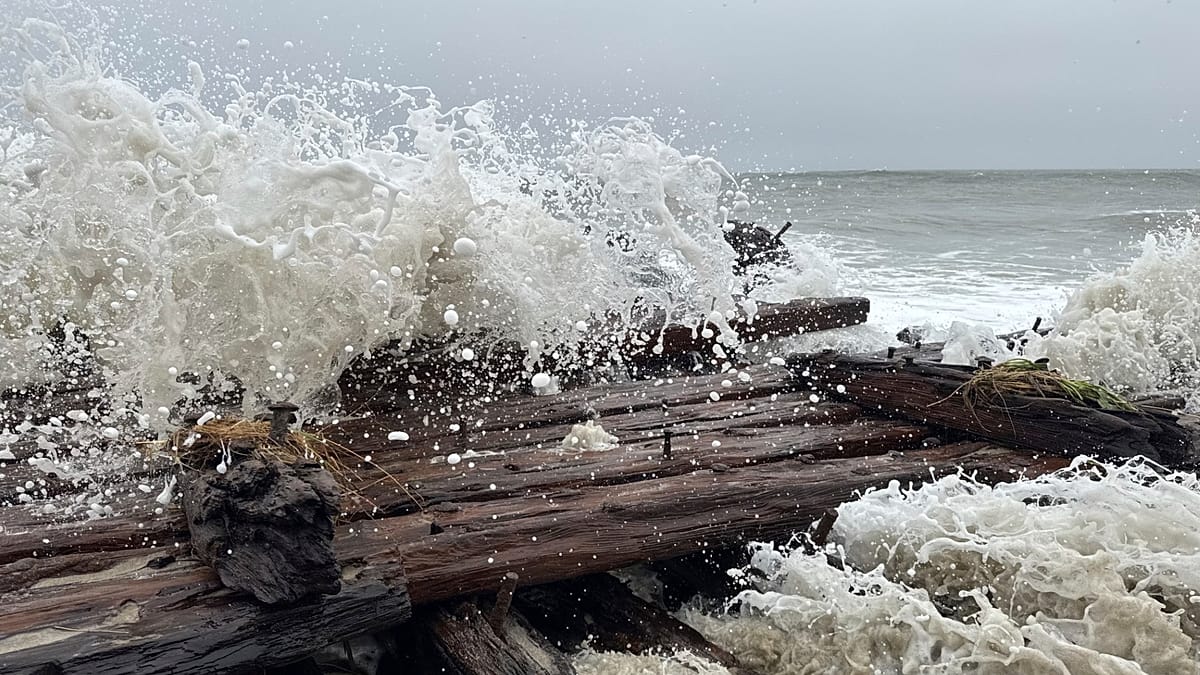
A powerful nor'easter that battered the U.S. East Coast has done more than erode dunes and flood streets. On the island of Nantucket, Massachusetts, the storm stripped away layers of sand to reveal splintered wooden beams jutting from the beach—likely the remains of a vessel that met its end in the waters off the island more than a century ago.
Local officials and maritime historians are now preparing to examine the exposed timbers, which could belong to the Warren Sawyer, a schooner that sank near Nantucket in 1884. The discovery has drawn attention not only for its historical value but also for what it says about the power of Atlantic storms to reshape coastlines and uncover buried secrets.
A storm's unexpected gift
The nor'easter, which swept through the region with high winds and heavy seas, carved deep cuts into the island's beaches. When the storm subsided, residents noticed dark, weathered planks protruding from the sand at a spot known as Low Beach. The sight quickly attracted curious onlookers and prompted calls to the Nantucket Historical Association.
Experts say the timbers are consistent with 19th-century ship construction, but they caution that a definitive identification will require careful study. The Warren Sawyer, a two-masted schooner, was lost with all hands during a gale in September 1884, and its wreck has never been positively located. If confirmed, this would be a rare and significant find.
“Every storm has the potential to rewrite our understanding of the past,” said a spokesperson for the Nantucket Historical Association. “We are treating this discovery with the utmost care and will work with marine archaeologists to document the site before the sea reclaims it.”
The wreckage is fragile, and experts warn that the next high tide or storm could easily destroy it. As a result, the team plans to conduct a rapid survey, using photography and 3D scanning to create a detailed record before any removal or further analysis.
This is not the first time Nantucket's shifting sands have revealed historical artifacts. The island, a whaling hub in the 19th century, has a rich maritime heritage, and its waters are littered with the remains of ships that fell victim to treacherous shoals and sudden storms. But each new discovery offers a fresh window into that era.
The event also underscores the broader impact of extreme weather, a topic of growing concern in Europe as well. Scientists have linked the intensification of storms to climate change, and European coastlines have seen their own share of erosion and storm damage. Europe's storm risk is rising as warming oceans fuel more powerful weather systems, a trend that has prompted calls for better coastal management and historical preservation.
For now, the focus remains on the Nantucket wreck. The Warren Sawyer was one of many vessels that plied the Atlantic coast in the late 1800s, carrying cargo and passengers between ports. Its loss was a tragedy that resonated locally, and the possibility of finally locating its remains has stirred interest among historians and residents alike.
“It's a poignant reminder of the human cost of the sea,” said a local historian. “These ships were not just vessels; they were homes and livelihoods. Finding the wreck brings us closer to the people who sailed on her.”
The investigation is expected to take several weeks, with results to be shared publicly. In the meantime, the site has been cordoned off to protect the timbers from souvenir hunters and to allow experts to work undisturbed.
While the discovery is a local story, it resonates with a wider audience, including in Europe, where maritime archaeology is a thriving field. Similar finds have occurred on European shores, from the Netherlands to the UK, where storms have uncovered ancient wrecks. The Nantucket case may inspire renewed interest in preserving such sites, which are often at risk from the very forces that reveal them.
As the Atlantic continues to churn, the sand will keep shifting, and the past will keep surfacing. For now, the Warren Sawyer—if that is indeed what lies beneath the beach—has emerged from its long burial, offering a fleeting glimpse of a bygone age.