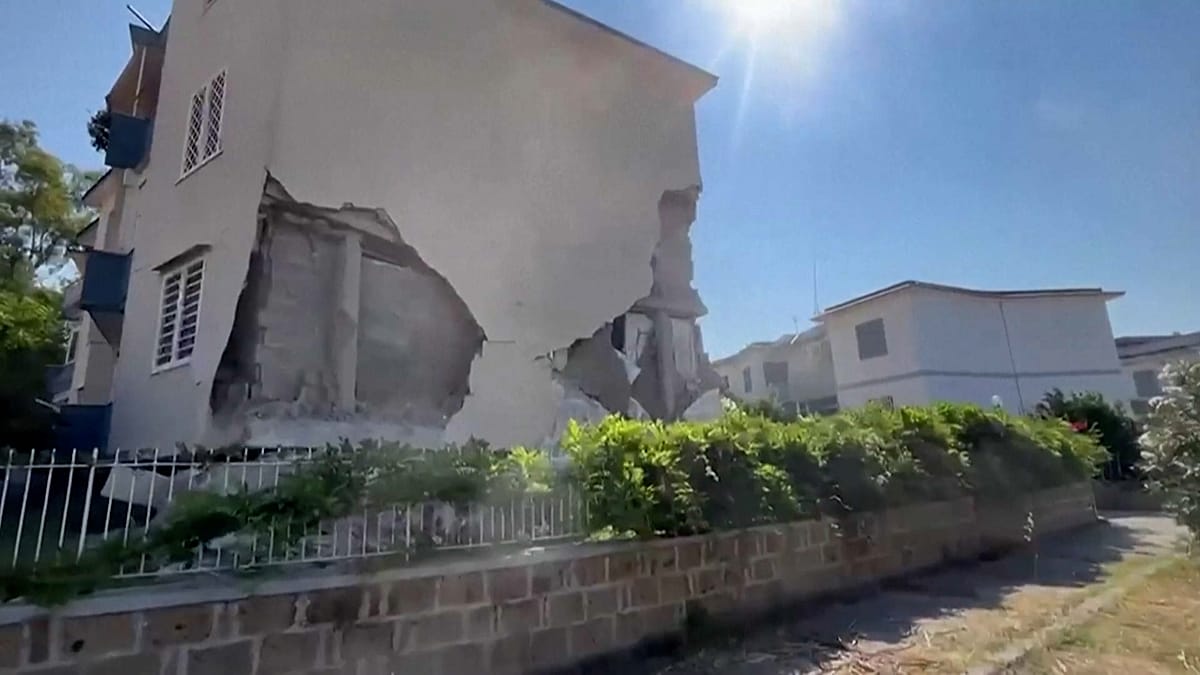
Fresh video footage from Pozzuoli, a coastal town west of Naples, shows the aftermath of Friday's magnitude 4.7 earthquake, which left 26 people injured and caused significant damage to buildings in the Campi Flegrei volcanic region. The quake, one of the strongest to hit the area in decades, sent residents into the streets and triggered a wave of concern about the region's seismic activity.
Damage and injuries in Pozzuoli
The footage, captured in the hours after the tremor, reveals cracked facades, fallen masonry, and debris scattered across narrow streets. Several historic buildings in Pozzuoli's centre, including churches and residential blocks, sustained structural damage. Local authorities reported that most injuries were minor, with people hurt by falling objects or while fleeing buildings, but at least two individuals required hospital treatment.
Italy's National Institute of Geophysics and Volcanology (INGV) recorded the earthquake at a depth of about 2.5 kilometres, unusually shallow, which amplified its effects on the surface. The epicentre was located in the Campi Flegrei, a large volcanic caldera that includes parts of Naples and Pozzuoli. This area has been experiencing gradual ground uplift, known as bradyseism, for decades, and scientists have been monitoring a recent increase in seismic activity.
Residents described a strong, rolling motion followed by a sharp jolt. "It felt like the ground was breathing," one Pozzuoli shopkeeper told local media. "We ran outside and saw cracks appearing in the walls of the bakery across the street." Many people spent the night in their cars or in temporary shelters set up by the civil protection agency.
Seismic context and regional concerns
The earthquake is the latest in a series of tremors that have rattled the Campania region over the past year. In September 2023, a magnitude 4.2 quake caused minor damage and heightened anxiety among residents. The strongest quake in years had already served as a wake-up call, but Friday's event has intensified calls for better building inspections and emergency preparedness.
Italy sits on the boundary between the Eurasian and African tectonic plates, making it one of the most seismically active countries in Europe. The Campi Flegrei, which includes the volcanic island of Ischia and the town of Pozzuoli, is a particularly complex area. Unlike Mount Vesuvius, which is a classic stratovolcano, the Campi Flegrei is a caldera formed by multiple eruptions over hundreds of thousands of years. Its last major eruption occurred in 1538, but the region remains restless.
Local authorities have ordered structural assessments of public buildings, including schools and hospitals, and are urging residents to review their own homes for damage. The Italian government has pledged funds for repairs and for reinforcing vulnerable structures. Meanwhile, volcanologists are closely watching the ground deformation data, though they stress that an imminent eruption is unlikely.
The earthquake also revived memories of the devastating 1980 Irpinia earthquake, which killed nearly 3,000 people in southern Italy. While Friday's event was far less severe, it underscores the persistent risk in a densely populated area. Naples, with its historic centre and more than a million residents, is particularly exposed. The city's building stock includes many older structures not designed to modern seismic standards.
In response to the quake, the regional government has activated emergency protocols and is coordinating with the national civil protection department. Teams of engineers are conducting rapid visual inspections, and drones have been deployed to assess damage to rooftops and church spires. The use of drone footage has become a standard tool in disaster assessment across Europe, offering a quick and safe way to survey affected areas.
For residents of Pozzuoli, the immediate concern is safety and the return to normalcy. Many businesses remained closed over the weekend as a precaution. "We are used to small tremors, but this one was different," said a local bar owner. "We need to know if our buildings are safe before we can move on."
Scientists from INGV and the University of Naples are installing additional seismometers in the area to better understand the sequence of events. They are also analysing whether the earthquake could trigger further activity in the caldera. While the probability of a larger quake remains low, the episode has highlighted the need for continuous monitoring and public education.
Italy's experience with earthquakes has led to some of the world's most advanced seismic engineering, but retrofitting old buildings remains a slow and costly process. The government has introduced tax incentives for seismic improvements, but uptake has been uneven. In the meantime, the people of Campi Flegrei must live with the uncertainty that comes from living on a restless volcanic field.
As the region begins to recover, the focus will be on repairing the damage and preparing for the next event. The recent earthquake in Molise served as a reminder that the entire Apennine chain is seismically active. For now, Pozzuoli's residents are counting their blessings that the toll was not higher, while hoping that the ground beneath them remains calm.