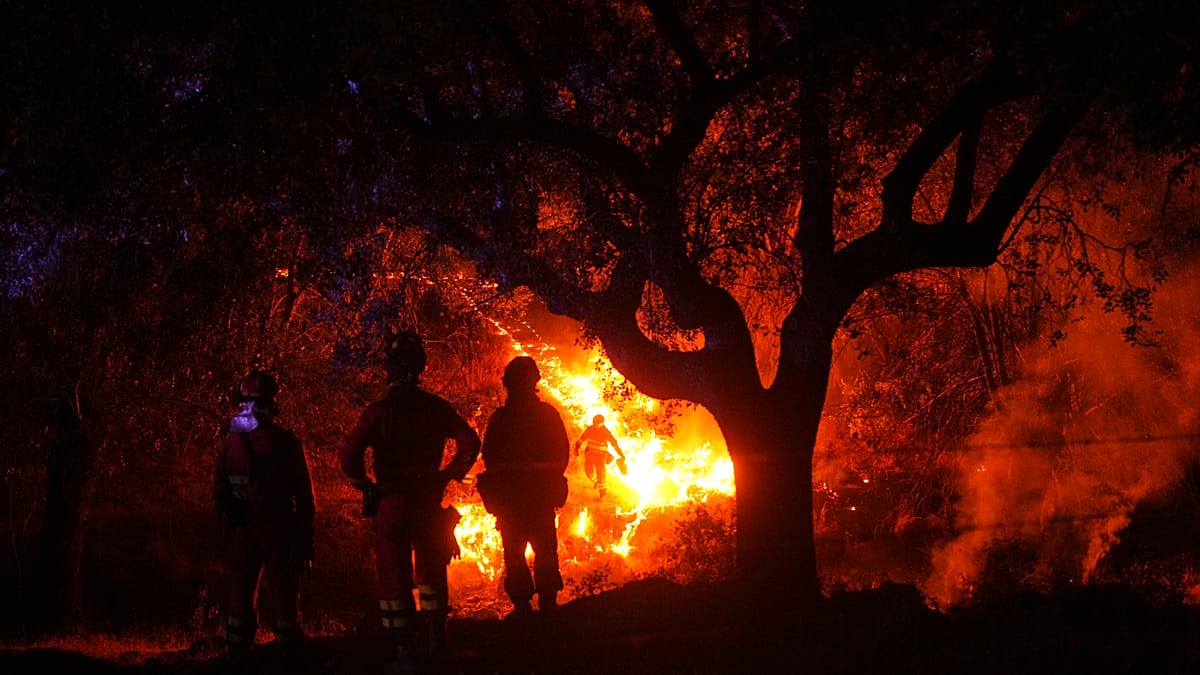
Aerial footage captured by a drone has laid bare the sheer scale of a wildfire raging in the province of Castellon, in eastern Spain, forcing the evacuation of thousands of residents and prompting a major firefighting response. The blaze, which began in the municipality of Villanueva de Viver, has spread rapidly through dry vegetation, fanned by strong winds and high temperatures that have left the region tinder-dry.
Firefighting efforts and evacuations
Emergency services have deployed multiple aircraft, including water-dropping helicopters and planes, to support ground crews battling the flames. The Spanish military's emergency response unit, the Unidad Militar de Emergencias, has also been mobilised to assist. Local authorities have evacuated several villages, including Montanejos, a popular tourist destination known for its natural hot springs, as a precautionary measure.
The wildfire in Castellon is part of a broader pattern of blazes across Spain this summer. In the northwestern province of Zamora, another wildfire has forced evacuations and destroyed thousands of hectares of land. The situation has been exacerbated by a prolonged drought and record-breaking heatwaves, which have increased the risk of fires across the Iberian Peninsula.
As Teresa Ribera, Spain's ecological transition minister, has argued, the intensifying wildfire seasons are a direct consequence of climate change, and she has criticised those who deny its impact for endangering lives. The fires in Castellon and Zamora are a stark reminder of the growing threat that southern Europe faces.
Broader European context
The wildfires in Spain are not isolated incidents. Across the Mediterranean, from Portugal to Greece, countries are grappling with increasingly severe fire seasons. In Turkey, mass evacuations have been ordered along the Aegean and Mediterranean coasts as fires threaten tourist resorts and residential areas. In France, the Provence region has seen fires that forced even celebrities like George and Amal Clooney to flee their home near Brignoles.
The European Union has mobilised its Civil Protection Mechanism to coordinate assistance, deploying firefighting aircraft and personnel from member states to the worst-affected areas. The bloc has also increased funding for fire prevention and climate adaptation measures, though critics argue that more needs to be done to address the root causes of the crisis.
In Greece, the situation has been particularly deadly. Earlier this summer, three firefighters lost their lives as gale-force winds drove wildfires across the island of Crete, highlighting the extreme dangers faced by those on the front lines. The World Health Organization has warned that wildfire smoke poses a health emergency that extends far beyond the flames, affecting air quality and respiratory health across entire regions.
As the climate continues to warm, the frequency and intensity of wildfires in Europe are expected to increase. The drone footage from Castellon serves as a powerful visual testament to the scale of the challenge that lies ahead for the continent.