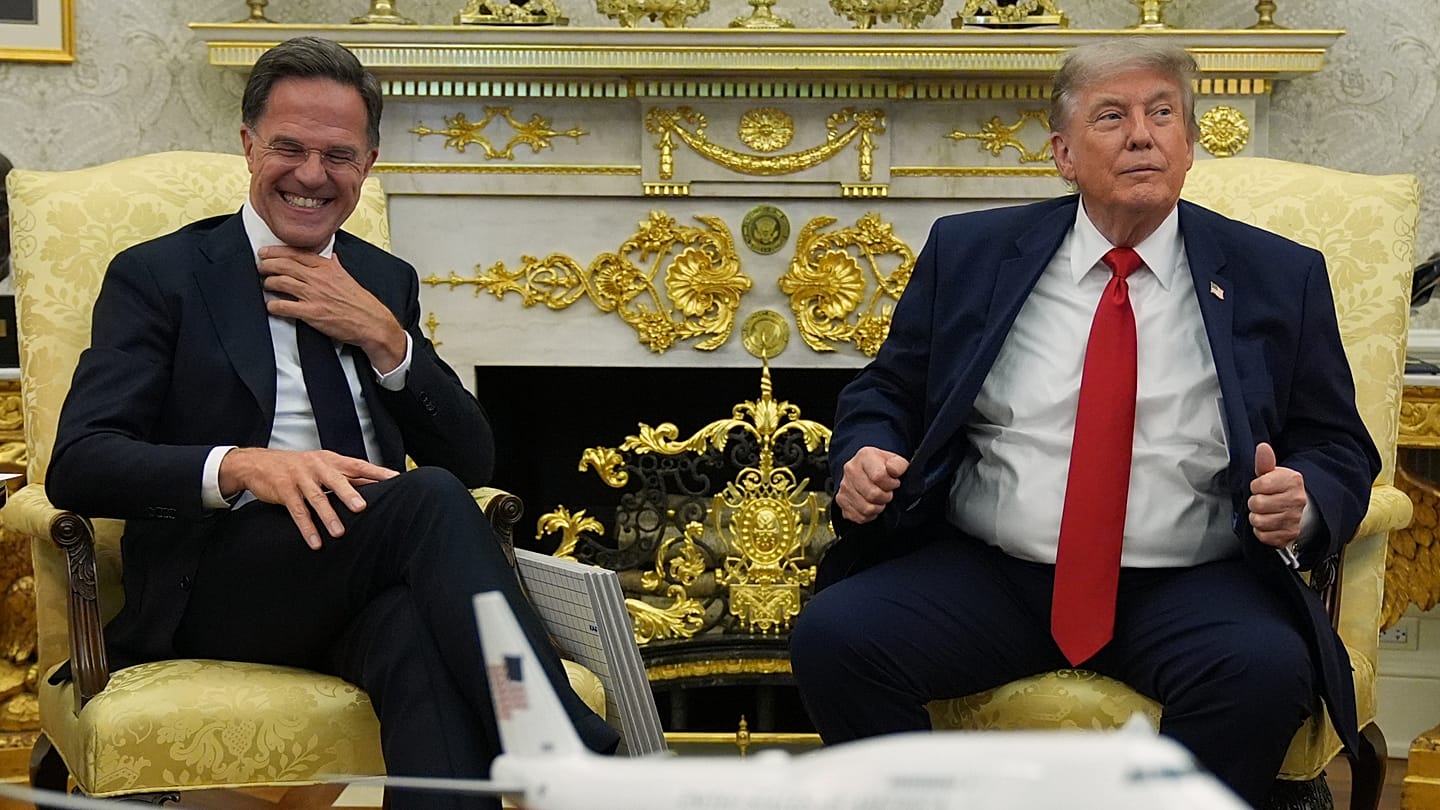
NATO Secretary-General Mark Rutte has pushed back against former U.S. President Donald Trump's assertion that European allies let him down on Iran, defending their record of cooperation within the alliance. In a carefully worded response, Rutte acknowledged that there have been "isolated cases" of disappointment but insisted that, broadly speaking, European partners have stood by Washington.
"I know there have been isolated cases about which you are really disappointed, but generally speaking, your European allies have been there with you," Rutte said, according to remarks reported on Tuesday. The comments come as Trump continues to voice frustration over what he perceives as insufficient European support for his administration's maximum-pressure campaign against Tehran.
The exchange underscores persistent transatlantic tensions over Iran policy, a fault line that has divided the United States and many European capitals since Trump's withdrawal from the Joint Comprehensive Plan of Action in 2018. While European signatories—including France, Germany, and the United Kingdom—sought to preserve the nuclear deal through a dedicated payment mechanism, Trump has repeatedly accused them of freeloading on U.S. security guarantees.
Rutte's Balancing Act
Rutte's remarks reflect a broader effort by the NATO chief to manage relations with a potential future Trump administration. The Dutch former prime minister has sought to emphasize European burden-sharing within the alliance, a theme that resonates with Trump's long-standing complaints about defense spending. In recent months, Rutte has pointed to increased European contributions to NATO's eastern flank and to Ukraine, hoping to preempt criticism.
The timing is delicate: with the NATO summit in July approaching, Rutte is working to ensure that the alliance presents a united front on key security challenges, including Iran's nuclear program and the war in Ukraine. Trump's latest broadside, however, threatens to overshadow those efforts.
European officials have privately expressed concern that Trump's transactional approach to alliances could undermine NATO's cohesion. They note that while the U.S. has led military operations in the Middle East, European allies have contributed troops, intelligence, and diplomatic resources to counter Iranian proxies and maintain stability in the region.
Iran at the Center of Dispute
The dispute over Iran is not new. During Trump's presidency, European governments worked to keep the nuclear deal alive through the Instrument in Support of Trade Exchanges (INSTEX), a barter-like mechanism designed to bypass U.S. sanctions. The effort ultimately failed to attract significant business, and Iran resumed uranium enrichment beyond deal limits.
More recently, the International Atomic Energy Agency has insisted that inspections will continue despite Tehran's objections, but the standoff remains unresolved. Trump has threatened to end talks over Iran's demands regarding tolls in the Strait of Hormuz, a move that could escalate tensions further.
Rutte's defense of European allies also comes amid a broader recalibration of transatlantic relations. European leaders, including Italian Prime Minister Giorgia Meloni and French President Emmanuel Macron, have sought to maintain channels of communication with Trump's camp, even as they prepare for potential policy shifts after the U.S. elections. Meloni's popularity has held steady despite a public spat with Trump, suggesting that European voters may not penalize leaders who stand up to Washington.
For now, Rutte's message is one of reassurance: that European allies remain committed to the alliance, even if disagreements over Iran persist. Whether that will satisfy Trump—or his supporters—remains an open question.