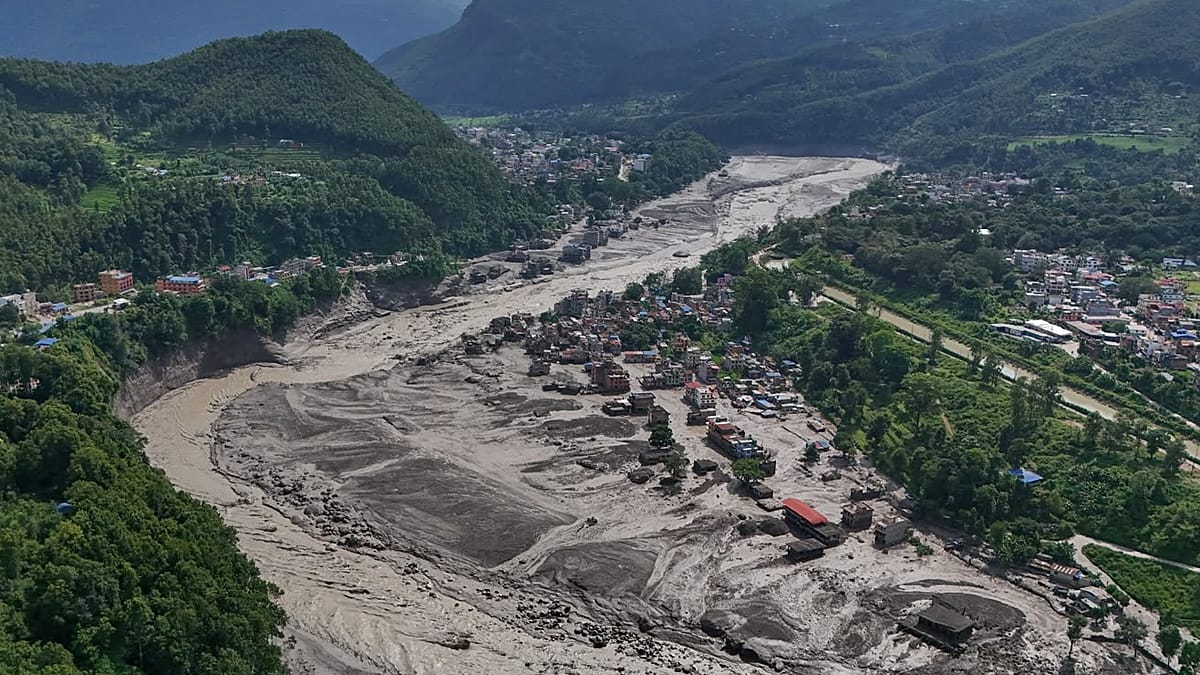
Flash floods have torn through central Nepal, leaving hundreds of people unaccounted for and at least eight confirmed dead. The deluge struck after a large volume of water entered the Bhote Koshi river from the Tibetan side, sending a torrent of muddy water downstream into the Trishuli River.
Footage from Nuwakot and Dhading districts shows brown, churning water rushing past villages and towns, with streets covered in thick mud and debris. Police have urged residents to remain alert and avoid the riverbanks as rescue teams work to assess the full scale of the disaster.
Rivers burst their banks
The flooding was triggered by a major surge in the Bhote Koshi in the northern Rasuwa district, where villages, roads, and infrastructure have been damaged. Authorities have warned people to stay away from the banks of the Bhote Koshi, Trishuli, and Narayani rivers, as water levels remain dangerously high.
In Galchhi, a town in Dhading district, the Trishuli carried a heavy flow of muddy water, inundating low-lying areas. Local officials say the situation is still evolving, with many communities cut off by damaged roads and bridges.
The confirmed death toll stands at eight, but officials fear it could rise significantly as search and rescue operations continue. Hundreds of people are reported missing, many of them believed to have been swept away while working or traveling near the rivers.
Nepal's army and police have been deployed to the affected areas, using helicopters and inflatable boats to reach stranded residents. In some places, people have been forced onto rooftops as floodwaters rose rapidly.
The disaster has drawn attention to the region's vulnerability to extreme weather events, which scientists say are becoming more frequent due to climate change. The Himalayas, which feed Nepal's major rivers, are particularly sensitive to shifts in temperature and precipitation patterns.
While the immediate focus is on rescue and relief, questions are already being raised about the long-term impact on the region's infrastructure and economy. The Bhote Koshi is a key tributary of the Trishuli, which is used for hydropower generation and irrigation, and the damage could have ripple effects.
For now, the priority is finding the missing and providing aid to those affected. The Nepali government has promised support, but the scale of the disaster is testing the country's resources.
As the waters begin to recede, the full extent of the damage will become clearer. But for the families of the missing, the wait for news is agonizing.