A federal judge in Washington has postponed the trial of a former Libyan intelligence officer accused of building the bomb that destroyed Pan Am Flight 103 over Lockerbie, Scotland, in 1988. The delay comes after prosecutors disclosed new evidence to the defence, which says it needs time to examine the material in a case that has already spanned nearly four decades.
Jury selection had been scheduled to begin on Wednesday for Abu Agila Mohammad Mas'ud Kheir Al-Marimi, who is charged with two counts of destruction of an aircraft resulting in death. If convicted, he faces a maximum sentence of life in prison. The trial would have been the first in the United States related to the 21 December 1988 attack, which killed all 259 people on board and 11 more on the ground in the Scottish town of Lockerbie.
US District Judge Dabney Friedrich did not specify the nature of the newly discovered evidence in her brief order, but she cited the case's complexity, the new material, and "the need for the defence to determine how best to defend this case" as reasons to postpone the proceedings. A hearing has been scheduled for 1 September in Washington to discuss the status of the case.
Defence attorney Laura Koenig, an assistant federal public defender, said prosecutors had disclosed the new evidence on Saturday. She declined to elaborate, but noted that "constitutional and ethical obligations require the defence to investigate this development."
A tragedy that reshaped aviation security
The bombing of Pan Am Flight 103 remains the deadliest terrorist attack ever on British soil. The aircraft, a Boeing 747, was flying at 9.45 kilometres over Lockerbie when a bomb in the forward cargo hold exploded 38 minutes after take-off from London Heathrow Airport. The flight had been bound for John F. Kennedy International Airport in New York.
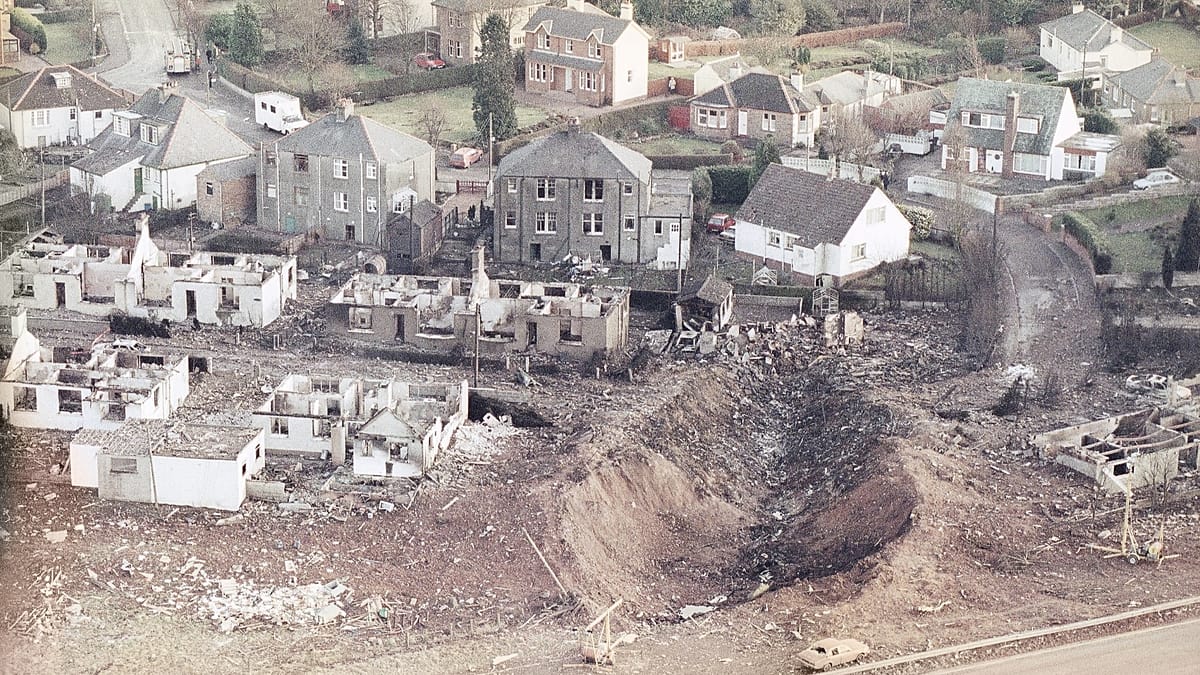
The blast killed all 259 passengers and crew, and the wreckage destroyed an entire block of houses in Lockerbie, killing 11 residents. Citizens of 21 countries died, including 190 Americans and 43 from the United Kingdom. Among the passengers were 35 Syracuse University students returning from a semester abroad.
Kara Weipz, board president of the nonprofit Victims of Pan Am Flight 103, said her organisation had received no details about the new evidence. Her brother Richard Monetti was one of the Syracuse students killed. She called the delay a shock, noting that some relatives were already packing to travel to Washington for the trial.
"At the same time, for almost 38 years we've been seeking the truth of what happened," Weipz said. "If that's what this is, then that's a good thing, and this delay is worth it. It's important to hear all the facts."
Prosecutors allege that Al-Marimi and others carried out the bombing at the direction of Libyan leader Muammar Gaddafi, who was ousted and killed in 2011. Al-Marimi, now in his mid-70s, worked for the Libyan intelligence service from approximately 1973 to 2011, rising to the rank of colonel, according to court documents.
Investigators believe Al-Marimi brought a suitcase containing a bomb to an airport in Malta and handed it to co-conspirators for a flight to Frankfurt, Germany. The suitcase then travelled from Frankfurt to London, where it was loaded onto Flight 103.
Two other Libyan intelligence agents were tried by a panel of Scottish judges at a former US military base in the Netherlands in 2000. The tribunal convicted one official and acquitted the other, but the identity of the bombmaker remained a mystery for years. Al-Marimi was later identified as a suspect and taken into US custody in 2022.
The delay adds another chapter to a case that has already seen decades of legal wrangling and diplomatic tension. For the families of the victims, many of whom are European, the wait for a full accounting of the attack continues. The new evidence, whatever it is, may finally shed light on the full extent of the conspiracy behind the Lockerbie bombing.