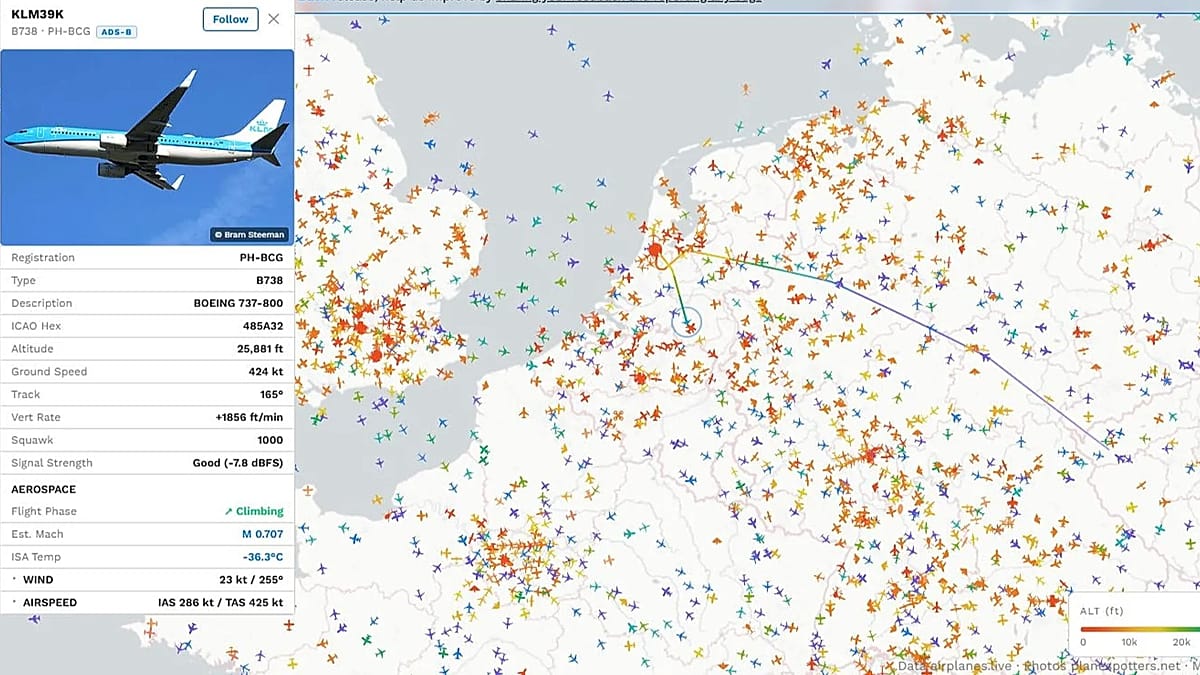
Aviation enthusiasts across Europe have a new tool to monitor the skies. Simple Flying, an aviation news website, has launched a flight tracker that stands out for its ability to send alerts when aircraft behave unusually. The system monitors parameters such as altitude oscillation, erratic flight paths, turn rates, and squawk codes—including 7700, the international emergency signal.
Real-Time Tracking and Replay
Users can follow flights in real-time and replay them after landing. The interface displays aircraft model, airline operator, altitude, and ascent or descent rate. It also integrates NOTAMs (Notices to Airmen), which are critical for understanding airspace restrictions—particularly relevant given recent disruptions like the drone alert that temporarily halted flights at Helsinki Airport.
Filters allow users to view commercial, military, private, or surface aircraft. Specific aircraft and callsigns can be added to a personal watchlist, making it easier to track particular planes or flights of interest.
Data Sources and Technology
The tracker pulls data from multiple sources, including Airplanes.Live and OurAirports.com. Aircraft are tracked using Automatic Dependent Surveillance-Broadcast (ADS-B) and multilateration (MLAT) data, captured by ground-based receivers. This technology is widely used across Europe, where networks of receivers—often operated by hobbyists—provide dense coverage over cities like London, Paris, Berlin, and Amsterdam.
For those following the ongoing jet fuel crisis that has forced airlines to cut thousands of flights, the tracker offers a way to see how carriers are adjusting their operations in real time.
Statistics and Insights
A statistics panel shows altitude distribution, top operators, and most common aircraft types. This feature could appeal to analysts tracking trends in European aviation, such as the rise of low-cost carriers or the impact of new long-haul routes like Riyadh Air's planned flights to London.
The launch comes at a time when flight tracking has gained mainstream popularity, from monitoring the final journey of Queen Elizabeth II to tracking flights out of the UAE during geopolitical tensions. For European readers, the tool offers a window into the continent's complex airspace, where military exercises, drone incidents, and strikes—like the upcoming strike at Belgium's Charleroi Airport—can cause sudden changes.
While the tracker is not the first of its kind, its alert system for unusual activity fills a niche for aviation geeks and professionals alike. Whether you're a pilot, a journalist, or just curious about what's flying overhead, this tool adds a layer of insight into the skies above Europe.