An international team led by the Institute for Economic Analysis (IAE), part of Spain's National Research Council (CSIC), has developed a tool that projects how climate change will erode agricultural productivity across the globe by the end of the century. Dubbed CADI—the Climate-induced Agricultural Decline Index—the platform maps potential crop yields on a 9.3-by-9.3-kilometre grid, isolating the impact of shifting weather patterns from human adaptation choices.
How CADI Works
Coordinated by Laura Mayoral and Hannes Mueller, who are also affiliated with the Barcelona School of Economics, the project draws on historical crop data from the UN Food and Agriculture Organization and climate records from the EU's Copernicus programme. By comparing yields from 1981–2000 with those from 2001–2020, the team calibrated a model that then projects changes under various IPCC scenarios through 2100. Crucially, the model assumes no adaptation—meaning it reflects the pure effect of climate change if farming practices remain frozen at 2020 levels.
The platform was developed in collaboration with the Centre for Economic Policy Research, the UK Foreign Office, and an initiative focused on conflict stemming from economic crises. Its results are already stark: one in six croplands worldwide has lost more than 10% of its potential productivity in the last two decades compared with the previous two.
Winners and Losers Across Europe
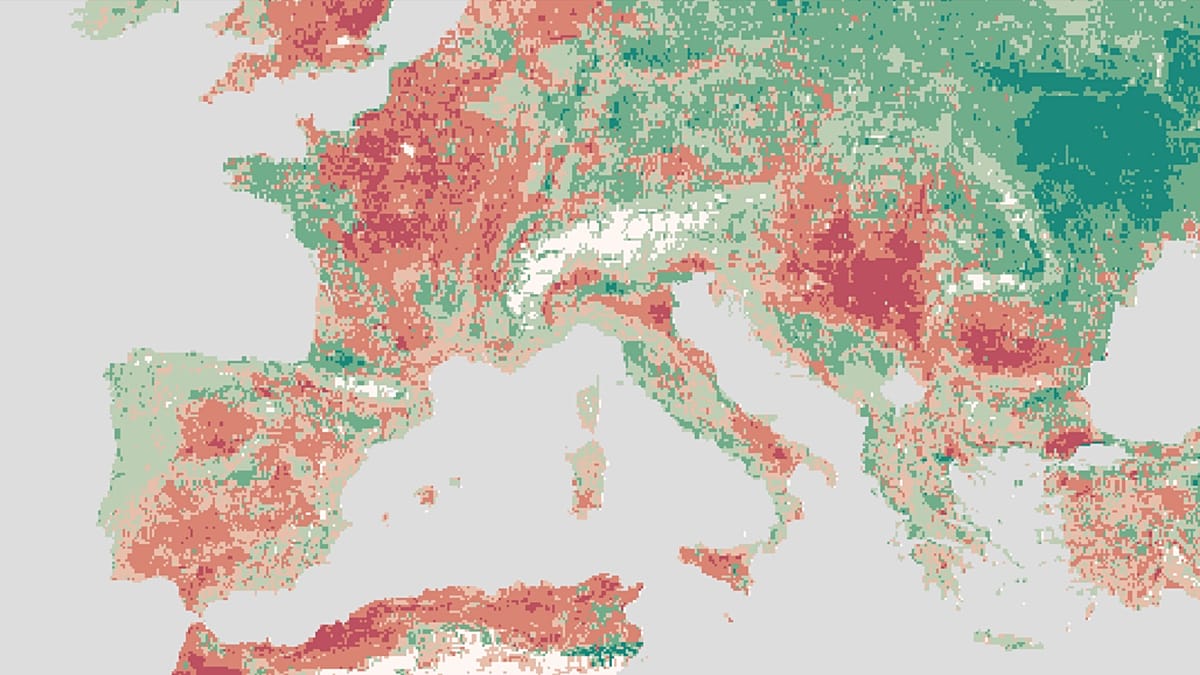
The familiar north-south divide in Europe is confirmed by CADI's projections. Scandinavia, Scotland, and the Alps are expected to see agricultural potential increase, while the continent's southern tier—including much of Spain, Italy, and Greece—faces significant declines. Within Spain, the pattern mirrors the global one: the Cantabrian coast, Galicia, and the Pyrenees gain productivity, while the interior and central-eastern regions suffer severe losses. Mueller notes that this internal imbalance could create new tensions over land and water resources, as regions that previously did not compete for these assets suddenly find themselves in conflict.
These shifts are not merely academic. Already, 15% of the world's population lives in areas where agricultural potential has dropped by at least 5%. Under a medium-high warming trajectory—about 2.1°C by mid-century—that figure could rise to nearly half the global population between 2041 and 2060. The model also reveals a stark concentration: just 5% of tropical land accounts for 35% of all recorded losses, and a quarter of countries are expected to bear 85–90% of global damage by mid-century.
The researchers emphasize a deep injustice: the nations that have contributed the least to historical greenhouse gas emissions are among the most exposed to these losses, and that gap is set to widen. For Europe, this means that while northern countries may benefit from longer growing seasons, southern member states face a future of declining yields, potentially exacerbating existing economic disparities within the EU.
Practical applications of CADI are already being explored. The tool can help policymakers identify regions most in need of investment in climate-resilient crops or irrigation infrastructure. For instance, agri-PV in Bavaria offers one example of how solar panels above hop gardens can mitigate heat stress while generating energy. Similarly, Portuguese environmentalists are demanding climate shelters as heatwaves intensify, a need that CADI's projections could help prioritize.
The index also highlights the broader human cost. Climate change already steals 56 hours of sleep annually, with southern Europe hit hardest—a reminder that the effects of a warming planet extend far beyond agriculture. As Mueller and Mayoral stress, CADI's value lies not only in its diagnosis but in its ability to guide adaptation strategies before the most severe impacts materialize.