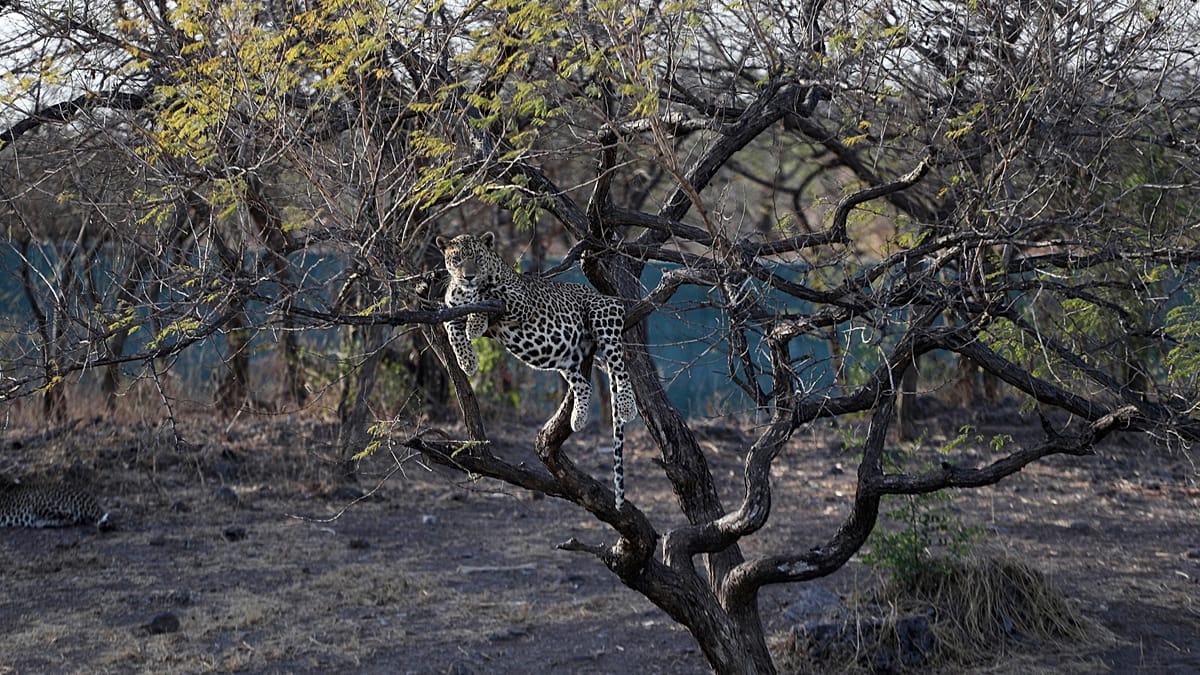
For the first time in over a hundred years, scientists have identified a new species of wild cat. The Tilcayo tiger cat, a small feline with a spotted coat reminiscent of a leopard, was first spotted in the mountainous Yungas region near La Paz, Bolivia's capital. Locals initially assumed it was a domesticated cat, but DNA analysis revealed it belongs to a distinct lineage.
A century in the making
Biologist and National Geographic explorer Paola Nogales-Ascarrunz, part of the research team, called the discovery a "remarkable event." The last new wild cat species was described in 1923, making this the first in exactly a century. The animal's local nickname, "tilcayo," inspired its scientific name, Leopardus tilcayo.
The Tilcayo tiger cat measures about 45 centimetres (18 inches) in length, slightly smaller than a typical domestic cat, and has rounded ears. So far, only two individuals have been found: a male living in an animal shelter in Yungas after being handed over by a family that had kept it, and a female that was rescued and released into the wild after being attacked by locals.
The research, published Thursday in the journal Current Biology, caps off work that began in 2021. The team conducted whole-genome sequencing on both animals, a deep genetic analysis that confirmed the species' uniqueness.
An elusive and vulnerable feline
Nogales-Ascarrunz noted that the species has "so far, it's only been detected in Bolivia" and nowhere else on the planet. Little is known about its behaviour, diet, predators, or reproductive habits. The researchers classify it as vulnerable to extinction, and warn it could soon be considered at "much greater risk" of dying out.
The discovery underscores the importance of biodiversity research, especially in regions like the Andes, where habitat loss and climate change are pressing threats. The team hopes their methods—combining field observations with advanced genetic tools—can be applied to uncover other unknown cat species worldwide and inform conservation strategies.
While the Tilcayo tiger cat is a new find, it joins a broader conversation about feline conservation. Tigers, for instance, are often called environmental warriors because their protected habitats allow vast stretches of forest to act as natural carbon sinks. Protecting such predators can have cascading benefits for ecosystems and climate.
The discovery also highlights the role of local communities in scientific breakthroughs. The family that took in the male tilcayo and the residents who reported sightings were crucial to the research. Their cooperation enabled scientists to study a species that might otherwise have remained hidden.
As researchers continue to explore the world's wild places, they are increasingly relying on genetic analysis to distinguish between known species and cryptic ones that look similar. This approach could revolutionise our understanding of feline diversity and help prioritise conservation efforts where they are most needed.
For now, the Tilcayo tiger cat remains a mystery, but its discovery is a reminder that even in the 21st century, the natural world still holds surprises. The challenge now is to ensure that this newly recognised species survives long enough for scientists to learn its secrets.