New Zealand's final vote count has delivered a hung parliament, with a brand-new centrist party holding the key to government formation. The Electoral Commission's tally, released on Friday after counting 400,000 special votes including ballots from abroad, left neither the centre-right nor the centre-left with a majority in the 130-seat House of Representatives.
Prime Minister Christopher Luxon's National Party slipped to 40 seats, two fewer than its preliminary result, while the right-wing bloc—including the libertarian ACT (13 seats) and the populist NZ First (12)—now holds 65 seats, one short of the 66 needed to govern. The left, led by Labour's Chris Hipkins, has 58 seats, with Labour itself on 36. The Greens took 17 and Te Pāti Māori five.
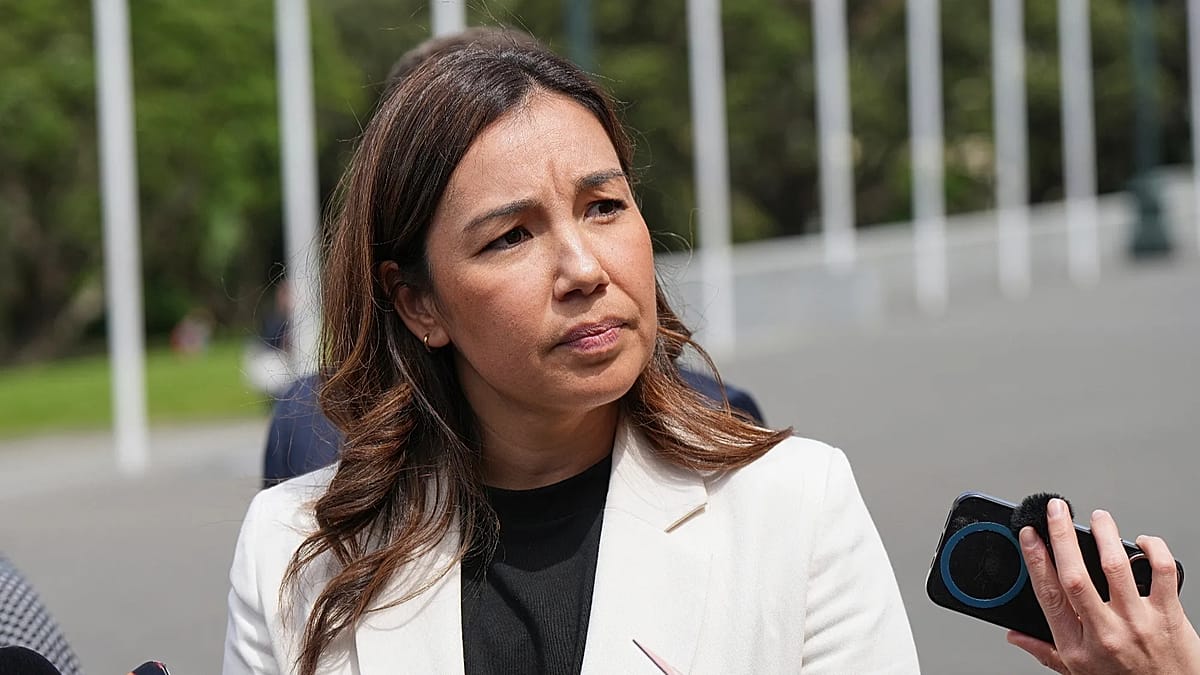
The balance of power rests with the Opportunity Party, an unaligned centrist newcomer led by 38-year-old business consultant Qiulae Wong, which won seven seats. Wong has said she could work with either side, but her party's five 'bottom line' policies—including tougher climate action and a ban on bottom-trawling—clash with the positions of ACT and NZ First. She has also ruled out joining any government in which Winston Peters, the NZ First leader, serves as foreign minister, citing his past parliamentary remarks about Asian people.
On Friday, Hipkins conceded that Opportunity's support would not be enough to put the left in power, an apparent admission of defeat. Luxon, who before the 7 November vote had ruled out working with Opportunity, reversed course, saying he was confident of forming a government with the party and his usual partners. 'These negotiations may be challenging and they could take some time,' he said. 'But getting it right matters far more than getting it done quickly.'
A fragmented electorate
The final tally showed more support for minor parties on the ideological flanks than in earlier counts. A total of 2.8 million votes were cast. Both major parties took under 30% of the party vote—Labour 29.88% and National 28.35%—reflecting widespread anger over the cost of living and little enthusiasm for either leader. Luxon survived two confidence votes among his own MPs this year, while Hipkins led Labour to defeat in 2023.
Wong said she would consider either a full coalition or a 'confidence and supply' deal, under which her MPs would back key legislation and decide other bills case by case. Her party's rise mirrors a broader trend in established democracies where centrist newcomers gain influence as traditional parties fragment—a dynamic also visible in European politics, where centrist parties have pushed back against far-right alliances in EU coalition talks.
The outcome in New Zealand underscores the challenges of coalition-building in multiparty systems, a familiar scenario for European readers. In France, for instance, the 2027 presidential election is already seen as pivotal for the continent's future, with centrist and pro-European forces mobilising. Meanwhile, in Spain, a tight election campaign has been dominated by housing, immigration, and polarisation, with the right-wing PP leading in polls and a possible right-wing majority in sight.
For Luxon, the path to a government is narrow: he needs the support of all three minor parties—ACT, NZ First, and Opportunity. Yet the ideological gaps are wide. ACT and NZ First are sceptical of ambitious climate measures, while Opportunity has made climate action a red line. Peters' history with Wong's party adds another layer of friction.
Analysts note that the final count's boost for flank parties—the Greens and Te Pāti Māori on the left, and ACT and NZ First on the right—reflects a polarised electorate. The Greens' 17 seats are their best result, while Te Pāti Māori's five seats give it a strong voice on indigenous issues.
As negotiations begin, Wong has positioned herself as a pragmatic broker. 'We will talk to anyone who is serious about governing in the interests of New Zealanders,' she said. Her decision will determine whether Luxon can form a government or whether the country faces a fresh election.
For European observers, the New Zealand election offers a case study in how small centrist parties can wield outsized influence—a lesson that resonates from Berlin to Madrid, where coalition arithmetic often hinges on similar dynamics.