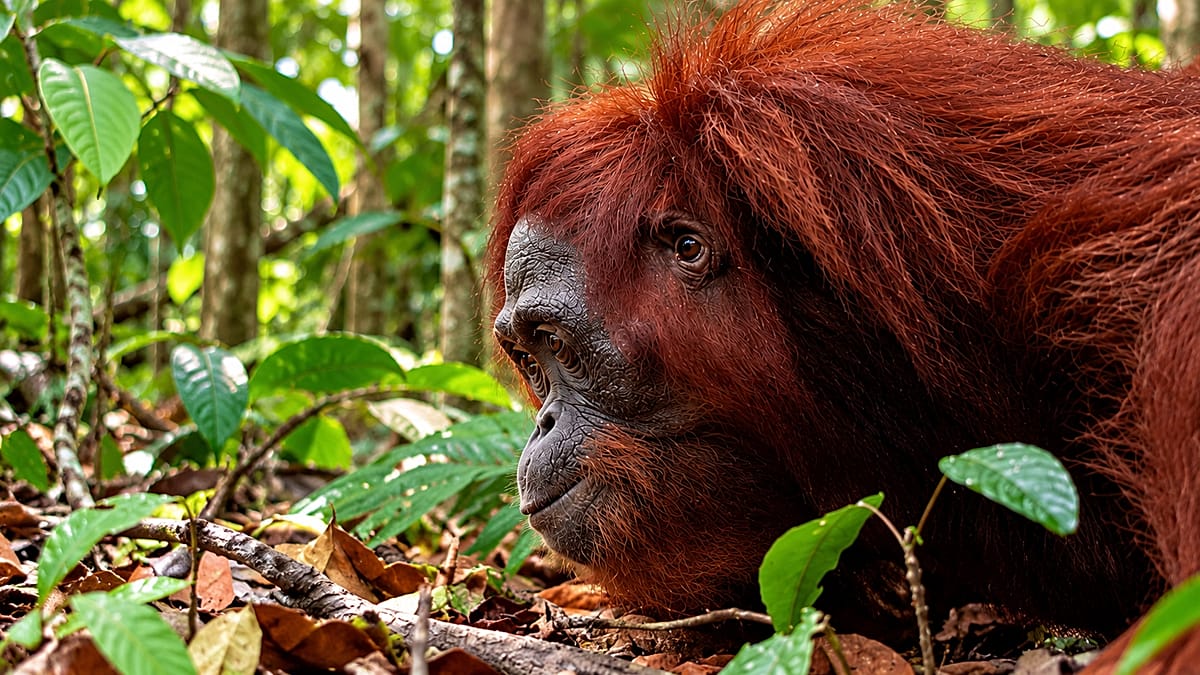
Nine orangutans that were rescued from devastating wildfires in Indonesian Borneo have been returned to their natural habitat after completing a rehabilitation programme. The group, which includes four mothers with their young, was released back into the forest following weeks of care, according to conservation officials.
The orangutans were among those displaced by the severe fires that swept through parts of Borneo, destroying vast areas of rainforest and leaving many animals injured, orphaned, or stranded. Rescue teams, working with local authorities and conservation groups, managed to locate and evacuate the primates before returning them to a safer environment.
A slow road to recovery
The rehabilitation process involved veterinary care, nutritional support, and behavioural monitoring to ensure the animals were fit to survive independently in the wild. For the mothers, particular attention was paid to their ability to care for their infants, as the stress of the fires and captivity can disrupt maternal bonds.
Three of the female orangutans are now expecting another baby, a hopeful sign for the species' long-term survival. Conservationists say that each successful birth is crucial for the orangutan population, which remains critically endangered due to habitat loss and fragmentation.
The release site, located in a protected forest area, was chosen after careful assessment to ensure it offers sufficient food sources and low human disturbance. The orangutans were fitted with tracking devices to monitor their movements and adaptation in the coming months.
Wildfires in Indonesia, often linked to land clearing for agriculture, have become an annual threat to the region's biodiversity. The smoke and haze from these fires also affect neighbouring countries, highlighting the transboundary nature of environmental crises.
While this rescue operation ended positively, conservationists stress that prevention is key. Restoring degraded peatlands, enforcing fire bans, and promoting sustainable land-use practices are essential to reduce the frequency and intensity of such fires.
The return of these orangutans is a reminder of the resilience of nature when given a chance. It also underscores the importance of international cooperation in protecting shared ecosystems, a lesson that resonates beyond Southeast Asia.
For European readers, the story echoes broader concerns about deforestation and climate change, issues that also affect the continent's own forests and biodiversity. Initiatives like Milan's urban forest plan show how restoration efforts can be scaled up, while the wild apple forests of Kazakhstan remind us of the hidden value in preserving natural habitats.
As the orangutans settle back into their forest home, their journey offers a glimmer of hope amid the ongoing challenges of wildlife conservation. It is a small but meaningful victory for the species and for the people who worked tirelessly to save them.