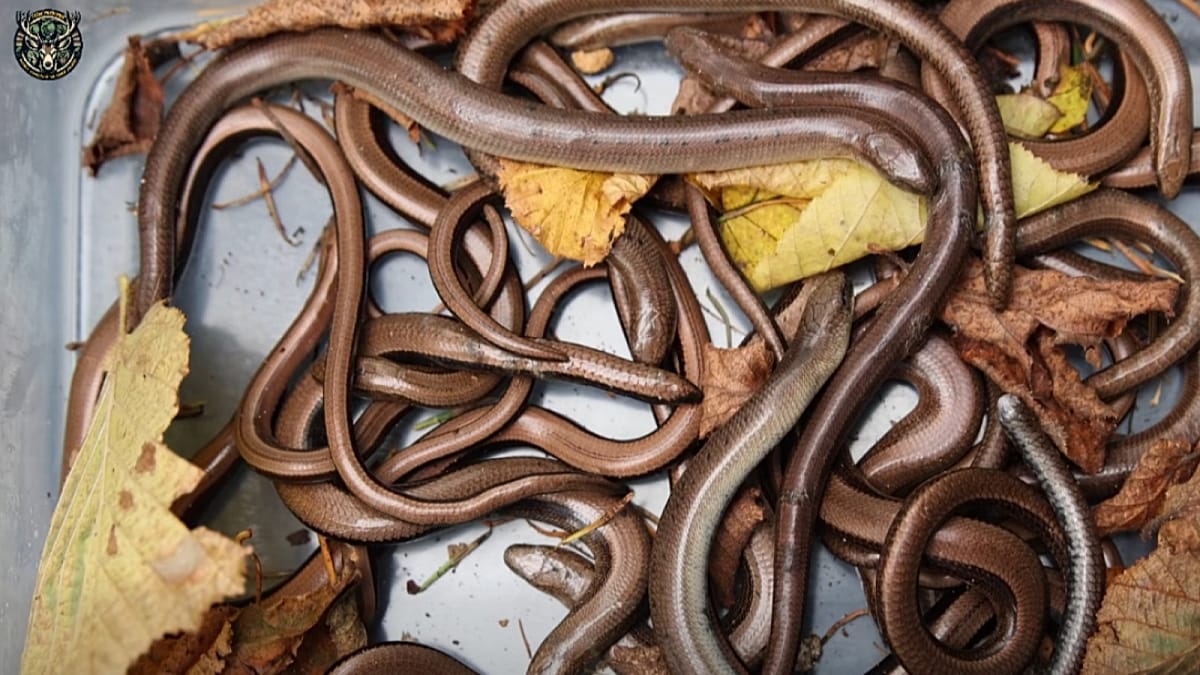
In southern Poland, a routine inspection of an underground water meter chamber turned into an unexpected rescue operation. Wildlife rehabilitation centre Leśne Pogotowie received a call about venomous vipers sheltering in the pit, but when rescuers arrived, they found not snakes but 19 slow worms—legless lizards often confused with their serpentine cousins.
The chamber, with its cool, damp atmosphere and concrete walls, had offered the reptiles an ideal spot for winter torpor. But the smooth vertical surfaces proved a trap: the slow worms could slither down easily, yet had no way to climb back out.
Because the animals were already in a state of hibernation, releasing them immediately into the cold would have been dangerous. They would have had little time to find alternative shelter before temperatures dropped further. Instead, the slow worms were taken to the rehabilitation centre, where they will spend the winter in carefully controlled conditions.
Winter care and spring release
At the centre, the slow worms are being kept at a stable, low temperature that mimics natural hibernation. This reduces the risk of them waking prematurely, which could deplete their energy reserves. The plan is to release them back into the wild in spring, once temperatures are consistently high enough for them to thrive.
Slow worms are harmless to humans and play a beneficial role in gardens, feeding on snails, earthworms, and other small invertebrates. Poland is home to two species: the common slow worm and the eastern slow worm. They are similar in appearance, but differ in scale structure and arrangement, and many male eastern slow worms display characteristic blue spots on their backs. These reptiles are most commonly found in the southeastern part of the country.
This incident highlights a broader issue: underground infrastructure, such as water meter chambers, can inadvertently become wildlife traps. Similar cases have been reported across Europe, where animals fall into pits or pipes and cannot escape. Conservationists often urge utility companies to install escape ramps or covers to prevent such accidents.
For the slow worms of southern Poland, the outcome was fortunate. Thanks to the quick response of Leśne Pogotowie, they will emerge from hibernation in spring and return to their natural habitat, ready to resume their quiet, beneficial lives.