Fifteen years after the Fukushima disaster reshaped global attitudes toward atomic energy, the pendulum has swung again. With tensions in the Middle East and the ensuing energy crunch, European policymakers are once again touting nuclear power as a cornerstone of the continent's low-carbon future. EU Climate Action Commissioner Wopke Hoekstra recently named nuclear among the sources member states should rely on. But a growing number of experts question whether the technology is as clean and dependable as its advocates claim.
The hidden carbon footprint
At first glance, nuclear energy appears spotless: reactors generate electricity without emitting carbon dioxide or smog-forming pollutants. Yet this narrow view ignores the broader picture. Dr Bettina Wittneben, a lecturer in Management at Oxford's Saïd Business School and associate fellow at Pembroke College and the School of Geography and the Environment, points out that the massive concrete structures embody significant carbon. "The bulky concrete structures mean that it has a large amount of embodied carbon and, of course, it is not a renewable energy as it requires the mining of uranium, bringing with it carbon costs in terms of extraction and transport," she explains. "Nuclear waste disposal and decommissioning must also be factored into the carbon budget of nuclear energy generation."
Heatwaves expose fragility
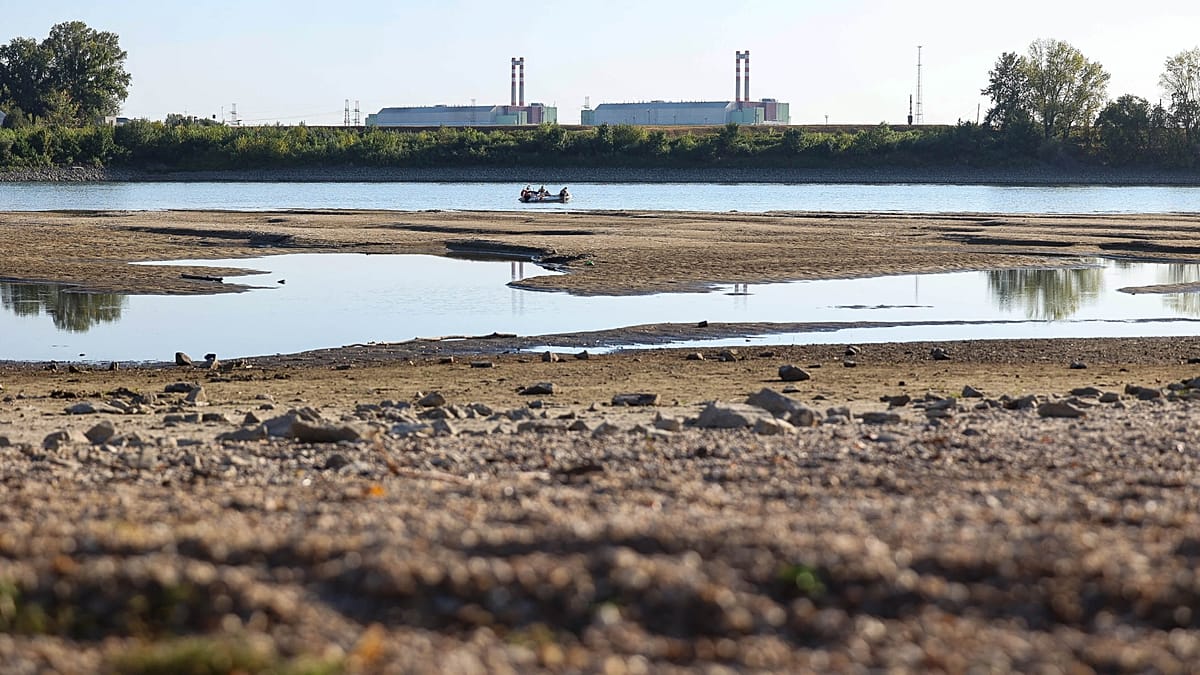
This summer, Europe was scorched by back-to-back heatwaves that scientists say would have been "virtually impossible" without climate change. The extreme heat, coupled with scant rainfall, drained rivers to record lows, forcing nuclear plants in France, Hungary, and Romania to shut down or reduce output. Nuclear reactors are notoriously thirsty—the Nuclear Energy Institute estimates a single reactor needs between 1,514 and 2,725 litres of water per megawatt-hour. Without a constant supply, reactors risk overheating, which can lead to core damage and the release of harmful radiation.
While coal and hydropower also suffered, solar power surged, with output rising by up to 17 per cent on heatwave days in June and July, according to energy think-tank Ember. Solar was the only major power source to perform "better than usual" during the hot weather. This resilience is one reason why Switzerland's Beznau plant—the oldest in the world—has faced repeated shutdowns in recent years, a pattern that raises questions about the long-term viability of ageing reactors in a warming climate.
Grid flexibility and the 'Hellbrise' problem
Intermittent renewables like wind and solar are often blamed for overloading Europe's outdated grid. When supply outstrips demand, surplus energy is wasted, sometimes leading to negative electricity prices—a phenomenon known as 'Hellbrise' (hell for bright, brise for breeze). "This is also the narrative of fossil fuel advocates, who present fossil gas as the saviour of the baseload," says Dr Wittneben. "Fossil fuel sceptics point instead to nuclear power as a reliable baseload technology."
However, nuclear plants are slow and costly to ramp down, meaning they can actually amplify the Hellbrise challenge rather than solve it. The EU has recognised that battery energy storage systems (BESS) are a "crucial technology" to prevent renewable energy from being wasted. In 2025, Europe installed 36 GWh of new BESS, pushing total capacity beyond 100 GWh for the first time—enough to power around 75 million homes. This shift toward storage, rather than new nuclear builds, is gaining traction as a more flexible solution.
Nuclear's uneven footprint in Europe
Last year, nuclear generated 652 TWh of electricity in the EU, accounting for 23.3 per cent of the bloc's total mix—more than solar (13.1 per cent) or wind (17.1 per cent). France leads the pack, producing 392 TWh, or 68.8 per cent of its electricity from nuclear. Spain follows with 54.1 TWh, and Sweden with 46.7 TWh. Yet this concentration raises concerns: as Ireland weighs nuclear options to meet AI-driven data centre demand, the debate over cost, safety, and climate resilience is far from settled.
Dr Wittneben warns that new nuclear capacity will not address today's energy challenges. "In the high-renewables systems of Europe, the problem is increasingly not how to generate more electricity but how to access it when and where it's needed," she says. As Europe grapples with the twin pressures of decarbonisation and climate adaptation, the true cost of nuclear—both financial and environmental—may be higher than its proponents admit.