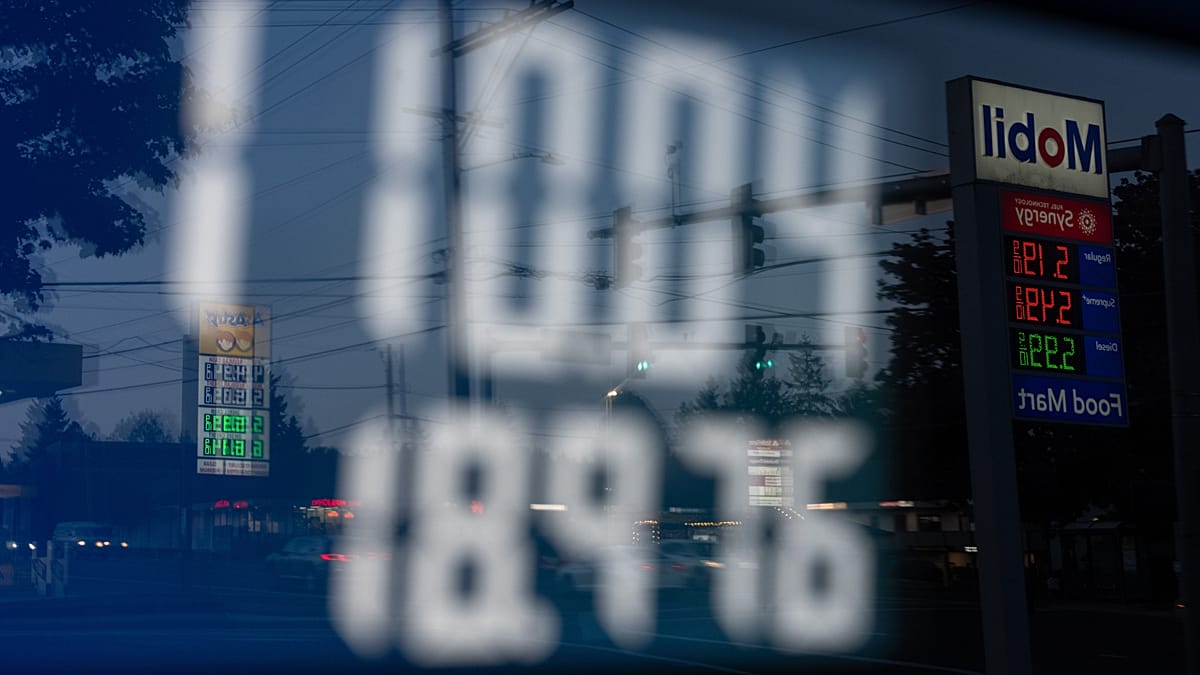
Major oil companies have reported blockbuster profits for the spring quarter, as the ongoing conflict between the United States and Iran disrupts shipping through the Strait of Hormuz and pushes energy prices higher worldwide. The six-month standoff has effectively halted most tanker traffic through the narrow waterway, which previously carried about a fifth of the world's oil and natural gas. With supply constrained, Brent crude—the international benchmark—soared from roughly $70 (€60) to above $100 (€86) per barrel during March, April and May, briefly touching $126 (€108) at its peak.
The windfall comes as motorists, airlines and households across Europe and beyond face sharply higher fuel bills. Petrol, diesel and jet fuel prices climbed steeply during the quarter, and some countries have resorted to rationing. Australia introduced sporadic fuel rationing, while government offices in Nepal and Sri Lanka were forced to close due to shortages.
Record profits for American giants
Exxon Mobil reported on Friday that its second-quarter profits doubled to $14.53 billion (€12.50 billion), boosted by record diesel production. Revenue jumped 42% to $116.02 billion (€99.78 billion). Chevron, based in Houston, nearly quadrupled its profits to $12.07 billion (€10.38 billion), with revenue up 56% to $70.06 billion (€60.25 billion).
European oil majors have also fared well. The six largest—including Shell, BP, TotalEnergies, Eni, Equinor and Repsol—posted combined first-quarter profits of $22 billion (€18.92 billion), more than 40% higher than the previous year. These companies are headquartered in London, Paris, Rome, Oslo and Madrid, and their earnings are a reminder of how deeply the energy crisis is intertwined with European economies.
“There are constituencies around the world who are having a very good crisis, and the oil producers are one of them,” said Patrick Galey, fossil fuels lead at Global Witness, a nonprofit that investigates environmental issues. “When you compare that to the hundreds of millions of people who are struggling with rolling blackouts, with electricity curbs, rationing, waiting in line for food queues, or the disruption to fertilizers and the potential impact that that has on food prices, we don’t think that it’s a justifiable price for the rest of the world to be paying.”
Political pressure for windfall taxes
The outsized profits have reignited debates about taxing energy companies. In the United States, Democratic lawmakers introduced bills in March to impose a per-barrel tax on companies producing or importing at least 300,000 barrels of oil per day in 2025, with proceeds redistributed to consumers. Senator Sheldon Whitehouse of Rhode Island, who sponsored the Senate version, said, “It’s fair to put a windfall profits tax on inordinate windfall profits rather than cut off children’s food programs.”
European governments have already moved in this direction. The UK and several other European countries implemented temporary windfall taxes on fossil fuel companies in 2022, and the UK has extended its levy to 2030, according to Tax Foundation Europe. However, Exxon CEO Darren Woods warned that such measures could backfire. “Penalising the businesses who stood by those countries and provided that product going forward is very short-sighted,” he told investors on Friday. “We canceled investments that we had planned for Europe based on the last time they passed a windfall profits tax.”
Refineries cash in while consumers pay more
Companies that own refineries, such as Exxon and Chevron, are particularly well positioned to profit from the current market conditions, said Tom Seng, assistant professor of energy finance at Texas Christian University. Refineries convert crude oil into petrol, diesel, jet fuel and heating oil. Higher product prices meant Chevron’s quarterly refinery profit was six times higher in 2026, even though it processed less crude and sold fewer products.
“The return on refining, on a percentage basis, has skyrocketed,” Seng said. “Oil right now is priced what it is priced because of the Iran war. But in the meantime, the refineries are making money hand over fist.”
The global refining market is under-supplied, and with countries such as Russia and China no longer exporting, companies like Exxon and Chevron have to make up the shortfall, said Rob Thummel, senior portfolio manager at Tortoise Capital. “The world is going to be short of jet fuel, diesel and gasoline, so we’ll probably continue to see higher profits there.”
Not all refineries have been able to secure the crude they need, said Timothy Fitzgerald, a University of Tennessee professor who studies the petroleum industry. Those with ample supply, including many in the US, are earning healthy margins, particularly on jet fuel and diesel, which are priced about 41% higher than before the Strait of Hormuz was blocked. “If you’re a company that owns a bunch of refinery capacity, things look pretty good,” Fitzgerald said.
American refineries are running near full capacity and stand to benefit because some refineries in the Middle East and Russia were damaged, while Asian buyers cannot access the Middle Eastern crude they need. “Ultimately, users of the energy services pay,” Fitzgerald said. “Consumers, people like you and me buying retail motor gasoline or diesel fuel or airplane tickets. But it also means that almost everything else we buy has an embedded energy content to it ... and this is where you start to worry about it driving increases in costs.”
The crisis has also reshaped global energy routes. Iraq has offered Turkey an additional 1 million barrels of oil per day as an alternative to Hormuz, and European governments are weighing emergency energy talks as drought disrupts river transport and nuclear plants. The low Rhine and Danube levels are already hampering industrial supply chains, adding to the pressure on energy prices. Meanwhile, the EU is considering emergency energy talks as Hungary's Paks plant shuts down due to drought.
As the conflict continues, the gap between corporate profits and consumer hardship is likely to widen. European policymakers face a delicate balancing act: securing energy supplies while addressing public anger over rising costs and windfall gains. The recent easing of tensions and OPEC+ output increases may offer some relief, but the long-term consequences of the Hormuz disruption will be felt for months.