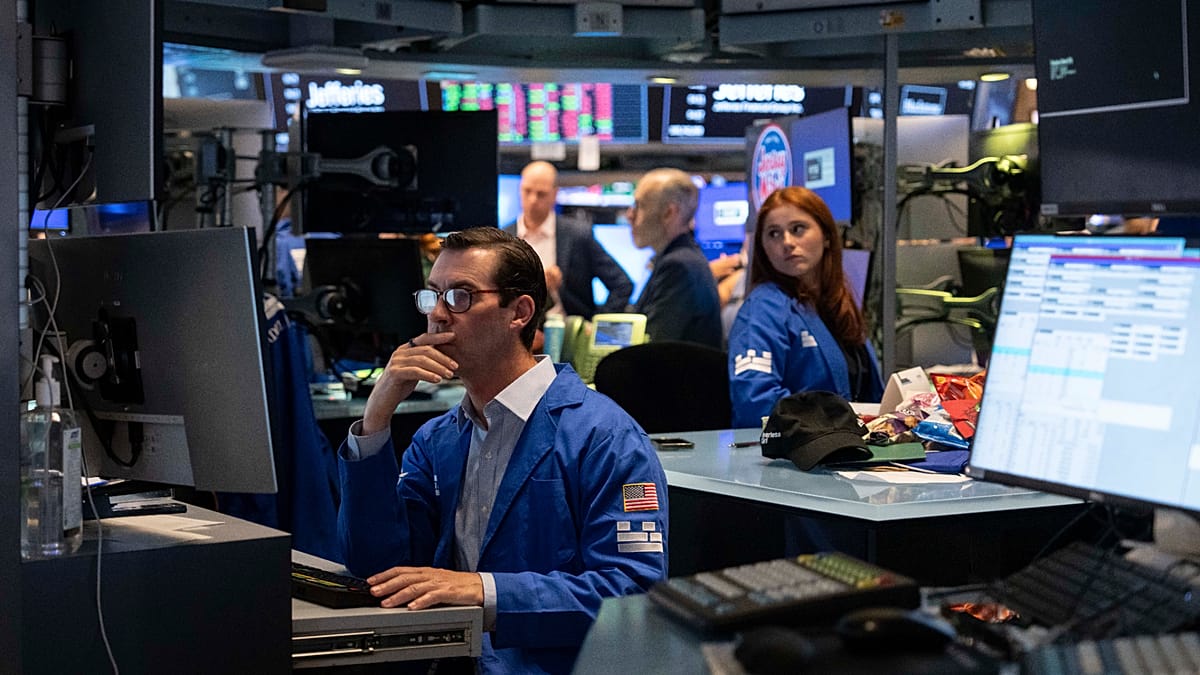
Oil prices clawed back some ground on Tuesday morning, while European futures pointed to a modestly higher open after a strong session on Wall Street. The rebound came after crude had tumbled more than 5% on Monday, when US President Donald Trump said he would hold off on further strikes against Iran at the urging of regional allies.
By early Asian trading, benchmark US crude had gained 84 cents to $81.18 a barrel, while Brent crude, the international standard, rose $1.15 to $84.92. The previous day’s slide had been driven by hopes that the conflict in the Persian Gulf might not escalate further, easing fears about supply disruptions. Brent’s price has swung wildly in recent weeks, ranging between $72 and $102 as traders weighed the risk of war and the prospect of tankers again moving freely through the Strait of Hormuz.
Currency markets remain in focus
Investors were also digesting last week’s rare joint intervention by the US and Japan to support the yen, which had fallen to nearly 40-year lows. The dollar was trading at 157.51 yen on Tuesday, up slightly from 157.18 yen, while the euro was little changed at $1.1511. Before the intervention, the dollar had been hovering around 160 yen.
Analysts remain divided on whether the move will have a lasting effect. A report from BMI, a unit of Fitch Solutions, noted that a US-backed operation carries more weight than Tokyo acting alone, but added that any US contribution would likely be limited in size. Matthew Ryan, head of market strategy at Ebury, a global financial services firm, called the intervention “historic and meaningful,” saying it signals a genuine shift in monetary policy rather than a one-off defensive move. He said it “materially improves confidence in our mildly bullish call for the yen.”
Still, some analysts caution that intervention does not address the underlying economic factors driving currency movements, such as inflation differentials and interest rate gaps. The effectiveness of such measures remains uncertain, they say.
Asian markets mixed, chip stocks volatile
Asian equities were mixed on Tuesday. Japan’s Nikkei 225 slipped 0.3% to 63,585.58, while South Korea’s Kospi fell 1.3% to 6,174.72. Australia’s S&P/ASX 200 gained 1.2% to 9,129.00. Hong Kong’s Hang Seng dropped 0.5% to 25,881.99, but the Shanghai Composite rose 0.2% to 3,802.61.
Markets remain jittery over the swings in semiconductor stocks, which have been volatile for weeks as investors question whether the surge in revenues driven by the artificial-intelligence boom is sustainable. The uncertainty has spilled over into European markets, which are bracing for potential knock-on effects, as Asian chip stocks plunge on AI sustainability fears.
Wall Street rally lifts sentiment
On Wall Street, the S&P 500 jumped 1.5% on Monday, closing just 0.1% below its record high set earlier this summer. The Dow Jones Industrial Average climbed 693 points, or 1.3%, to an all-time high, while the Nasdaq composite surged 2.1%. The rally was supported by easing oil prices, which helped calm inflation worries.
The yield on the 10-year Treasury fell to 4.68% from 4.75% late Friday, though it remains well above its pre-war level of 3.97%. Lower bond yields typically boost growth stocks, which helped drive the tech-heavy Nasdaq higher.
European investors will be watching this week’s earnings reports for clues on corporate health and inflation trends. The continent’s markets have been sensitive to energy prices, and the recent volatility in oil has added to uncertainty. As the EU grapples with its trade relationship with China, some policymakers have highlighted the bloc’s €1bn daily trade deficit with China as unsustainable, a concern that could weigh on sentiment.
For now, the focus remains on whether the oil price rebound is sustainable and whether the yen intervention will hold. European markets are likely to open with cautious optimism, but the path ahead is far from clear.