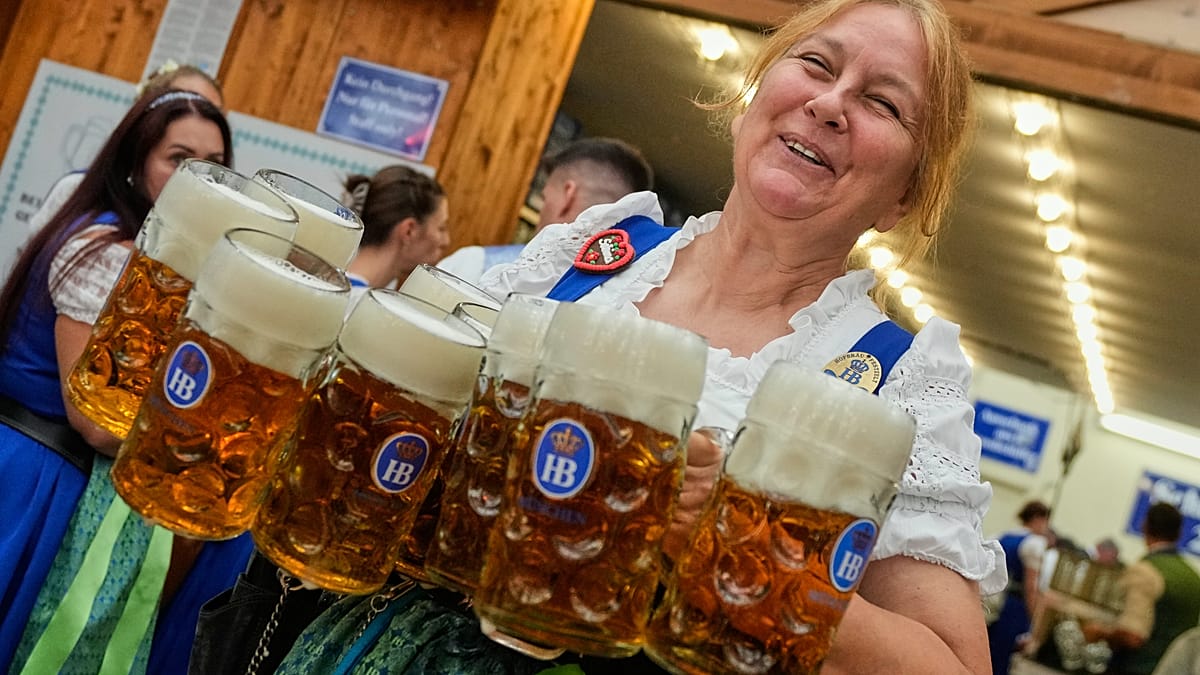
Munich's Theresienwiese roared to life on Saturday as Oktoberfest 2026 officially got underway. In a ceremony steeped in Bavarian tradition, the city's mayor performed the ceremonial first tap, driving the brass spigot into a wooden keg with two practiced swings and declaring the festival open. The crowd, a sea of dirndls and lederhosen, responded with cheers and the clinking of mass—the one-litre beer steins that are the festival's hallmark.
The opening day drew tens of thousands to the fairgrounds, where the smell of roasted almonds, grilled sausages, and freshly poured beer mingled with the sounds of brass bands. For many, the ritual marks the start of a two-week celebration that attracts visitors from across Germany and around the world. But this year, the festivities unfold against a backdrop of heightened security concerns.
Police have stepped up checks at all entrances, with bag searches and metal detectors now standard procedure. The increased measures follow a series of incidents in recent years, including a knife attack in 2024 that left several people injured. Authorities have urged visitors to remain vigilant and to report any suspicious activity. "We want everyone to enjoy the Wiesn, but safety comes first," said a Munich police spokesperson.
The security presence is part of a broader effort to ensure the festival remains a peaceful celebration. Munich's mayor, who took office last year, has made security a priority for the event. In a brief address before the first tap, he acknowledged the challenges but stressed the importance of preserving Oktoberfest's welcoming spirit. "This is a festival of joy, of coming together, and of Bavarian culture," he said. "We will not let fear dictate how we celebrate."
A tradition with deep roots
Oktoberfest traces its origins to 1810, when Crown Prince Ludwig of Bavaria married Princess Therese of Saxe-Hildburghausen. The citizens of Munich were invited to join the celebrations on the fields in front of the city gates, which were later named Theresienwiese in honor of the bride. What began as a horse race has evolved into the world's largest Volksfest, drawing roughly six million visitors each year.
The festival's rituals are carefully observed. The mayor's first tap is a moment of high drama, with the crowd counting the swings needed to open the keg. A single blow is considered a good omen; two or three are acceptable; more than that invites good-natured jeers. This year, the mayor managed it in two, earning applause and a quick toast.
Beyond the beer tents, Oktoberfest offers a glimpse into Bavarian culture, from traditional music and dance to the parade of costumed performers on the opening weekend. The festival also has a family-friendly side, with amusement rides, games, and quieter corners for those who prefer a break from the crowds.
For the city of Munich, Oktoberfest is both a cultural touchstone and an economic engine. Hotels are booked months in advance, and the festival generates hundreds of millions of euros in revenue. Local breweries, which must adhere to the Reinheitsgebot—the Bavarian purity law dating to 1516—see a significant share of their annual sales during the two weeks.
This year's edition also comes with new rules aimed at improving the experience for visitors and residents alike. The city has set out updated guidelines for the festival, including limits on the size of backpacks and stricter enforcement of noise levels in residential areas. Organizers hope the measures will strike a balance between celebration and consideration.
The heightened security comes amid broader concerns about public safety in Germany. Recent incidents, including an arson attack on defence firms in Munich, have underscored the challenges facing law enforcement. Yet for most visitors, the mood remains buoyant. "We come every year," said a tourist from Berlin, raising his stein. "It's tradition. You can't let a few bad apples ruin it."
As the sun set over the Theresienwiese, the tents glowed with warm light, and the sounds of singing drifted into the evening air. The first day of Oktoberfest 2026 had delivered what it promised: beer, cheers, and a sense of continuity in a changing world. For Munich, the festival is more than a party—it is a statement of identity, resilience, and the enduring appeal of a good, cold beer shared among friends.