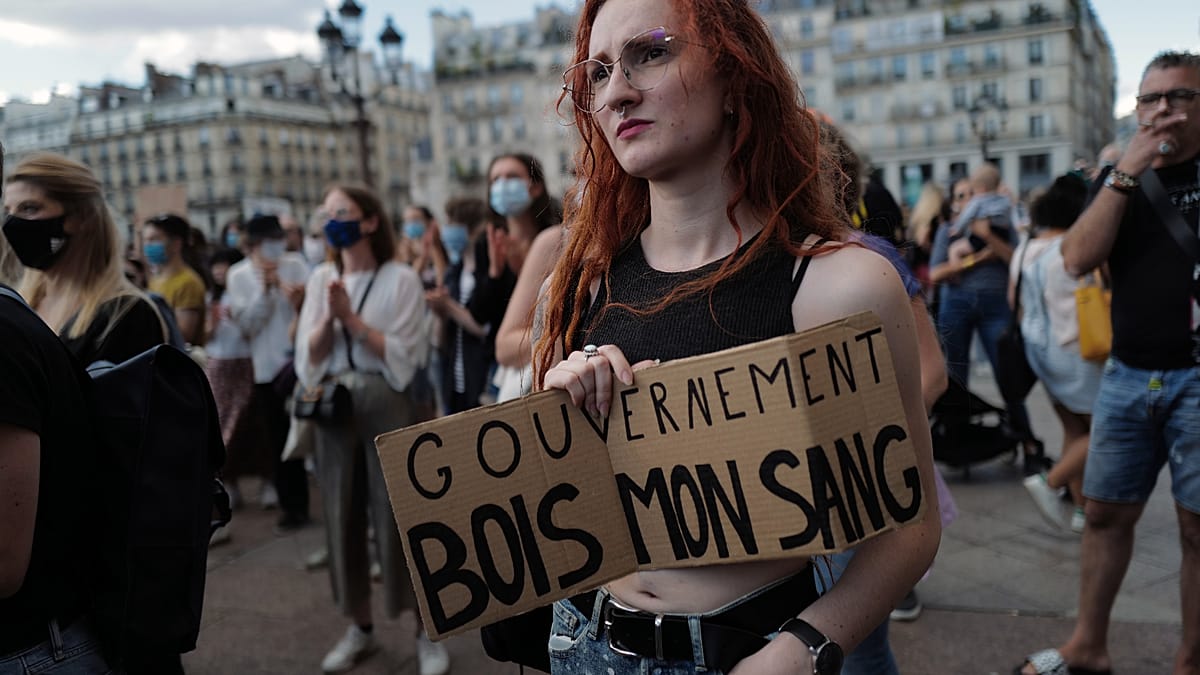
Women's rights activists gathered outside France's Justice Ministry in Paris on Tuesday as lawmakers began examining a proposed law on sexual violence. The demonstration, organised by a coalition of feminist groups, aimed to pressure the government into strengthening the draft legislation, which they argue does not go far enough to protect survivors or deter perpetrators.
The protest comes amid a broader European reckoning with how legal systems handle sexual violence. From the MeToo movement's origins in the United States to its ripple effects across the continent, activists have repeatedly called for clearer definitions of consent and more robust support mechanisms. In France, the debate has been particularly charged, with critics pointing to persistent gaps between public outrage and legislative action.
What the bill proposes
The draft law, presented by the government of Prime Minister Élisabeth Borne, includes measures to extend statutes of limitations for certain offences, improve access to forensic examinations, and create specialised courts for sexual violence cases. It also introduces a new offence of 'sexual coercion' aimed at addressing situations where victims are pressured into sex without explicit consent.
However, activists say the text falls short. They argue that the definition of consent remains ambiguous and that the bill does not adequately address the systemic issues that allow sexual violence to go unpunished. 'We need a law that puts the burden on the aggressor, not the victim,' said Claire Monod, a spokesperson for the collective Nous Toutes, which helped organise the rally. 'This bill is a step, but it is not the leap we need.'
The protest also highlighted concerns about the treatment of survivors within the justice system. Many demonstrators carried signs reading 'Believe us' and 'Justice for all', echoing frustrations that police and courts often re-traumatise victims through insensitive questioning and lengthy procedures.
European context
The French debate mirrors discussions elsewhere in Europe. In Spain, the 'only yes means yes' law, passed in 2022, has been both praised and criticised for its implementation. In Sweden, consent-based legislation has been in place since 2018, but conviction rates remain low. The European Union has also been working on a directive to combat violence against women, though negotiations have stalled over the inclusion of rape as a crime under EU law.
France's approach is being closely watched by other member states, particularly as the EU seeks to harmonise standards. The outcome of the French parliamentary debate could influence similar legislative efforts across the bloc. As one activist put it, 'What happens in Paris matters for women in Warsaw, Berlin, and Rome.'
The rally took place just days after French police were suspended following a video showing racist abuse and talk of a coup, adding to public distrust of law enforcement. While the two issues are distinct, both underscore broader questions about accountability and institutional reform in France.
Lawmakers are expected to debate the bill for several weeks, with amendments likely from both the government and opposition parties. The final text will then be voted on in the National Assembly and the Senate before becoming law. Activists have vowed to keep up the pressure, announcing further protests in the coming weeks.
For many in the crowd, the fight is personal. 'I am here for my daughter, and for all the daughters who deserve a justice system that protects them,' said Marie Lefèvre, a 54-year-old teacher from the Paris suburbs. 'We cannot wait another generation.'
The demonstration also drew attention to the recent strike at the Eiffel Tower, where women staff were sidelined during a Hindu ceremony, highlighting ongoing gender discrimination in French institutions. Though unrelated to the sexual violence bill, the incident has reinforced activists' arguments that gender inequality remains deeply embedded in French society.
As the parliamentary debate continues, the eyes of Europe are on Paris. The outcome will not only shape French law but also signal whether the continent is serious about ending the scourge of sexual violence.