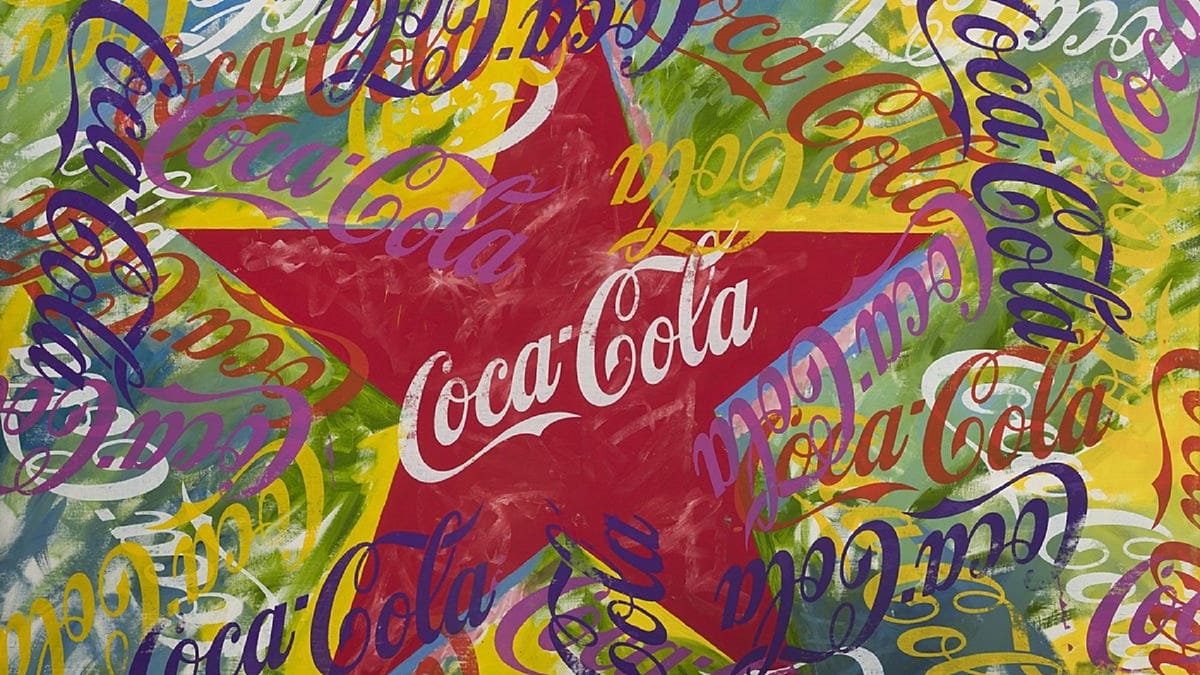
An extensive retrospective dedicated to the Hungarian painter Sándor Pinczehelyi has opened at the M21 Gallery in the Zsolnay Cultural Quarter in Pécs. The exhibition, which runs until 8 November 2026, brings together 150 works that trace the artist's six-decade career, from his early experiments to his most recent creations.
Pinczehelyi, who turned 80 this year, is a Munkácsy Prize laureate and holds the titles of Artist of Merit and Artist of Excellence. He first gained international attention in the 1970s and 1980s, when he daringly combined the visual language of Soviet totalitarianism with the iconography of Western consumerism—a juxtaposition that was both provocative and prescient in the years before the fall of the Iron Curtain.
“In European art circles I am known as someone who, in the earlier socialist period, worked with symbols such as the hammer and sickle, the paving stone and the star,” Pinczehelyi said at the opening. “One such piece is my iconic work with the hammer and sickle you can see here. There is virtually no art book dealing with that period in which this work is not reproduced.”
The exhibition is organized into nine thematic sections, guiding visitors through the artist's evolution across photographs, paintings, spatial sculptures, prints, and enamel works. Alongside well-known pieces, the show includes several works that have never been published or exhibited before, offering fresh insight into his creative process.
Some of the works on display were previously shown at exhibitions in Turin and Berlin, underscoring Pinczehelyi's standing in the broader European art scene. His ability to navigate the cultural and political tensions of the Cold War era made him a unique figure, and his work continues to resonate with contemporary audiences.
A career shaped by Cold War contrasts
Pinczehelyi's art is often seen as a dialogue between East and West. During the socialist period, he appropriated state symbols and recontextualized them, creating a visual critique that was subtle enough to pass censorship yet powerful enough to challenge viewers. His use of everyday materials—such as paving stones—added a tactile, almost monumental quality to his pieces.
The retrospective in Pécs offers a rare opportunity to see the full arc of his work, from the politically charged pieces of the 1970s to the more introspective and experimental works of recent years. It also highlights his contributions to the Hungarian neo-avant-garde, a movement that flourished despite the constraints of the Kádár era.
Pécs, a city in southern Hungary known for its rich cultural heritage, is an apt setting for this tribute. The Zsolnay Cultural Quarter, where the M21 Gallery is located, is itself a symbol of artistic resilience, housed in the former Zsolnay porcelain factory, which has been transformed into a vibrant arts district.
The exhibition is a testament to the enduring relevance of Pinczehelyi's vision. As Europe continues to grapple with questions of identity, memory, and the legacy of totalitarianism, his work offers a powerful reminder of the role art can play in confronting the past.
For those interested in the broader context of Central European art, this retrospective complements other recent efforts to preserve and celebrate the region's cultural heritage, such as the resistance of Gdańsk shipyard artists to redevelopment. It also follows the recent passing of another Hungarian literary giant, Péter Nádas, whose work similarly engaged with the complexities of Hungarian history.
Visitors to Pécs can also explore the city's other attractions, including its early Christian necropolis, a UNESCO World Heritage site, and the vibrant café culture that has made it a favorite among travelers. The exhibition at M21 is a must-see for anyone interested in the visual arts and the enduring power of symbolic expression.
As Pinczehelyi himself noted, his work has become a reference point for art historians and enthusiasts alike. This retrospective ensures that his legacy will continue to inspire future generations, both in Hungary and across Europe.