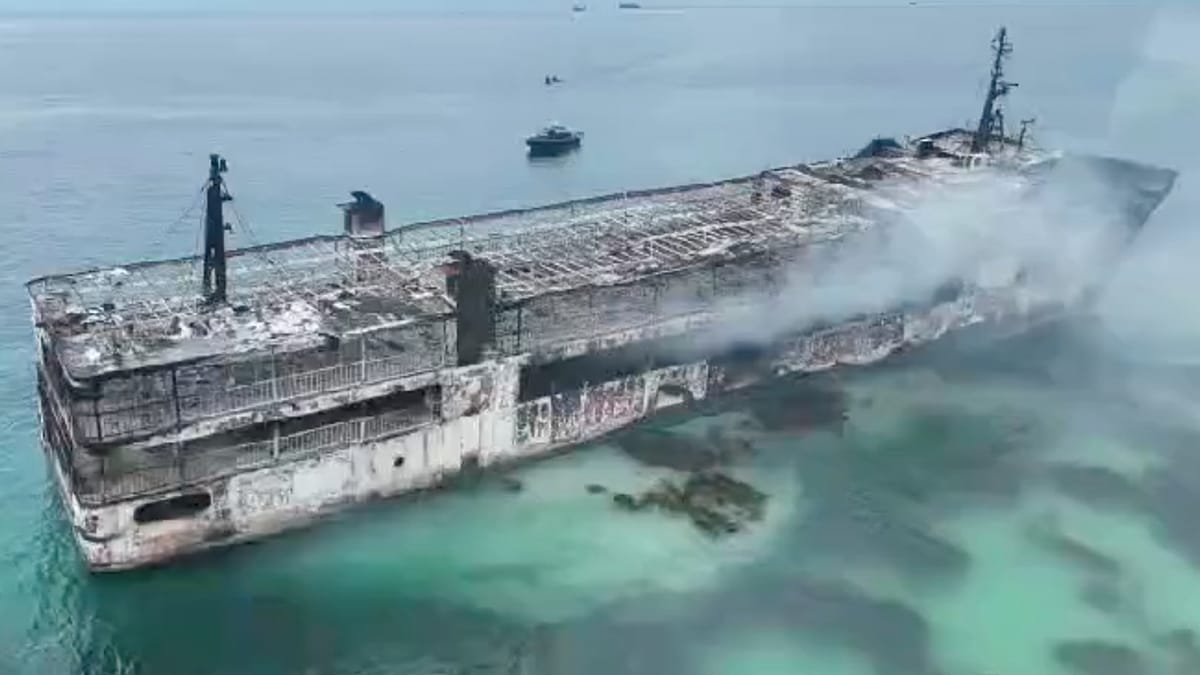
A passenger ferry caught fire off the western Philippines on Wednesday night, killing at least five people and leaving 86 unaccounted for, according to the Philippine Coast Guard. The vessel, the M/V June Aster, was about 2.2 kilometres from shore when the blaze erupted, forcing passengers and crew to abandon ship.
The ferry had sailed from Manila and was approaching its destination of Coron, a popular diving and tourist hub in Palawan province, when the fire broke out. Coast Guard spokeswoman Commodore Noemie Cayabyab told local radio that 42 people had been rescued and five bodies had been brought ashore, but 86 remained missing. She stressed that the figures were provisional and could change as search and rescue operations continued.
“Based on the data we have right now on rescued (42) and the casualties, we still have 86 people who are unaccounted for,” Cayabyab said. The vessel carried 117 passengers and 17 crew, according to the coast guard. No information was available about any foreign nationals on board.
Rescue efforts hampered by weather
Rescue teams, including a coast guard ship, high-speed response boats, a military vessel, and private volunteers and fishermen, were deployed to the scene. Passengers were helped into smaller boats that took them to shallow water, while smoke continued to waft over the charred vessel by midday Thursday. The coast guard later reported that one additional person had been rescued, though their identity had not yet been confirmed.
Cayabyab acknowledged the difficulties posed by challenging weather conditions. “We are continuing search and rescue operations,” she said. She also noted that authorities had not yet been able to interview the rescued passengers, adding, “We have not been able to obtain information from the rescued individuals because we have not been able to speak with them.” Firefighting efforts were still underway.
The incident is the latest in a series of maritime disasters in the Philippines, an archipelago where ferries are a vital mode of transport. In January, a triple-decker ferry carrying more than 340 people sank off the southern Philippines, killing at least 52. The country has a history of ferry accidents, often attributed to poor regulation, overcrowding, and severe weather.
While this tragedy occurred in Southeast Asia, it resonates with European readers who follow maritime safety and disaster response. The European Union has its own strict ferry safety standards, and incidents like this highlight the importance of such regulations. For context, a recent ferry disaster in Cyprus also drew attention to the risks of sea travel, and a cargo ship sinking in the Marmara Sea underscored similar concerns closer to home.
As the search continues, the Philippine Coast Guard has promised to provide updates as more information becomes available. The incident serves as a sombre reminder of the perils faced by those who depend on maritime transport in the region.