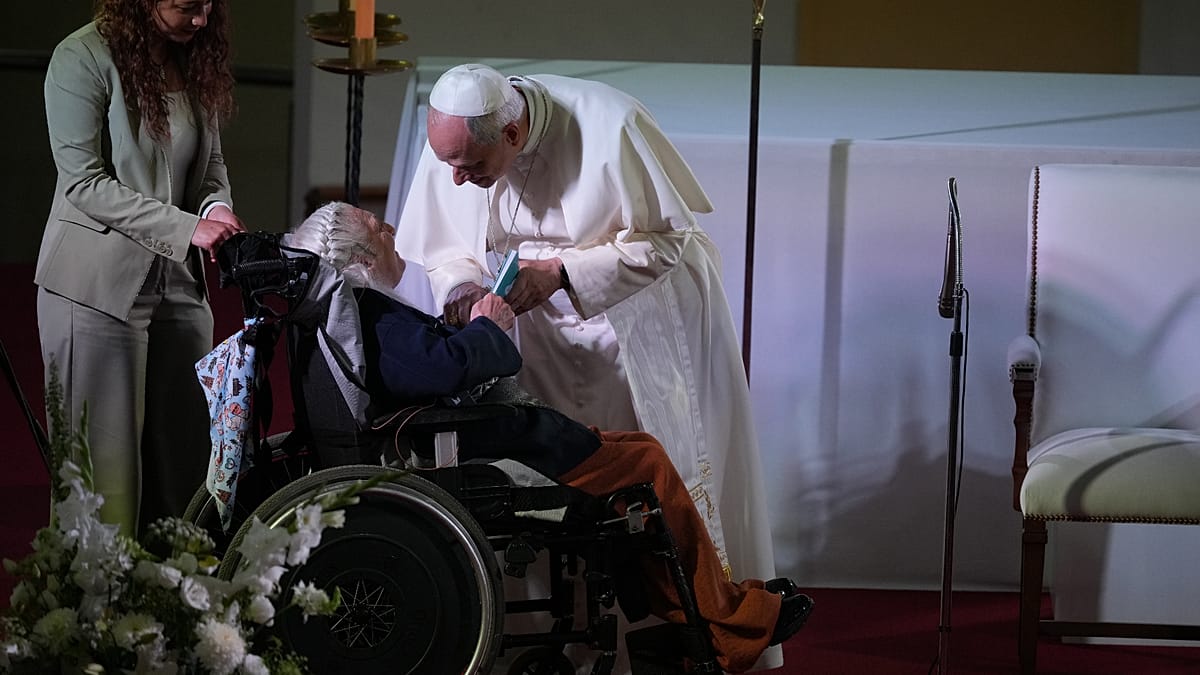
Pope Leo XIV devoted his first full day in Argentina to the country's most vulnerable citizens, travelling to a care centre for people with disabilities south of Buenos Aires and delivering an implicit rebuke to the austerity programme of President Javier Milei.
The pontiff visited Cottolengo Don Orione in Claypole, a facility founded in 1935 by an Italian priest that houses more than 400 residents with disabilities across a 50-hectare site. The centre, known locally as the "city of charity", has been squeezed by cuts to health and social services and by funding shortfalls for specialised therapy programmes.
During his tour, Leo XIV embraced residents in wheelchairs, spoke with them and offered his blessing. His arrival moved several workers and residents to tears. Addressing those present, he said their lives are a blessing to society rather than a burden — a phrase that carried particular weight given the political context.
A nation measured by its treatment of the weakest
In the centre's chapel, the Holy Father defended the dignity of every person and called for solidarity to be restored in the face of what he described as an excessive pursuit of economic success and the cult of appearances.
"The progress of a nation is also measured by how it welcomes all people with disabilities and particular needs," he said.
The message lands in a country where roughly five million people live with disabilities, and where the relationship between the government and disability organisations has grown increasingly fraught. Last year Congress overturned Milei's veto of a law that would have increased funding for the sector, but the executive has resisted implementing it, arguing that doing so would jeopardise the fiscal balance it has achieved.
As a result, centres such as Cottolengo have accumulated debts running into hundreds of thousands of euros. The government's adjustment measures have also affected specialised therapy programmes that for decades have been a lifeline for many Argentines with disabilities.
The timing is pointed: within days, the Senate is due to examine a draft bill that would ring-fence funds for disability benefits in next year's budget. Milei opposes the initiative.
A platform that extends beyond the care home
Kuyen Rolon Rey, a volunteer at Cottolengo, said the pope's decision to begin his Argentine tour at the centre mattered enormously. "The people here deserve this grace," he said, praising the choice of a place that is small in size but large in the love it represents.
The visit opened a day in which Leo XIV was scheduled to meet business representatives, trade union leaders and popular movement figures at the Catholic University of Argentina. The encounter forms part of the Catholic social teaching he is developing during the trip, which places the weakest at the centre of economic decision-making — a line that revives a central element of the legacy of Pope Francis, who was born in Argentina.
On Sunday, in his first speech on Argentine soil and in Milei's presence, Leo XIV had already echoed one of his predecessor's recurring themes: that money must serve people, not the reverse. "The economy must serve the person, not the person the economy," he said.
Monday's meeting was expected to include representatives of national manufacturers, who have been hit by an influx of low-priced imported goods since Milei dismantled trade restrictions that had been in place for years. Members of Argentina's main trade union confederation were also invited; their representatives had travelled to the Vatican in September to voice concerns about job losses and falling wages.
Since taking office at the end of 2023, Milei has pursued a sweeping austerity programme that has made him one of the most prominent figures in the international conservative reaction against the liberal establishment. The pope's visit has placed a spotlight on the human cost of that programme — and on the question of who bears it.