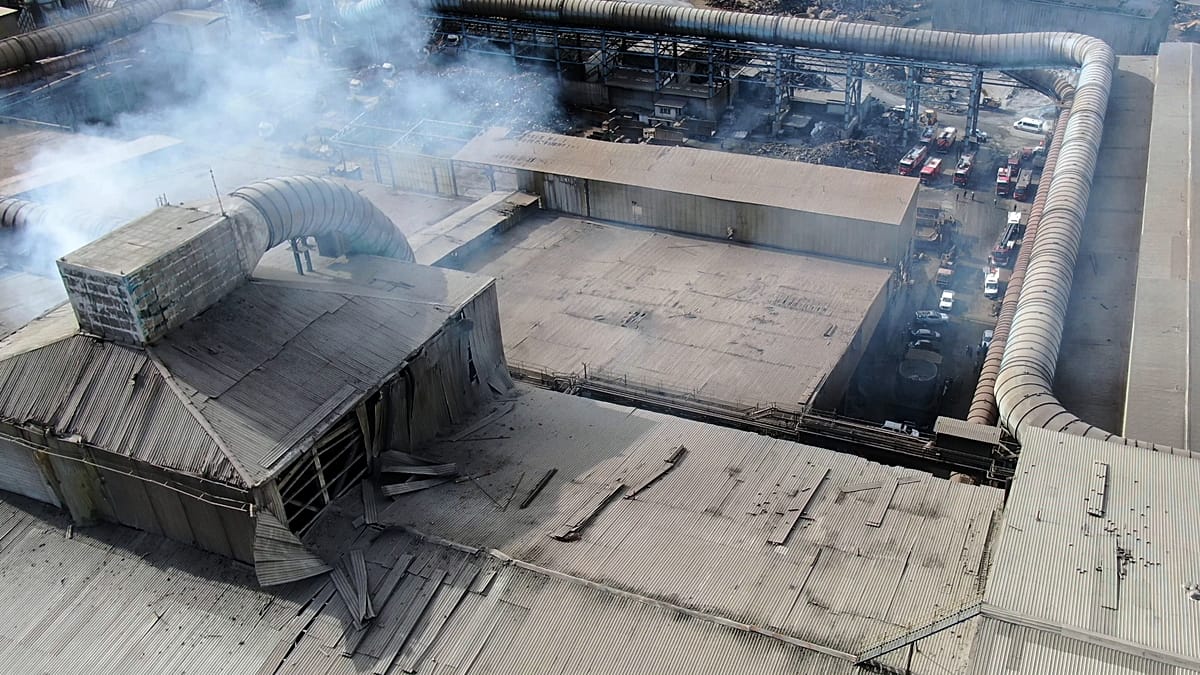
A catastrophic explosion at a steel factory in western Turkey has killed at least 17 people and injured 13 others, two critically, according to Turkish officials. The blast occurred around midday local time on [current date] at the HABAS plant in Aliaga, a district in Izmir province, when a crane lifting a replacement boiler collapsed and plunged into a large industrial furnace used in the liquid steel casting process.
President Recep Tayyip Erdogan, speaking in a televised address after a scheduled cabinet meeting, expressed condolences and promised a thorough inquiry. “The circumstances surrounding this tragic incident, which has deeply saddened our nation, including how and why it happened, whether there was any negligence and who bears responsibility, will be established,” he said.
Eyewitnesses described the force of the explosion as feeling like an earthquake. The blast triggered a massive fire that engulfed part of the facility, sending thick plumes of smoke into the sky and prompting a large emergency response.
Rescue and recovery efforts
Izmir’s mayor, Cemil Tugay, said on social media that rescue teams were “continuing their work to remove the collapsed platform” and confirmed that the victims were factory workers. The injured have been transported to nearby hospitals, with two reported to be in critical condition.
The HABAS plant, established in 1987, is one of Turkey’s leading steel producers, with an annual capacity of 4.5 million tons, according to the company’s website. The privately owned group operates across multiple sectors, including shipping and energy, and employs thousands of workers in the region.
Industrial accidents are not uncommon in Turkey, where rapid industrial growth has sometimes outpaced safety regulations. In recent years, the country has faced international criticism over workplace safety standards, particularly in mining and construction. This latest tragedy is likely to reignite debates about enforcement and oversight.
The explosion also raises questions about the maintenance and operation of heavy machinery in high-risk environments. Investigators will examine whether the crane’s collapse was due to mechanical failure, human error, or a lapse in safety protocols. The government has pledged to hold those responsible to account.
Local authorities have cordoned off the area, and the plant’s operations have been suspended pending the investigation. The incident has cast a shadow over the industrial port town of Aliaga, which is home to several heavy industries, including shipbreaking and petrochemicals.
Turkey’s broader economic challenges, including high inflation and a weakened lira, have put pressure on industrial employers to cut costs, sometimes at the expense of safety. Trade unions have repeatedly called for stronger protections and more frequent inspections.
The European Union, which has an ongoing dialogue with Turkey on a range of issues, has not yet issued an official statement. However, the disaster is likely to be raised in discussions about Turkey’s alignment with EU standards, particularly in the context of EU enlargement and strategic alignment, where workplace safety and rule of law are key criteria.
As the community in Aliaga mourns, the focus now shifts to the families of the victims and the injured. The government has announced compensation for the families, though details have yet to be finalized. The tragedy serves as a stark reminder of the human cost of industrial ambition when safety is not prioritized.
This is a developing story. More details will be reported as they emerge.